No Account Casino UK: How No-Verification Play Works
 Available in GB
Understand instant play, deferred verification, payment routes and the checks that may still apply when real money is involved.

Table of Contents
- What "No Account" Really Means in the UK
- The UK Regulatory Reality Behind No-Verification Casinos
- How KYC, eKYC and Deferred Checks Work
- When a Casino Can Ask for ID, Address or Source of Funds
- Choosing Between UK-Licensed and Offshore No-Account Casinos
- No-Account Casino Lists, Sister Sites and Bonus Terms
- Real-Money Play on Mobile: Deposits, Withdrawals and Trustly
- No-Deposit Bonuses and the Cost of “Free” Play
- Trustly at a No-Account Casino: What the Payment Route Changes
- Paysafecard at No-Account Casinos: More Privacy, Not a Free Pass
What "No Account" Really Means in the UK
The phrase "no account casino" gets used loosely, so it helps to pin down the terminology before anything else. In practice, two different models hide behind the label — and they behave very differently once money is involved.
The first is genuine instant play. You register with minimal details, deposit, and start playing within minutes. A casino without account in this sense still exists as a legal entity holding your funds; it has simply removed friction from the front end. Your details are checked quietly in the background rather than collected through a form.
The second model is what the industry calls no verification casinos. These operators may allow you to register, deposit, and start playing without immediately submitting proof of identity. That doesn’t mean verification never happens. What you are usually encountering is deferred verification: the casino lets you play instantly but reserves the right to request ID later — typically after a large withdrawal request or a security alert. The check has been postponed, not abolished.
The distinction matters because the marketing rarely makes it. "Play in seconds" can describe a licensed site with automated background checks, or an offshore operator with no legal obligation to you at all. Both sound identical in an advertisement. They are not equivalent, and later sections of this guide cover exactly where they diverge — licensing, withdrawals, and what happens when a document request lands on your account.

One thing to hold onto throughout: fast registration and unrestricted play are separate claims. A casino can offer one without the other, and the difference only becomes visible when you try to take your winnings out.
The UK Regulatory Reality Behind No-Verification Casinos
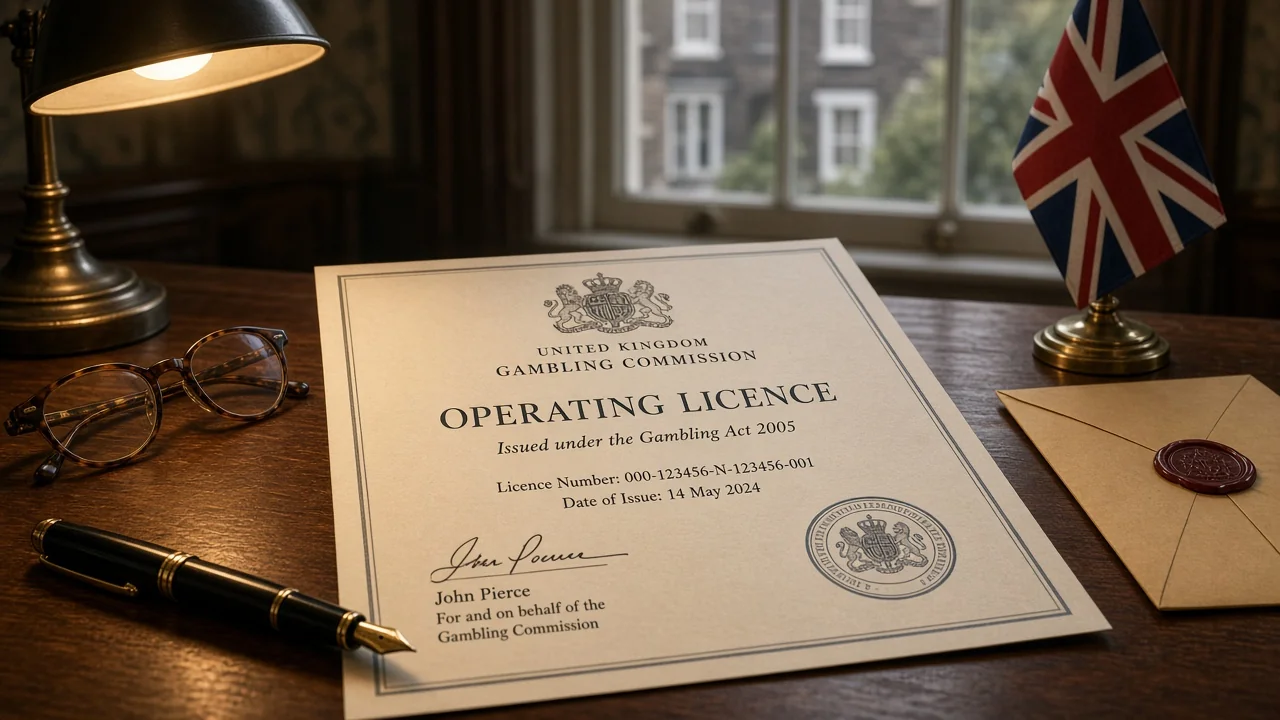
The single most important fact to hold onto when you see a casino advertised as "no verification" is this: a casino actively promoted that way cannot legally hold a UK Gambling Commission licence. This is not a grey area or a matter of interpretation. The two claims — "no verification" and "UKGC-licensed" — cannot both be true at the same time.
What the UKGC actually requires
The Gambling Act 2005 is the primary legislation governing gambling in Great Britain, and the UK Gambling Commission, established under that Act and in full operation since 2007, is the regulator that enforces it. Any operator providing online gambling services to consumers in England, Wales or Scotland must hold a UKGC licence, regardless of where the operator is physically based. Operating without one is a criminal offence.

The licensing requirement is not just a piece of paperwork. UKGC-licensed casinos must verify a player’s identity and age before allowing deposits or gameplay. That is a condition of holding the licence, not a courtesy the operator can choose to skip. Age verification is treated by the regulator as the primary technical mechanism preventing under-18s from accessing real-money casino games — the general legal gambling age in the UK being 18, with no form of gambling legal below 16 under any circumstances and no parental permission overriding that.
This is why the "no verification casino" label is structurally incompatible with a UK licence. A UKGC operator that skipped identity and age checks before taking deposits would be in breach of its licence conditions from the first customer onward. So when a site markets itself as a no-KYC casino or a no account casino to UK players, it is telling you, in effect, that it sits outside the UK regulatory system entirely.

Recent tightening, and how confident you should be about it
The direction of travel in UK regulation has been towards stricter checks, not looser ones. A profile industry review reports that since June 2026, UKGC rules tightened considerably under updated licence conditions, with operators required to complete age verification before a player can access any real-money game. The same type of source also reports two further changes: a new 40% Remote Gaming Duty introduced in 2026, and a requirement, in force from November 2025, that directors and persons with significant control complete digital ID verification for an operator to function legally. These are single-source claims about a moving target, so treat the specifics as reported rather than settled — but they all point the same way. The UK regulatory framework is getting more insistent about knowing exactly who is playing and who is running the show, not less.
None of that helps the no-verification pitch. If anything, it guarantees that no UKGC-licensed operator will be joining the no-KYC category in the foreseeable future.
What "offshore" means in practice
Casinos that serve UK players while marketing themselves as no-KYC or no account casinos are, in almost every case, licensed elsewhere. Offshore casinos serving UK players are typically licensed by regulators such as Curaçao, Malta, Panama, Anjouan, or Belize. These licences are real documents issued by real authorities — but they are not the UK licence, and the difference matters in ways that go well beyond the registration form.
Requires full identity and age verification before play and deposits.
Often uses deferred verification, postponing ID checks until withdrawal.
A UKGC licence means the operator has been assessed on identity and ownership, finances, integrity, competence and criminality. It means the operator is required to verify customers before deposits and withdrawals. It means the operator must be a member of GAMSTOP, the national online self-exclusion scheme. It means that if something goes wrong, there is a regulator with the power to act on complaints about that operator. Application fees alone are non-refundable, and the standard processing time for a licence application runs to approximately 16 weeks — this is a regulator that makes operators work for the privilege.
An offshore licence, by contrast, does not give UK players any of these protections. If a Curaçao-licensed site refuses a withdrawal or closes your account, there is no UK regulator that will take up your case, because from the UK’s point of view the site is operating illegally in this market in the first place. You may have some recourse through the licensing authority in the operator’s jurisdiction; you have none through the UK system. This is the trade that "no verification" actually buys you: less friction at the door, and no institution standing behind you once you are inside.

Why the licence check comes first
Because the claims are so tangled, the licence is the one thing that cuts through them. The UKGC maintains a public register of current operating and personal licences. You can verify a casino licence by checking the operator name or licence number against that register and confirming the listed domain matches the site you are actually on. The check takes a couple of minutes and settles the question that marketing copy never will.
If the domain is on the register, the site is a UK-licensed operator — which means it verifies players, whatever its advertising says about speed or convenience. If the domain is not on the register, the site is an offshore operator serving the UK market outside UK law, and everything that follows from that — from withdrawal exposure to the absence of UK consumer protections — applies to you as a player there.
The next sections look at how verification actually works in practice, both at UK-licensed sites and at offshore no-KYC casinos, so you can see what each model does and does not spare you.
How KYC, eKYC and Deferred Checks Work
When a casino says you don’t need an account, what it usually means is that you don’t fill in a long registration form. Behind the scenes, some form of identity checking still happens — it just happens differently. There are three broad models, and understanding the difference between them tells you what a "no account" promise is actually worth.
Verification Models
Understanding how different operators handle your identity behind the scenes.
There are three main approaches: Standard KYC (manual documents), Instant eKYC (automated database matching), and Deferred Checks (play now, verify during withdrawal).
Standard document-based KYC
KYC — "know your customer" — is the traditional model. You upload a passport or driving licence, sometimes a utility bill or bank statement, and a member of staff (or software) compares the documents to the details you gave. It’s the slowest route. Manual document review typically completes within 24 hours, though operators with more advanced systems manage it within a few hours. UK-licensed casinos don’t have a choice about this: verification before play is a licence condition.
Instant eKYC: verification without paperwork
Automated eKYC removes the upload step. Instead of asking for documents, the operator checks the details you type in — name, address, date of birth — against trusted databases. No-verification casinos use this approach to verify identity by matching player details against public and private databases rather than requesting uploaded documents.
The databases used for this matching may include:
- the electoral roll
- banking information
- mobile phone records
- credit reference agencies such as Experian
If the details you enter match what these sources hold, the system clears you in seconds. If they don’t — a typo in your address, a recent house move, a name change — the match fails, and the casino asks for documents anyway. So "instant eKYC" is instant only when the data about you is clean and current. It’s a bet on your own paperwork history.
Soft credit checks: invisible, and harmless to your score
One tool in the eKYC stack deserves its own explanation, because "credit check" sounds alarming.
Some operators run a soft credit check using your name, address and date of birth, conducted through credit-reference agencies like Experian. The purpose is not to judge your finances — soft verification is used to confirm that you are over 18 by checking whether your details match an adult record.
Two things matter here. First, a soft check is invisible to lenders and does not affect your credit score — it leaves no footprint that a bank or mortgage lender would see. Second, it happens without you seeing it. That’s the trade-off with automated screening: you gain speed and skip the upload, but you lose visibility into exactly what is being checked and when.

Deferred checks: play now, prove later
The third model is the one most "no verification casinos" actually run. Deferred verification allows you to register, deposit and start playing without immediately submitting proof of identity. The casino collects your details and does basic screening, but full verification is postponed.
The postponement is not a waiver. ID may be required later, typically after a large withdrawal request or a security alert. In practice, this means the moment you try to take meaningful money out is the moment the operator may decide it needs to know exactly who you are — and possibly where the money came from.
Deferred checks sit somewhere between the two extremes, and the difference has a practical shape:
| Model | When you’re checked | What you provide | When you can play |
|---|---|---|---|
| Standard KYC | Before deposit | Passport or driving licence, plus address proof | After review (hours to a day) |
| Instant eKYC | At registration | Name, address, date of birth only | Seconds, if the database match succeeds |
| Deferred checks | After you’ve deposited and won | Details now, documents later if requested | Immediately |
Playing immediately is not the same as avoiding verification
This is the distinction the marketing blurs. A casino with no account form lets you start playing immediately. That is not the same as a casino that never verifies anyone.
Under instant eKYC, your identity is checked before or as you play — you just don’t see the paperwork. Under deferred checks, the check hasn’t happened yet, but it can. Under standard KYC, it has already happened and you’re cleared.
So when you read a no-account casino review promising fully anonymous play, ask which of the three models the operator runs. If it’s eKYC, you were verified the moment your details matched the electoral roll or a credit-reference agency record — you just weren’t shown the process. If it’s deferred, the verification you avoided at the door is waiting at the exit, attached to your withdrawal.
The honest summary: the account-free experience removes friction at the start of the journey. Whether it removes verification depends entirely on which system sits underneath — and that is rarely stated in the promotional text.
When a Casino Can Ask for ID, Address or Source of Funds
Searching for a no account casino in the UK in 2026 returns plenty of sites promising that you can play without registering, uploading documents, or waiting for approval. What those promises rarely spell out is when the bill arrives. "No account" describes the front door, not the whole building. Verification is not abolished at these sites — it is deferred, and it is triggered by specific events. Knowing those triggers tells you far more about a site than its homepage does.
Withdrawal Risk
Deferred verification means the operator can demand your ID exactly when you try to withdraw your winnings.
The withdrawal: the most common trigger
The single most predictable moment for verification is the one players care about most — getting money out. UK-licensed casinos are legally required to verify customer identity before processing withdrawals, so the request you can postpone at the deposit stage cannot be postponed at the cashier. If your account was opened with soft, automated checks that passed silently, a withdrawal is when the operator may move to documents.
Offshore no-KYC sites work the same way in practice, if less predictably in timing. Deferred verification allows you to start playing immediately, but the operator may require ID later — characteristically after a large withdrawal request or a security alert. A site that markets itself as needing no documents and then demands them when you cash out is not contradicting itself; it is running the model exactly as designed. The uncomfortable part is that you only learn which category you fall into at the moment your money is already sitting in a pending withdrawal.
Security alerts
The second trigger has nothing to do with your conduct and everything to do with pattern recognition. A login from an unfamiliar device, details that don’t match across your account and your payment method, or activity that looks unusual against your history can all prompt a review. Being asked for ID after a security alert is not an accusation — it is the operator protecting itself against account takeover and third-party play. It is, however, another reminder that "no verification" is a marketing term, not a technical state.

Payment ownership: the check people forget
Payment verification confirms that the payment method belongs to the account holder. This is the trigger that catches players off guard more than any other, because it turns everyday household habits into compliance problems. Depositing with a card in a partner’s name, a family member’s bank account, or a shared e-wallet means the operator cannot confirm the money is yours — even if everyone involved consents. When this surfaces, the requested evidence is typically a bank statement or card detail linking the payment method to the name on the account.
Standard verification at a UK-licensed casino involves three layers: identity, address, and payment verification. The first may require a passport or driving licence. The second may require a utility bill, bank statement, or council tax letter dated within three months. The third covers the payment method itself. None of these layers is optional at a licensed operator; the only variables are when they are triggered and how quickly they clear — automated checks can complete in seconds, while manual document review typically completes within 24 hours, with some operators running advanced systems that finish within a few hours.
Source of funds and financial checks
The requests above are about who you are. A separate layer is about where your money comes from. A specialist review of UK gambling rules notes that a licensed casino may request source-of-funds evidence when a player deposits significant sums — that is, proof that the money you are staking was obtained legitimately, not merely proof that you are over 18. What counts as acceptable evidence is set by the operator, so treat any request as a conversation rather than a fixed checklist.
One regulatory commentary also reports that, since 2025, operators have been required to conduct financial vulnerability checks on customers. These checks run in the background rather than through your document folder, but they can surface as questions you did not expect — about affordability rather than identity. If a casino asks how a losing streak is being funded, this is the layer you have met.
The Main Trade-off
No-account features reduce entry friction but often shift the verification burden to the moment you want to exit.
What to do before it happens
UKGC-licensed operators may request ID, proof of address, or source of funds at any time — not only at withdrawal, and not only once. The practical response is preparation: a valid photo ID, a bill or statement within the three-month window, and a bank statement showing the payment method in your own name. With current documents, the manual stage of the process clears within a day at most licensed sites.
An online casino without an account that never asks anyone for anything is not being relaxed about verification. It is being unlicensed — and the moment that matters, the withdrawal, is precisely when the difference becomes yours to pay.
Choosing Between UK-Licensed and Offshore No-Account Casinos
The moment you decide to try a no-account casino, you face a fork that marketing copy does its best to blur: is the site a UK-licensed operator using automated checks to speed things up, or an offshore operator with no UKGC licence at all? The two can look identical on the surface — same lobby, same games, same welcome offer — but they are built on completely different legal foundations. Here is a framework for telling them apart before you deposit a penny.
Start with the licence, not the branding
The first check takes two minutes and filters out most of the noise. The UK Gambling Commission maintains a public register of operating and personal licences. Before depositing anywhere, you should be able to find the operator’s name or licence number on that register and confirm that the domain you are on is the one listed. If the register returns nothing, the site is not UKGC-licensed, whatever its footer says.
Offshore no-account casinos serving UK players are typically licensed elsewhere — Curaçao, Malta, Panama, Anjouan, or Belize are the common jurisdictions. A licence from one of these regulators is not automatically meaningless, but it is not a UK licence. It does not give you access to UKGC complaint procedures, and it does not give you legal recourse against the operator if something goes wrong. That last point deserves emphasis, because it is the one that marketing copy never mentions: with an unlicensed offshore operator, your protection depends entirely on the operator’s goodwill.

And here is the structural fact that cuts through all the advertising: a casino actively promoted as "no verification" cannot legally hold a UKGC licence. So the claim itself is a signal. If a site advertises itself as requiring no verification from UK players, it has told you what it is — an offshore operator — in the same breath as it told you its selling point.
What "no account" actually costs you in withdrawal exposure
The registration friction is only half the picture. The other half is what happens when you try to take money out.
At a UKGC-licensed site, verification happens before you play, and withdrawals are processed against a fully verified account. Many leading UKGC sites process withdrawals within hours once that verification is complete. The upfront checks are the price; the payoff is that your withdrawal is not held hostage to a document review.
At a genuinely no-verification offshore site, deferred verification means you can deposit and play instantly, but the operator can still request ID later — typically after a large withdrawal request or a security alert. This is the asymmetry that defines the whole choice: the operator can skip verification when it suits them (taking your deposit) and demand it when it suits them (releasing your winnings). You are not actually escaping verification; you are deferring it to the moment when you have the least leverage.
- Verify the operator on the UKGC public register
- Read the full bonus wagering requirements
- Check withdrawal terms before depositing
- Assume “no verification” means total anonymity
- Rely on offshore bonus offers without checking terms
- Trust sister sites without checking their individual licences
The practical test before depositing is simple: find out what the site’s terms say about withdrawal checks. If the answer is buried, vague, or "we may request documents at any time" — which, to be fair, is what nearly every operator’s terms say — then treat the "no verification" label as describing your experience on the way in, not your experience on the way out.
Responsible gambling tools are not the same on both paths
This is where the comparison stops being about convenience and starts being about what happens if things go badly.
Deposit limits, reality checks, cooling-off periods, and self-exclusion all rely on a verified account linked to a real identity. That is not a technicality — a limit enforced against an anonymous account can be walked around by opening another one, and UKGC rules recognise this by requiring all remote operators to be members of GAMSTOP, the national online self-exclusion scheme that works precisely because identities are verified. A no-KYC offshore casino cannot honestly offer you an equivalent, because the whole premise of its model is that it does not reliably know who you are. Do not assume the tools exist just because a "Responsible Gaming" page does.
The protections extend beyond self-exclusion. Stake limits for online slots are now in place in the UK, and an industry review of the licence changes notes further reforms coming into force in January 2026, including mandatory wagering calculators and bans on certain bonus types. These are UK licence conditions. An offshore operator is free to ignore all of them — and free to offer the aggressive bonuses that UK rules have started to prohibit, which is part of why offshore sites often look more generous. The generosity is not free; it is what replaces regulation.
A checklist before you deposit
Pulling the framework together, these are the checks that matter, in order:
- Licence. Search the operator name or licence number in the UKGC public register. Confirm the domain listed matches the site you are on. No match means offshore — decide accordingly, with full awareness of what that means for recourse.
- Withdrawal terms. Find out when documents can be requested. Assume “later” means “on your withdrawal”, because deferred verification typically works that way.
- Responsible gambling tools. Check whether self-exclusion is a verified, enforced scheme or a button that only excludes one throwaway account. If you have ever used GAMSTOP, remember that offshore operators are not part of it — and deliberately using them to get around your own self-exclusion is a sign the tools, not the casino, are the thing to address.
- Bonus conditions. Read the wagering requirements, game weightings, and expiry window before the bonus, not after. This section’s neighbour covers bonus terms in detail, so it is enough to note here that offshore bonus terms are where the real cost of “no account” play tends to hide.
The honest summary of the trade
A UKGC-licensed site and a no-account offshore site are not two flavours of the same product. One gives you slower entry and real, enforceable protections on the way out. The other gives you instant entry and a promise about the way out that the operator can revoke whenever a document request becomes convenient. No list of casinos can make that decision for you — but the licence register can tell you, in under two minutes, which of the two you are actually looking at.
No-Account Casino Lists, Sister Sites and Bonus Terms
This page highlights UK-licensed casino operators for readers exploring no account casino options in the UK in 2026. Use the listed bonus, payout-speed and minimum-deposit details as a quick guide when reviewing the available choices.
License: UKGC Operator Licence · Bonus: £200 welcome bonus · Payout speed: Within 48 hours · Min. deposit: £10 32Red holds a UKGC Operator Licence and offers a £200 welcome bonus. Its minimum deposit is £10, with payouts stated as being made within 48 hours.
License: UKGC Operator Licence · Bonus: £100 bonus · Payout speed: Within 24 hours · Min. deposit: £10 ProgressPlay Limited is listed with a UKGC Operator Licence and a £100 bonus. It has a £10 minimum deposit and payouts within 24 hours.
License: UKGC Operator Licence · Bonus: £20 bonus · Payout speed: Within 48 hours · Min. deposit: £10 Silverbond Enterprises is a UKGC-licensed operator offering a £20 bonus. The minimum deposit is £10, and payouts are stated as being made within 48 hours.
License: UKGC Operator Licence · Bonus: £100 bonus · Payout speed: Within 24 hours · Min. deposit: £10 Genesis Global Limited holds a UKGC Operator Licence and offers a £100 bonus. Players can deposit from £10, with payouts within 24 hours.
License: UKGC Operator Licence · Bonus: £100 bonus · Payout speed: Within 24 hours · Min. deposit: £10 LeoVegas is listed with a UKGC Operator Licence and a £100 bonus. It supports a £10 minimum deposit, while payouts are stated as being made within 24 hours.
License: UKGC Operator Licence · Bonus: £50 bonus · Payout speed: Within 48 hours · Min. deposit: £10 Platinum Gaming Limited is UKGC licensed and offers a £50 bonus. Its minimum deposit is £10, with payouts stated as being made within 48 hours.
Search for a list of no-account casino sites and you will mostly find affiliate pages, not neutral registries. Every list has an owner, and that owner usually earns a commission when you sign up through a link. This does not automatically make a list dishonest, but it does mean the list is an advertisement, and it should be read the way you would read any advertisement.
What a list can and cannot tell you
A useful list tells you facts you can verify yourself: which regulator licenses the operator, which payment methods are accepted, and what the bonus terms say. A weak list tells you only what cannot be checked — "fast payouts", "trusted by players", "the best experience". If a list promotes a casino as requiring no verification at all, treat that as a signal about the operator’s licence rather than as a selling point. A casino actively marketed as "no verification" cannot legally hold a UK Gambling Commission licence, so what the list is really showing you is an offshore site licensed elsewhere — typically by regulators such as Curaçao, Malta, Panama, Anjouan or Belize.
Bonus Terms
Always check the wagering requirements, game weightings, and expiry windows before claiming any offer.
None of this tells you the site is a scam. It tells you the rules you are protected by are not UK rules, and the list has no way to change that.
Sister sites: shared branding is not shared safety
Many operators run several brands under one roof. You will see them described as sister sites: the same parent company, often the same platform, the same payment providers and sometimes the same bonus structure under different skins.
The mistake to avoid is treating the family relationship as a quality signal. If one sister brand handles verification or withdrawals well, that is a point in its favour — but it does not transfer automatically to the rest of the group, and it does not override the licence question. Check each brand the way you would check a standalone casino: the licence, the jurisdiction behind it, and what happens if something goes wrong. Shared ownership tells you who is behind the brand, not whether the brand is safe for you.
Bonus terms: where the real conditions live
A no-account casino bonus is only as good as the terms attached to it. Before you count any offer as money in your pocket, three things have to be checked.
- Wagering requirements. The conditions you must meet before bonus winnings can be withdrawn. Without reading these, the headline value of an offer is meaningless.
- Game weightings. Not every game contributes equally to wagering, and some contribute nothing at all. An offer that looks generous on the front page can be near-impossible to clear depending on which games count.
- Expiry windows. Bonuses do not last indefinitely. If the window closes before you finish the requirements, the bonus and anything won from it can be removed.
One more change is worth knowing about. According to a UK-focused regulatory review, changes coming into force in January 2026 include mandatory wagering calculators and bans on certain bonus types. If that is how UK-licensed operators will have to present bonuses, any offshore brand offering something a UK site could not legally offer should prompt a simple question: why is it allowed there, and what does that say about who protects you?
A checklist before you trust any list entry
- Find the licence and the jurisdiction yourself — do not take the list’s word for it.
- Read the bonus terms before depositing, not after.
- Treat sister sites as separate brands until each one is checked.
- Remember that deposit limits, reality checks, cooling-off periods and self-exclusion all rely on a verified account linked to a real identity — a genuine no-verification setup may not be able to offer them in any enforceable form.
A list is a starting point for research, never a substitute for it. The brands that survive your own checks are the only ones worth a deposit.
Real-Money Play on Mobile: Deposits, Withdrawals and Trustly
Most mobile casinos follow the same sequence: you pick a payment method, deposit, play, and eventually request a withdrawal. What separates a UK-licensed site from a no-account casino is what happens at the moment money moves — and, more importantly, what the operator is required to check before releasing it.
Depositing on mobile
On a phone, deposits are quick by design. You tap through to the cashier, choose a card or an alternative method, confirm the amount, and the funds appear in your balance. UK-licensed casinos verify your identity and age before allowing deposits or gameplay, so the money you put in is already sitting behind a verified account. No-verification casinos may let you register, deposit and start playing without submitting proof of identity, which is precisely the friction they advertise away.
Mobile Safety Check
- Confirm the site is UKGC-licensed via the public register
- Verify your preferred withdrawal method is available
- Check if your payment method matches your account name
The catch is not the deposit itself. It is what that deposit does to your position later. If the operator runs any check — at withdrawal, on a security alert, or because the payment method raises a question — an unverified account gives it every reason to pause your cash-out until you provide documents.
Trustly as part of the picture
Trustly sits in this conversation because it is bank-linked. You authorise the payment directly from your bank account, and the casino receives a confirmation that the money came from an account in your name. That matters for payment verification: the operator can confirm the payment method belongs to the account holder without asking for a card photo or a bank statement.
What Trustly does not do is remove the casino’s right to verify identity. A bank-linked deposit strengthens the paper trail; it does not exempt the transaction from later review. The full detail on this belongs further down this guide, but on mobile the practical point is simple: choosing Trustly speeds up the mechanics of payment while leaving the operator’s verification powers intact.
Withdrawing after verification
Withdrawals are where the models genuinely diverge. UK-licensed casinos are legally required to verify your identity before processing a withdrawal, and many leading UKGC sites process cash-outs within hours once the account is fully verified. Automated checks can complete in seconds; manual document review typically completes within 24 hours, and operators with advanced systems often finish within a few hours.
At a no-verification casino, the same withdrawal can trigger the checks you were promised wouldn’t happen — most often after a large win or a security flag. The deposit took ten seconds; the withdrawal can take as long as the document review does, and there is no regulator to escalate to if the site stalls.
Before you deposit anywhere on mobile, check the licence, understand which payment route you are using, and assume the withdrawal — not the deposit — is the moment that matters.
No-Deposit Bonuses and the Cost of “Free” Play
A no-deposit bonus at a no-account casino looks like the cheapest offer in gambling: credit that arrives without you funding the account first. The cost is not in the money you put in — it is in the conditions attached to the money you take out.
The first thing to check is wagering. A bonus you did not pay for is almost never withdrawable as-is; it must be turned over a set number of times, and each game contributes differently. Slots typically carry full weighting while table games contribute a fraction — or nothing at all. Then there is the expiry window: bonus funds and any winnings from them are voided if the conditions are not met within the stated period. An offer that looked generous on the landing page can be unusable if the window is short and the weighting is thin. Any promotion that does not state these terms clearly is not a bonus; it is a marketing sentence.
Deposit bonuses raise the same questions with more money at stake. At a no-verification casino you can register, deposit, and start playing without immediately submitting proof of identity — which means the bonus terms are the only contract you have actually read before the money moves. Read them before depositing, not after.
Final Summary
- A “no account” casino is usually an offshore operator, as UKGC rules mandate verification.
- Verification is often deferred, not removed, and is most likely to be triggered during withdrawals.
- Automated eKYC can provide speed but still requires your data to match official records.
- Always prioritize licensed operators for access to enforceable responsible gambling tools.
One point is easy to miss. The tools that make bonus play controllable — deposit limits, reality checks, cooling-off periods, self-exclusion — all rely on a verified account linked to a real identity. A platform where identity is not confirmed cannot anchor those protections to you specifically. The "free" credit comes without that safety net.
On the UK side, bonus rules are tightening rather than relaxing. According to one industry review of the upcoming changes, requirements coming into force in January 2026 include mandatory wagering calculators and bans on certain bonus types — a signal that regulators see bonus structures, not just verification gaps, as a consumer-protection issue.
The practical test for any no-deposit or deposit offer is the same: can you find the wagering requirement, the game weighting, and the expiry window before you claim it? If all three are visible and you accept them, the bonus is a priced product. If any of them is hidden, the price is whatever the operator decides later.
Trustly at a No-Account Casino: What the Payment Route Changes
Trustly occupies a specific place in the no-account casino story. Because it connects directly to your bank account, it is often presented as the reason registration forms and document uploads can be skipped: the operator trusts your bank, so it doesn’t need to trust you. That framing contains a grain of truth and a significant omission.
The grain of truth is on the deposit side. When you pay through Trustly, you authenticate yourself with your bank’s own security process. Some no-verification casinos use this flow, sometimes combined with automated eKYC screening that checks your details against trusted databases such as the Electoral Roll or credit reference agencies, to let you start playing without filling in a form. The payment route genuinely removes friction at this stage.
The omission is what happens afterwards. Payment verification confirms that the payment method belongs to the account holder — and Trustly makes that check easier, not unnecessary. Your bank account carries your name, and the funds arriving at the casino carry it too. The operator does not need documents on day one because the payment route itself creates a traceable link between the deposit and a real, named individual. Far from hiding you, the route quietly does part of the operator’s verification work.

That has two practical consequences. First, playing through a bank-linked route does not give you anonymity from the casino — it gives the casino a verified payment instrument attached to your identity. Second, if a withdrawal review or security check is triggered later, the evidence the operator needs is already in the payment chain, and refusing to complete it can freeze that withdrawal.
A bank-linked route changes how quickly you can start. It does not change who can be asked to prove what.
Paysafecard at No-Account Casinos: More Privacy, Not a Free Pass
Paysafecard appeals to players who want a layer of privacy at no-account casinos, and the appeal is real but narrower than it looks. The card is bought with cash, so no bank account or card number is handed over at the deposit stage. What you spend is what you load, which also keeps the deposit itself simple and bounded.
What Paysafecard does not do is exempt you from the casino’s own rules. Two things in particular are worth separating.
Deposit privacy is not withdrawal privacy. A prepaid voucher tells the operator nothing about your bank account — but withdrawals work differently. Most casinos that accept Paysafecard for deposits require a different method for cashing out, and that method is tied to you. Paysafecard itself is deposit-only in practice, so the privacy ends where the payout begins.
Verification can arrive later. Deferred verification allows instant play but may require ID later, typically after a large withdrawal request or a security alert. Using a prepaid card changes how you pay; it does not change what the operator is allowed to ask. At UK-licensed casinos the point is firmer still: they are legally required to verify your identity before processing withdrawals, whatever method you deposited with.
So treat Paysafecard as a spending-control tool with a privacy side effect, not as a route around checks. If a site implies that paying by voucher means you will never be asked for documents, that claim tells you more about the site’s marketing than about its procedures.
Check the licence before depositing — on the UKGC public register if the operator claims one — and check whether a withdrawal method exists at all before you rely on the voucher.
What documents do no verification casino alternatives in the UK actually require?
They may not request documents at registration because some use automated checks against databases such as the Electoral Roll, banking information and mobile phone records. If manual verification is triggered later, you may need a passport or driving licence, proof of address such as a recent utility bill, bank statement or council tax letter, and evidence that the payment method belongs to you.
Are no verification casinos in the UK legal in 2026?
No, a casino actively marketed as offering no verification cannot legally hold a UK Gambling Commission licence. UKGC-licensed casinos must verify your identity and age before allowing deposits or real-money play, so no-verification sites serving UK players are generally offshore operators.
When will an offshore casino ask for identity verification?
It may request ID after you submit a large withdrawal request or when a security alert is raised. Deferred verification means that checks were postponed rather than permanently removed.
How long does verification take at a UK-licensed casino?
Automated checks can finish in seconds, while manual document reviews typically take within 24 hours. Some operators with advanced systems complete manual checks within a few hours.
What triggers an ID verification review at a no-KYC casino?
A large withdrawal request or a security alert can trigger a review. The casino may then request identity, address or payment documents, even if you were allowed to deposit and play without uploading them initially.
What should I do if a licensed casino is using verification to delay my withdrawal?
Complete the requested identity, address and payment checks, because UK-licensed casinos are legally required to verify customers before processing withdrawals. If the operator requests source-of-funds evidence, provide it where relevant, as significant deposits can trigger that additional review.
Published by the Casinouk Game Info team.