Penny Slot Machines UK: How They Work
 Available in GB
Explore how penny slots are defined in practice, where they can be played, and how stakes, prizes and payouts work.

Table of Contents
- What “Penny Slots” Mean in the UK
- Playing Penny Slots Online for Real Money in the UK
- Penny Casino Slots and UK Venue Categories
- How to Approach Penny Slots Without Treating Them as a Strategy Game
- Penny Slot Games: Free Play and Online Versions
- What Is a Penny Slot, and What Can You Bet?
- Free Penny Slots with Bonus Rounds
- How Penny Slots Work and What They Cost
- Penny Slot Payouts and Jackpot Limits
- Using a Penny Slot Machine Online in the UK
What “Penny Slots” Mean in the UK
If you have seen the phrase “penny slots” used on American gambling sites and wondered whether it means anything specific in Britain, the short answer is: not as a legal category. In UK gambling law, no machine is classified by how little it costs to play. Gaming machines are categorised according to the maximum stake and prize available — not according to the lowest stake a player may choose. That distinction matters more than it first appears, because it determines where a machine can legally be placed, who may play it, and how much it can pay out.
The UK does not have a “penny slot” category
The legal categories of gaming machine in the United Kingdom are A, B1, B2, B3, B3A, B4, C and D, set under the framework of the Gambling Act 2005 and the Categories of Gaming Machine Regulations 2007. Each category is defined by ceilings: the most you may stake per play and the most the machine may pay as a prize. There is no category called “penny slots”, and no category defined by a one-penny minimum.
This shortlist helps UK players explore penny slot machines in 2026 while considering key practical details such as welcome bonuses, minimum deposits and payout times. Use the listed facts as a starting point when assessing which option fits your preferences.
License: UKGC Operator Licence · Bonus: £200 welcome bonus · Payout speed: Within 48 hours · Min. deposit: £10 32Red stands out with a £200 welcome bonus and a £10 minimum deposit. Payouts are stated to arrive within 48 hours, and the operator holds a UKGC Operator Licence.
License: UKGC Operator Licence · Bonus: £100 bonus · Payout speed: Within 24 hours · Min. deposit: £10 ProgressPlay Limited offers a £100 bonus with a £10 minimum deposit. Its stated payout speed is within 24 hours, and it operates under a UKGC Operator Licence.
License: UKGC Operator Licence · Bonus: £20 bonus · Payout speed: Within 48 hours · Min. deposit: £10 Silverbond Enterprises features a £20 bonus and a £10 minimum deposit. Payouts are listed as arriving within 48 hours, with a UKGC Operator Licence.
License: UKGC Operator Licence · Bonus: £100 bonus · Payout speed: Within 24 hours · Min. deposit: £10 Genesis Global Limited offers a £100 bonus alongside a £10 minimum deposit. Its stated payout speed is within 24 hours, and it holds a UKGC Operator Licence.
License: UKGC Operator Licence · Bonus: £100 bonus · Payout speed: Within 24 hours · Min. deposit: £10 LeoVegas provides a £100 bonus with a £10 minimum deposit. Payouts are stated to be processed within 24 hours, and the operator has a UKGC Operator Licence.
License: UKGC Operator Licence · Bonus: £50 bonus · Payout speed: Within 48 hours · Min. deposit: £10 Platinum Gaming Limited offers a £50 bonus and a £10 minimum deposit. Its listed payout speed is within 48 hours, and it operates under a UKGC Operator Licence.
This means that when someone in the UK talks about penny slot machines, they are describing a style of play — low-stake play — rather than pointing at a defined machine type. The same physical machine might accept a small stake on one spin and a much larger one on the next, if its category permits it. The category follows the machine and its permitted maximums, not the coin you happen to insert.
So a low denomination does not, by itself, identify a machine. Two machines that both accept pennies can belong to entirely different categories, sit in entirely different premises, and carry entirely different prize limits.
Where small stakes genuinely do exist in UK machines
That said, low-stake play is real in the UK machine landscape — it just lives inside the existing categories rather than forming its own.
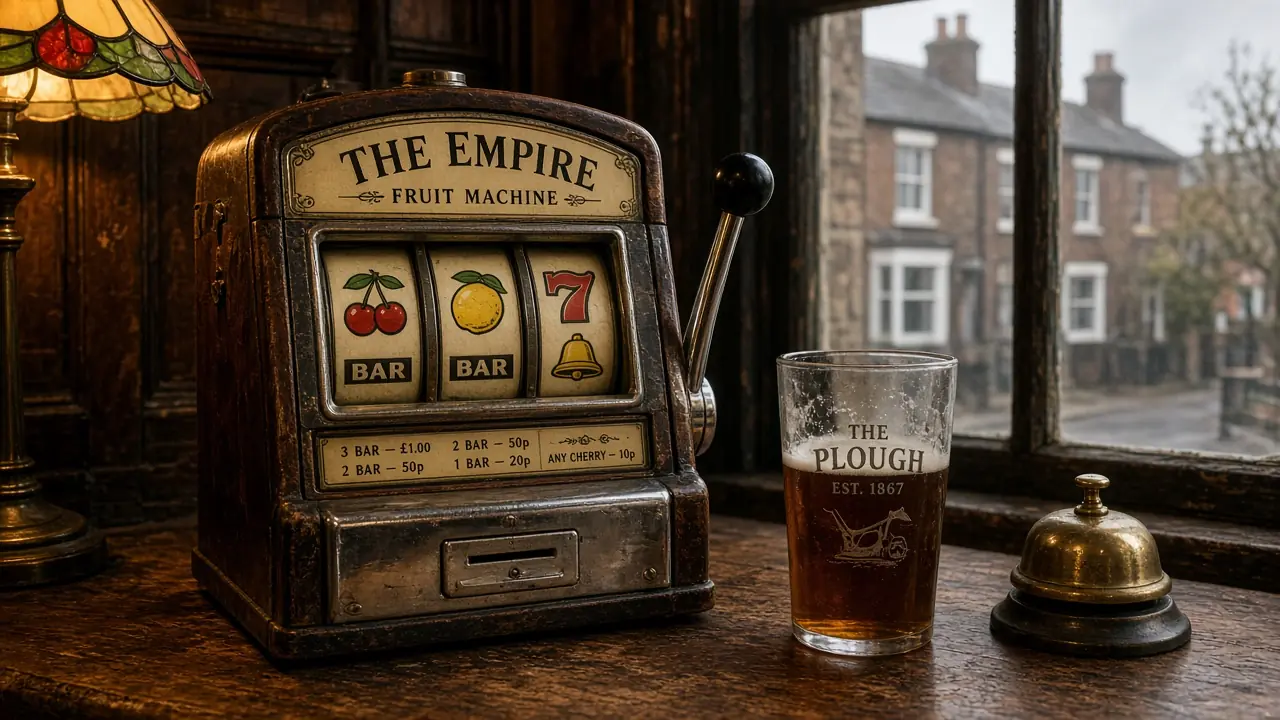
The clearest example is the money-prize AWP machine — Amusement With Prizes, the low-stake machines you find in seaside arcades and similar settings. A money-prize AWP machine allows a 10p stake and a cash prize of up to £5. This is the closest thing British law has to a machine built around genuinely tiny stakes, and it is the closest relative of what an American site would call a penny slot.
Category C machines are the classic British pub fruit machine, with a £1 maximum stake and a £100 maximum prize. A £1 maximum is not “penny” territory in the strict sense, but these machines sit at the low end of the stake scale for adults-only play, and they are the machines most people picture when low-stake gambling in a pub comes up.
At the very low end of Category D, crane grab machines allow a stake of up to £1 and a non-monetary prize of up to £50 — a stuffed toy rather than cash. Again, “penny” is not the legal label; the stake-and-prize combination is.

Notice the pattern: in every case, the definition runs through the maximums the law permits, never through the minimum a player can choose. UK regulation is written from the top down — what is the most this machine can take and pay — not from the bottom up.
Why the American term causes confusion
The phrase “penny slots” comes from markets where machines are commonly described by their denomination — cent slots, nickel slots, quarter slots. In those systems, the denomination tells you something about the machine’s identity. Imported into a UK context, the word carries that assumption with it, and the assumption does not hold.
In Britain, if you ask what a machine is, the correct answer is its category. A machine in a pub is almost certainly a Category C machine. A crane grab is a Category D machine. What you personally chose to stake on it is beside the legal point. A player staking pennies on one machine and a player staking the maximum on the neighbouring machine may be using the same category of machine under the same rules.
This also cuts the other way. A machine being cheap to play does not mean it falls into the loosest regulatory corner. Stake limits, prize limits, testing requirements and premises rules attach to the category — and the category stays fixed regardless of the coin value you select on the screen.
What this means when you see the term used
When a UK-facing site advertises penny slots, it is almost always using the word as marketing shorthand for low-stake play, not as a reference to a regulatory category. That is not a scandal — it is simply loose language, and loose language in gambling is worth untangling before you make decisions based on it.
Penny Slots
A marketing term used to describe low-stake games rather than a specific legal category of machine.
The practical habit to take away is this: when you want to know what a machine legally is in the UK, ask for its category and the stake-and-prize limits that come with it. When you want to know what it costs you personally, look at the stake options on the machine itself. Those are two separate questions, and the word “penny” answers neither of them reliably.
The same caution applies to phrases like “1p slots” or similar low-denomination wording you may encounter. A one-penny stake may be available on a machine, or it may not; either way, the machine’s legal identity is set by its category, and the category is set by its maximums. The penny, if there is one, is just the price you chose to pay for a single play — nothing more structural than that.
The sections that follow apply this distinction to specific situations: what the phrase means when online casinos use it, where machines of each category may legally be offered in Britain, and how prize limits attach to a machine’s category rather than to its marketing label. The terminology established here — category defined by maximum stake and prize, denomination as a player’s choice — carries through all of them, because it is the distinction the UK’s entire machine framework is built on.
Playing Penny Slots Online for Real Money in the UK
When people search for penny slots to play online in the UK, they are almost never looking for a physical machine. They are looking for a casino game — a spinning-reel game loaded in a browser or an app — where the smallest stake is very low. That is a different thing from the gaming machines that sit in pubs, arcades and casinos, and the difference matters more than most players realise.
What "penny slots" means online
Online, the phrase has no statutory meaning at all. There is no legal category of "penny slot" in British gambling law, and no regulator-approved definition. It is a marketing and player term, used loosely to describe online slot games whose minimum stake per spin is low enough to feel almost free.
That looseness creates a small trap. A game that advertises a low minimum stake may still allow — and by default may be set to — a much higher stake per spin. Most online slots let you adjust both the coin value and the number of paylines in play, which means the total cost of a single spin can be a multiple of the headline denomination. A game that looks like it costs pennies can, with one settings change, cost considerably more. Before you spin, check the total stake displayed on the screen, not the coin value buried in the settings.
Online play is not a machine category
Physical gaming machines in the United Kingdom are categorised according to the maximum stake and prize available. Those categories — with their caps on stakes and jackpots — apply to machines sited in licensed premises. An online slot game is not one of those machines. It is offered under a remote operating licence, and the stake and prize limits that shape a physical machine’s category do not attach to it in the same way.
This distinction is worth holding onto, because the vocabulary overlaps. Sites talk about "£500 jackpot slots" when describing certain B3 machines in arcades and betting shops. When the same phrase appears next to an online game, it may be describing a prize structure that has nothing to do with that machine category. The words travel; the legal meaning does not.
Check Total Stake
Attention! Always check the total stake displayed on your screen, as adjusting coin value or paylines can increase your cost per spin.
What "real money" actually means
"Real money" play means your own funds are at stake. You deposit, you wager, and whatever you win or lose is real. The alternative is demo or free-play mode, where the balance is virtual and nothing can be withdrawn. The phrase exists in search language because the two modes genuinely feel different: free play costs nothing and returns nothing, while real-money play means every spin has a consequence.
The mechanics of the game do not change between the two modes. The reels, symbols and features are the same. What changes is that in real-money play, you are funding the session, and any return is credited to your account. There is no third mode in between, whatever a promotional page implies.
Choosing where to play
Operators providing online gambling services to consumers in Great Britain must hold a licence from the UK Gambling Commission, regardless of where the operator is based. That single requirement does more work than any "best online penny slots" list ever could, because it is checkable. The Commission maintains a public register of operating licences. You can search the operator’s name or licence number, and confirm that the domain you are on is the one listed against that licence. If the domain does not match, you are not playing where you think you are.

A licence is not a quality mark, and it is not a promise that any particular game will treat you well. It is a baseline: the operator has passed the Commission’s assessment of its identity, ownership, finances, integrity, competence and criminality. You should also be 18 or over — the general legal gambling age in the UK — and any licensed operator will verify this before you can withdraw.
A note on "new" games
Searches for new penny slots are common, but the word "new" tells you almost nothing useful. A newly released game is not more generous, more loosely set, or more likely to pay out than an older one. If a game has been through the Commission’s licensing framework, its return information is handled under the same rules regardless of its release date. Novelty is a feature of the artwork, not of the mathematics.
What to check before your first spin
- The total stake per spin, not the coin denomination. This is the single number that determines what the game costs you.
- The licence and domain match, via the UKGC public register.
- The return information the operator displays. For physical B1 machines there is no minimum RTP requirement, but the minimum average return must be displayed to the player — and the practice of publishing return figures extends across licensed online gambling, so a game page with no return information at all deserves your suspicion.
- Your own limits, set before you start rather than during the session.
None of this makes a low-stake game profitable or predictable. It makes it legible: you know what each spin costs, who is accountable for the game, and what information the operator owes you. For a game whose main selling point is that it costs almost nothing, those are the facts worth having before the first spin rather than after it.
Penny Casino Slots and UK Venue Categories
When people talk about penny casino slots in the UK, they are usually imagining a physical machine in a licensed venue — a coin slot, a stake measured in single pence, and a prize that might or might not stay in penny territory. What that machine actually is, legally, has nothing to do with the word "penny" on the cabinet or in the game’s marketing. In the UK, every gaming machine belongs to a statutory category, and that category — not the denomination — determines where the machine can be sited, what it may charge per play, and what it may pay out.
Category C (Pub) Max stake: £1 | Max prize: £100
Category B1 (Casino) Max stake: £5 | Max prize: £10,000
Category D (Arcades) Non-monetary prizes: up to £50
The framework comes from the Gambling Act 2005 and its associated categories regulations. If you walk into a casino, a betting shop, a bingo hall, a pub or an adult gaming centre, the machines you see there were not chosen at random. Each venue type is permitted to offer specific categories, and the list of permitted categories is the single most useful thing to understand before you look for low-stakes play in a physical setting.
Where casino categories can actually be found
The highest-value machines in the UK sit in casinos. Category B1 machines — with a maximum stake of £5 and a maximum prize of £10,000 — can only be made available in casinos. They may also carry a linked progressive jackpot of up to £20,000, but only on a premises basis, meaning the link runs between machines within the same casino rather than across a national or multi-site network. A B1 machine can be configured to accept a low per-play stake, and many casino floor games do offer settings well below the £5 ceiling. But even if you stake a penny, you are playing a B1 machine, with a B1 machine’s prize structure and a B1 machine’s regulatory obligations.
Category B2 machines occupy a narrower set of premises: 2005 Act casinos, 1968 Act casinos, betting shops, and tracks with pool betting. Category B3 machines have the widest casino-adjacent footprint of the higher categories — they may be made available in casinos, betting shops, tracks with pool betting, bingo premises, and adult gaming centres. An adult gaming centre licence, notably, permits an unlimited number of Category B3, C and D machines, which is why these venues often carry the largest mixed floors of low and mid-stake machines outside a casino.
Category C machines — the classic British pub fruit machine — may be made available in the widest range of premises of any category: pubs, licensed family entertainment centres, clubs, bingo premises, adult gaming centres, betting shops, tracks with pool betting, and casinos. So a genuine low-stakes machine experience is not confined to casinos at all. In fact, if your goal is the lowest possible stake in a physical venue, the machines most likely to offer it are the ones outside the casino door, not inside it.
What "penny" tells you — and what it doesn’t
A penny denomination tells you one thing only: the smallest unit a single line or spin can cost. It tells you nothing about the machine’s category, its maximum prize, or where you are allowed to encounter it. Two machines could both accept a 1p minimum stake and sit in entirely different regulatory worlds — one a Category C fruit machine in a pub, one a Category B1 machine on a casino floor with a five-figure prize ceiling.
This is why questions like "penny slots versus pound slots" don’t map cleanly onto UK venue categories. The meaningful comparison is not penny versus pound but category versus category: what the machine may charge at most, what it may pay at most, and which premises may offer it. A "pound slot" in a betting shop and a "penny slot" in a casino could, in stake terms, overlap entirely — the labels describe settings, and settings are configurable within each category’s legal ceiling.
The same applies to any list of penny slots tied to UK venues. There is no regulatory register of machines by denomination, because denomination is not a classification criterion. What exists is a register of categories and permitted premises. Anyone offering you a definitive list of "the best penny slots in UK casinos" is ranking things the regulator does not classify — which does not automatically make the list wrong, but it does mean no official source can confirm it.
Responsible Play Checklist
- Verify the operator has a UKGC licence
- Confirm the domain matches the UKGC register
- Check the total cost per spin (including lines)
- Set your personal loss limit before starting
Winning in a physical venue
Whether you can win on these machines, and how much, is again a question of category rather than denomination. In a casino, a low-stake session on a B1 machine plays for a prize pool that runs to £10,000, or to the £20,000 progressive ceiling if the machine is linked on the premises. In a pub, the same nominal penny stake plays on a Category C machine capped at £100. Same coin, different worlds.
The venue decides which worlds are on offer. Before you plan a trip around low-stakes machine play, it is worth knowing which premises can legally host which categories — because that, and not the price of a spin, is the fixed part of the picture.
How to Approach Penny Slots Without Treating Them as a Strategy Game
Searches for the "best" penny slots or the "best" strategy share one assumption: that somewhere there is a right answer, a game or a technique that outperforms the rest. That assumption is worth unpicking before you put any money in, because most of what circulates as strategy for low-stake machines does not survive contact with how these games actually work.
What a strategy can and cannot change
Gaming machines in the UK are games of chance. The outcome of each play is determined by the machine, not by your decisions, and no sequence of button presses, timing, or stake patterns changes the underlying result. A "system" that promises otherwise is not a cautious approach with an edge — it is a claim the machine’s design does not support.
What you can genuinely control is limited to three things:
- Whether to play at all. The only decision that reliably affects your outcome is the one to stop.
- How much you stake per play. On the classic pub fruit machine — Category C under UK rules — the maximum stake is £1 and the maximum prize is £100. Choosing to play at a lower level than the machine allows reduces what a session can cost you, though it does not change the odds of any individual play.
- How long you play. A time limit set before you start is the one control that always works, because it doesn’t depend on the machine cooperating.
Everything beyond that — hot and cold streaks, machines being "due" a payout, pressing at the right moment — belongs to folklore. There is no verified evidence that any of these improve results, and the machine’s technical design gives them nothing to act on.
Choosing a stake level honestly
Low denomination is not the same as low cost. A machine that takes small stakes can still take a lot of them: what a session costs is stake multiplied by number of plays, and a fast game at low stakes can outrun a slow game at higher ones. When you pick a stake, the useful question is not "what’s the smallest I can bet?" but "what’s the most I’m prepared to lose across the whole session?" Decide that first, and let the stake fall out of it.
One thing worth checking on the machine itself: UK rules require that certain machines display return information to the player. For B1 machines in casinos, there is no minimum return-to-player percentage set by regulation, but the minimum average return must be displayed. The absence of a regulatory floor is a good reason to read the display rather than assume one — the number you see is what the machine is designed to return, and it’s the only figure you can actually verify.
Essential Reminders
- Machine identity is determined by legal category, not denomination.
- Low denomination does not mean low regulatory risk.
- Online ‘penny slots’ are marketing terms for low-stake games.
- Always verify the operator’s license via the UKGC register.
Free play and no-download versions
Playing in free or demo mode before spending money is a reasonable habit, though it has limits worth stating plainly. Free play lets you learn how a game’s interface and features behave; it tells you nothing reliable about results with real money, because there is nothing at stake and nothing to win. Treat it as familiarisation, not rehearsal. The specifics of where to find free versions and how they differ from real-money play are covered later in this article.
Are they worth playing?
That depends on what "worth" means to you. If it means "a way to make money," no: the machine is not designed to be beaten, and the return information displayed on licensed machines reflects that. If it means "a low-cost form of entertainment with a defined ceiling on what a single play can cost," then the answer is a matter of budget and preference.
Two practical notes for physical venues. Pubs and other alcohol-licensed premises are automatically entitled to up to two Category C or D machines once they notify the local licensing authority, so a fruit machine in a pub is a normal, permitted sight. And Category D machines — the low-stake fruit machine style, coin pushers and crane grabs — have no age restriction, which is why they appear in family settings rather than being confined to adult-only areas.
The honest summary of "the best way to play" is short: decide your limit before you start, stake at a level where the worst session outcome is one you’ve already accepted, read whatever return information the machine displays, and don’t mistake persistence for technique. The machine has no memory of your efforts, and the pleasant fiction that it does is the most expensive part of any strategy sold as one.

Penny Slot Games: Free Play and Online Versions
When people search for penny slot games in the UK, they are usually looking for one of two things: a game they can play for free, or a low-stakes game they can play online. Both requests are reasonable, but the phrase itself describes a stake level, not a product category — and that distinction shapes what any operator or website can honestly offer you under that label.
What the label actually covers
In UK gambling regulation, there is no category of gaming machine called a "penny slot." Gaming machines are classified by maximum stake and prize, with categories ranging from Category A down to Category D. The word "penny" refers to how much a single spin or play costs you, not to where the machine can be sited, what it may pay out, or who may play it.
This matters because a website advertising "penny slot games" is describing an experience — small stakes per play — rather than pointing to a defined, regulated product type. The games behind that label could sit in very different legal categories with very different rules attached.
Free play and demo versions
Free versions of slot-style games are widely offered online, and they serve a genuine purpose: letting you see how a game behaves, how its features trigger, and how quickly a balance moves before any money is at risk. Free play is also the only version where the word "penny" is genuinely cost-free — there is no minimum spend to worry about at all.
One point worth knowing if you encounter free versions of lottery-style machines: some gaming machines categorised as B3A run lottery-style games where the outcome is predetermined by a virtual lottery ticket selected the moment the game starts. What looks like an interactive game of chance is, in effect, a reveal of a result already fixed at the start of play. Free versions of such games show you the mechanics; they do not mean your choices influence the outcome.
Why use demo modes?
Demo modes are useful for familiarising yourself with a game’s interface and bonus features without risking real money.
However, remember that results in free play do not reflect actual winnings, as no real money is at stake.
Online versions
Online, the low-stakes promise can be softer than it sounds. A game that accepts a small minimum stake may still encourage — or in some cases require — multiple lines or features to be active, which raises the cost of a single spin above the headline figure. Before playing, check what a complete play costs, not just the smallest number advertised.
Any operator offering real-money online gambling to consumers in Great Britain must hold a UK Gambling Commission licence, and you can verify this through the Commission’s public register. A "penny" label on a website tells you nothing about licensing; only the register does.
No verified list of specific penny slot game titles is available for the UK market, so none is offered here. A list of names without checked details would be decoration, not information.
What Is a Penny Slot, and What Can You Bet?
A penny slot is a gaming machine — or an online slot game — built around a very low minimum stake per spin. The name refers to the denomination, not to a legal category. In the UK, machines are classified by the maximum stake and prize they are permitted to offer, and no category in that system is defined by how small the minimum bet is. That distinction matters more than the label on the cabinet.
The denomination is not the category
British gaming machines fall into categories A, B1, B2, B3, B3A, B4, C and D, each with its own stake and prize ceilings. A machine that accepts pennies does not sit outside this structure — it sits inside one of these categories, and the category, not the coin you insert, sets the limits. The classic pub fruit machine, for example, is a Category C machine: a £1 maximum stake and a £100 maximum prize, regardless of whether a particular game lets you start much lower.
The same logic runs through the rest of the framework. Category B3A machines, restricted to lottery-style games in members’ clubs and miners’ welfare institutes, have a maximum stake of £2 and a maximum prize of £500. At the far end, Category A machines are the only ones with unlimited stakes and prizes — and they are not permitted in Great Britain, so no machine you encounter will carry that label.
What you can bet
The honest answer to "what is the max bet" is that there is no single answer for penny play. The ceiling depends entirely on the machine’s category:
- Category C, the pub fruit machine: up to £1 per play, with a £100 maximum prize.
- Category B3A: up to £2 per play, with a £500 maximum prize.
- Online, the maximum is set by the operator within the rules of its remote licence, not by a physical category.
A game marketed as a penny slot can therefore have a maximum bet well above a penny. Many modern machines let you bet on multiple lines at once, so a "1p" game played across several lines costs several pence per spin. The denomination describes the unit, not the total you spend each time you press the button.
A few practical pointers
Treat the "penny" label as a marketing and convenience term, not a guarantee of cheap play. Before you sit down or load a game, check the stake limit displayed on the machine — for several categories, including B1 machines, displaying return information to the player is a regulatory requirement, so the numbers are usually in front of you. And remember that a low stake changes how slowly you lose, not whether the outcome is predictable: each play’s result is determined by the machine, not by anything you do.
Understanding Categories
The legal category, not the coin denomination, dictates the machine’s stake, prize limits, and location.
If a machine’s displayed stake, prize or return information is missing or looks wrong, that is a reason to walk away from it entirely.
Free Penny Slots with Bonus Rounds
When a game is advertised as free, the first question worth asking is what "free" actually covers. In most cases it means a demo version: the reels, symbols and bonus rounds run exactly as they would with money at stake, but no wager is placed and no winnings can be withdrawn. The bonus round you trigger in a demo is there to show you how the feature behaves, not to hand you a prize.
That distinction matters because the marketing language around bonus rounds can blur it. Words like "bonus" and "free spins" appear both in demo play and in paid promotions, and the two are not the same thing. A bonus round inside a game is a feature of the game itself — a set of spins or a mini-game triggered by symbol combinations. A bonus offered by an operator is a commercial incentive attached to a real-money account, and its terms are a separate matter from the game’s design.
One thing a bonus round cannot do is guarantee a return. No feature changes the underlying mathematics of the game. Whether you are playing a demo or wagering real money, the outcome of any spin — and of any feature triggered by it — is determined by the game’s internal logic, not by the round’s appearance or its name. A free-spins feature that looks generous is still subject to the same rules as the base game.
For UK players, the same point extends to machine-based play. Where a game’s outcome is predetermined at the point of play, as it is with certain lottery-style machines, the visible presentation of a feature does not describe how the result was reached. Category B3A machines, for example, are gaming machines limited to lottery-style games, and their outcome is set by the virtual lottery ticket selected when the game starts — the screen displays the result rather than creating it.
So treat "free penny slots with bonus rounds" as a description of what you can try, not what you can win. If the goal is to see how a feature works before committing money, a demo does that. If the goal is to win, no bonus round on its own will get you there.
How Penny Slots Work and What They Cost
A gaming machine works the same way whatever you feed into it: you place a stake, an outcome is generated, and a prize is paid according to the game’s rules. A penny stake doesn’t change that mechanism. What it changes is only how much each play costs you — the denomination of the coin is a stake setting, not a feature of the machine itself.
That distinction matters when you ask what penny play actually costs. In UK venues, the machines most likely to accept small stakes are Category D — generally low-stake fruit machine style machines, coin pushers, or crane grabs. Category C machines, the classic pub fruit machine, also sit at the low end of the stake scale. The cost of a session is simply the number of plays multiplied by the stake you choose; there is no separate pricing built into the machine beyond the stake you commit each time.
The word "cost" cuts in two directions, though, and the second one is for operators rather than players. A physical machine placed on a premises is regulated equipment, not a purchase you can site anywhere. Pubs and other alcohol-licensed premises are automatically entitled to two Category C or D machines once they have notified the local licensing authority — beyond that entitlement, a formal permit is required. Other venues face their own rules about which categories they may offer: Category B4 machines, for instance, can appear in clubs, bingo premises, and adult gaming centres.
Regulatory Standards
Before reaching the public, all machines must meet certification conditions and pass technical standards testing.
Before any machine is offered to the public, it must meet certification conditions — it carries a Technical Standards Certificate, and machines in the higher categories must be tested by an independent test house. These requirements exist for the operator’s side of the counter, but they tell you something useful as a player: a machine that has passed through this process is one whose behaviour has been checked against standards, which is worth more than any description on the cabinet’s front panel.
Penny Slot Payouts and Jackpot Limits
The word "penny" tells you what a single stake can cost. It tells you nothing about what you can win. In the UK, payouts and jackpots are governed by the legal category of the gaming machine, not by the denomination you choose at the button.
Prize ceilings follow the category
Every category of gaming machine in the UK carries a statutory maximum prize, and that ceiling applies regardless of whether you play the machine at a penny per spin or at its top stake. A category C machine — the classic pub fruit machine — has a fixed prize limit set in law. A category D machine, the low-stake style often found in family entertainment settings, has its own set of stake-and-prize combinations. In neither case does playing at 1p raise or lower what the machine is allowed to pay out.
Where the big jackpots sit
Casinos sit at the top of the prize structure. A category B1 gaming machine — available only in casinos — has a maximum prize of £10,000. Beyond that, B1 machines can offer a linked progressive jackpot of up to £20,000 on a premises basis. That progressive is the highest prize level you will find attached to a physical gaming machine short of unlimited-stakes machines, which are not currently permitted in the UK.
Elsewhere the ceilings drop sharply. A category B3A machine, limited to lottery-style games in members’ clubs and miners’ welfare institutes, carries a maximum prize of £500 — whatever the stake you feed it.
What this means for a penny player
If you are drawn to the phrase "penny slot jackpots," the honest answer is that no jackpot is defined by the stake size. A 1p spin on a high-category machine competes for the same prize pool as a maximum-stake spin on the same machine, and a 1p spin on a low-category machine is bound by the same low ceiling. The category determines the prize; the penny only determines the stake. If a large jackpot is what you are after, the machine’s category — and the venue licensed to site it — is the thing to check, not the denomination on the screen.
Using a Penny Slot Machine Online in the UK
When UK players type "penny slot machine online" into a search bar, they are usually looking for low-stakes games they can play on a phone or laptop. The wording blends two different worlds, and it is worth untangling what it actually describes.
A "slot machine" in everyday speech refers to a physical gaming machine — the kind regulated under the Gambling Act 2005 and sorted into categories A through D by maximum stake and prize. Online, there is no machine sitting in a venue. What you are playing is remote gambling software, offered under a remote operating licence from the UK Gambling Commission. The word "machine" survives in search language out of habit, not because any hardware is involved.
That distinction matters for two practical reasons.
First, classification. A physical machine’s category tells you its legal stake and prize limits. Online games have no such category, so the "penny" label refers only to the minimum bet per spin that a particular game allows — not to any regulatory status.
Second, return information. For licensed machines such as B1s, the minimum average return must be displayed to the player, even though there is no minimum RTP requirement in the rules. Online, you should look for a published return-to-player figure in the game’s own information screen or the operator’s help pages, and check the operator against the UKGC’s public register of licences before depositing anything at all.
Treat "penny" as a description of the stake, nothing more. The cost of a session is set by how many spins you take, not by the denomination in the title.
Prepared by the Casinouk Game Info editorial staff.