Classic Slots Online UK: How They Work
 Available in GB
Explore their mechanical roots, familiar symbols, simple gameplay and key points for choosing classic slots online.
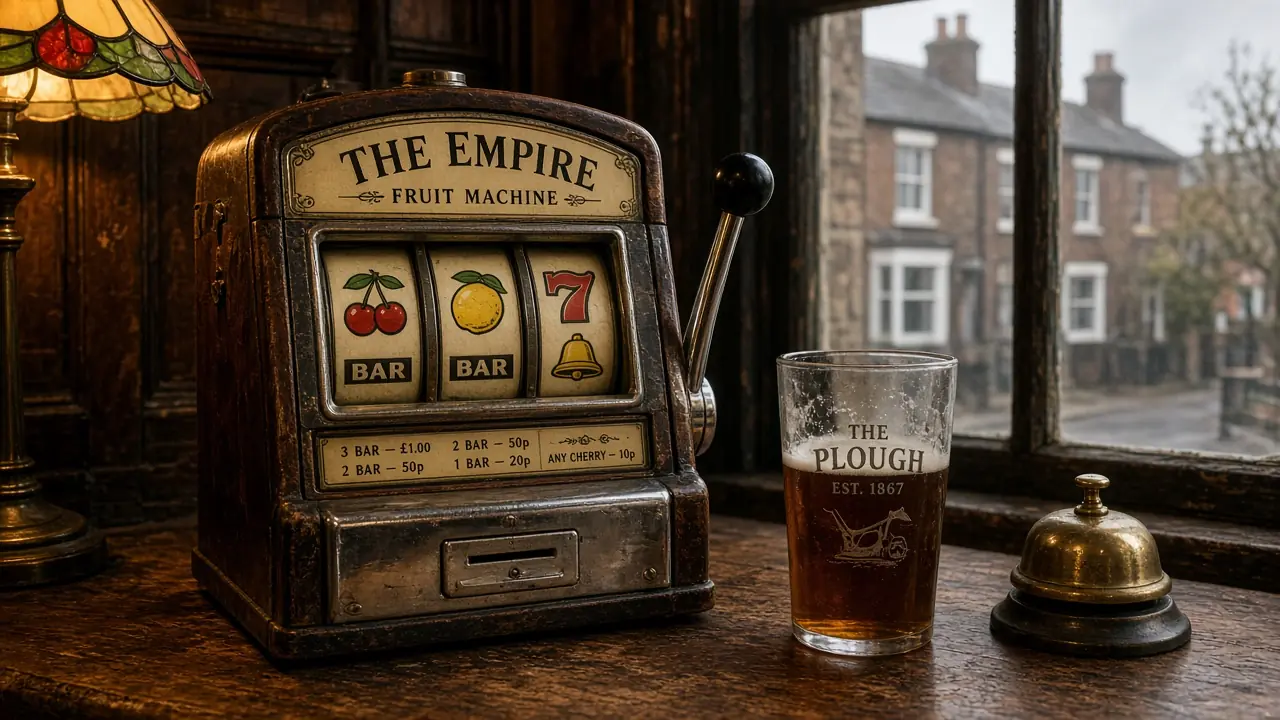
Table of Contents
- What Makes a Classic Slot Feel Classic?
- Classic Slot Machines: From Pub Fruit Machines to Online Play
- Choosing a Classic Slots Casino in the UK
- How Classic Slot Games Work
- How to Play a Classic Slot Online
- Real-Money Classic Slots: What UK Players Need to Check
- The UK Meaning of a Classic Slot
- Free Classic Slots Without a Cash Stake
- Why Classic Fruit Slots Still Look Familiar
- Reading Classic Slot Machine Symbols
What Makes a Classic Slot Feel Classic?
When someone says "classic slot," a picture forms almost instantly: three reels, a short row of symbols, a single lever metaphor carried over from mechanical days. That picture is roughly right, but it is worth pulling apart, because the phrase does a lot of work in this guide and elsewhere in the UK, where the legal term for the whole family of devices is actually "gaming machine." What follows is a working definition: what makes a slot classic, what makes it something else, and where the wording gets slippery.
Three reels, and what they imply
The most visible marker of a classic slot is the reel count. A classic is built on three reels, occasionally fewer or more, but the three-reel layout is the reference point. Three reels do more than set the visual shape of the game. They narrow the number of possible outcomes relative to the five-reel formats that dominate modern online catalogues, and that narrowing is part of the appeal. With fewer reels, the paytable is short enough to hold in your head. You can see a winning line land, and you can understand why it won.
This selection highlights UK-licensed operators to consider when exploring classic slots online in the UK in 2026. Use the listed bonus, payout speed and minimum deposit details as practical points of reference.
License: UKGC Operator Licence · Bonus: £200 welcome bonus · Payout speed: Within 48 hours · Min. deposit: £10 32Red holds a UKGC Operator Licence and offers a £200 welcome bonus. Its stated payout speed is within 48 hours, with a £10 minimum deposit.
License: UKGC Operator Licence · Bonus: £100 bonus · Payout speed: Within 24 hours · Min. deposit: £10 ProgressPlay Limited is a UKGC-licensed operator offering a £100 bonus. Payouts are stated as being completed within 24 hours, and the minimum deposit is £10.
License: UKGC Operator Licence · Bonus: £20 bonus · Payout speed: Within 48 hours · Min. deposit: £10 Silverbond Enterprises operates under a UKGC Operator Licence and provides a £20 bonus. Its stated payout speed is within 48 hours, with a £10 minimum deposit.
License: UKGC Operator Licence · Bonus: £100 bonus · Payout speed: Within 24 hours · Min. deposit: £10 Genesis Global Limited is UKGC-licensed and offers a £100 bonus. The listed payout speed is within 24 hours, and the minimum deposit is £10.
License: UKGC Operator Licence · Bonus: £100 bonus · Payout speed: Within 24 hours · Min. deposit: £10 LeoVegas holds a UKGC Operator Licence and offers a £100 bonus. It lists payouts within 24 hours and a £10 minimum deposit.
License: UKGC Operator Licence · Bonus: £50 bonus · Payout speed: Within 48 hours · Min. deposit: £10 Platinum Gaming Limited is a UKGC-licensed operator with a £50 bonus. Its stated payout speed is within 48 hours, and the minimum deposit is £10.
Three-reel classic slots also tend to carry a single payline, or at most a handful. This is the second defining feature: simplicity of structure. A modern video slot can spread payouts across dozens of paylines, layered bonus rounds, expanding symbols and cascading reels. A classic slot typically does one thing at a time. You set a stake, the reels stop, and the result is either a win or not. There is a certain honesty in that directness, which is why the format survives decades after the technology that first made it necessary has disappeared.
The features a classic leaves out
If the three-reel layout is the positive definition, the negative one is the absence of features. The classic slot format generally does without:
- Bonus rounds. No second-screen games, no pick-and-win interludes, no free spin ladders triggered by scattered symbols.
- Complex payline structures. No all-ways or cluster payout systems where wins form anywhere on the grid.
- Narrative theming. No characters, story arcs, or licensed media tie-ins built into the play itself.
- Layered animation. Reels spin and stop; they do not explode, cascade, or transform mid-round.
This is not a value judgement. Modern slot design exists because players wanted more happening per spin, and the industry obliged. But the classic format deliberately keeps the machine legible. When a guide describes a "classic slots game," it is pointing at this stripped-down structure, not at any particular title.
Speed, stake and session shape
A practical consequence of the simple structure is pace. With no bonus sequences to sit through and no long paytable to consult, a classic slot runs quickly. Spin follows spin without interruption. For some players that is the entire attraction: a short session with a clear rhythm, in and out. For others it is a reason to prefer something slower and more elaborate. Neither preference is wrong, but it is worth knowing which one you have before you choose a game, because the difference shapes the whole session.
The stake side matters too. In UK gambling law, stakes and prizes are not decorative details — they determine the legal category of the machine itself. Land-based gaming machines in Britain are sorted into categories according to the maximum stake and prize available, from unlimited-stake Category A machines at the top of the scale down to low-stake Category D machines. The familiar pub fruit machine sits at Category C, with a fixed £1 maximum stake and £100 maximum prize. Online, the picture is different again: a remote game hosted at an online casino is not a physical machine sited on licensed premises, so the category system that governs pubs and arcades does not map onto it one-to-one. That distinction matters, and later sections of this guide treat it properly. For now, the point to hold onto is that "classic" describes a format, while the law describes categories — and the two are not the same axis.
Terminology worth fixing early
Because this guide returns to these terms repeatedly, it helps to settle them now:
- Slot — the informal, universal word for a reel-based game of chance. In UK regulatory language the device is a “gaming machine.”
- Classic slot — a slot built in the older three-reel, few-or-no-frills mould.
- Three-reel slot — largely synonymous with classic in everyday usage, though the terms describe format and layout respectively.
- Fruit machine — the British colloquial name for the Category C machines found in pubs, with their own traditions of hold buttons and feature trails. Section 2 covers this lineage separately.
The overlap between these words is where most confusion starts. A fruit machine is a classic in spirit, but it is also a specific legal category with a specific permitted stake and prize. A three-reel online slot may look identical to one but live under entirely different rules. When this guide says "classic slots online," it means the format and the feeling, not a legal classification.
Why the definition holds
Nothing about the classic format is technologically necessary any more. Online reels are software, and software could render any arrangement a designer wanted. The three-reel game persists because it does a job the elaborate formats do not: it explains itself. You do not need a tutorial to know what a win looks like, or a manual to follow what the machine is doing. That self-explanatory quality — more than any specific symbol, sound or colour scheme — is what makes a classic slot feel classic, and it is the quality the rest of this guide assumes you are looking for.
Classic Slot Layout Three reels
Defining Feature Simplicity of structure
Typical Paylines Single or a handful
Classic Slot Machines: From Pub Fruit Machines to Online Play
When British players talk about a classic slot machine, most picture something specific: a cabinet standing against the wall of a pub, a coin slot, three reels behind a glass panel, and a set of fruit symbols that has barely changed in decades. That image is not just nostalgia — it is a legally defined piece of equipment. Understanding what a classic machine actually is, and how the online version relates to it, is worth doing properly, because the words people use casually ("fruit machine", "one-armed bandit") and the words used in law ("gaming machine") do not always describe the same thing.
The pub fruit machine, legally speaking
In the United Kingdom, the machine most people grew up with — the pub fruit machine — falls into a specific regulatory category. Category C machines are the classic British pub fruit machine, with a £1 maximum stake and a £100 maximum prize. They may be made available in pubs, licensed family entertainment centres, clubs, bingo premises, adult gaming centres, betting shops, tracks with pool betting, and casinos.
The pub placement has a particular legal basis. An alcohol-licensed pub is automatically entitled to up to two Category C or D machines if it notifies the local licensing authority. That is worth pausing on: the pub machine is not there by accident or by the landlord’s goodwill alone. It exists because legislation grants the entitlement, and because the machine sits inside a defined stake-and-prize band.
One rung below sits Category D — generally low-stake fruit machine style machines, coin pushers, or crane grabs. These are the seaside-arcade cousins of the pub machine: same visual language, lower stakes, and no age restriction. The step from D to C is, in practical terms, the step from a machine a child can play to one restricted to adults.
So the classic slot machine in the UK is not a vague cultural object. It is a cabinet with a defined category, a defined maximum stake, a defined maximum prize, and a defined set of premises where it may legally stand. Everything else — the hold buttons, the nudges, the trail features — is design layered on top of that regulatory skeleton.
What made the format classic
The classic machine earned its reputation through constraint, not despite it. Three reels, a single win line, a handful of symbols: everything on the glass was readable at a glance, and every outcome was visible as it happened. You watched the reels slow, you saw what landed, and the machine paid or it did not.
The British fruit machine added its own vocabulary on top of this. Holds that let you freeze a reel for the next spin. Nudges that let you push a reel down one position. Feature trails and cash ladders that broke up the base game. These mechanics were distinctive enough that "fruit machine" came to mean something different from the American "slot machine" — a machine with small decisions built in, rather than a pure press-and-pray.
Category C machine with a £1 maximum stake and £100 maximum prize.
Low-stake machines, such as coin pushers or crane grabs, with no age restriction.
A software recreation of the classic format, operating under different licensing rules.
That vocabulary has traveled online better than the cabinet did. The physical machine — the heavy box, the coin mechanism, the physical lever — has no online equivalent, and pretending otherwise would be dishonest. What survives online is the format: three reels, the familiar symbols, and often the hold and nudge mechanics that British players recognise on sight. An online classic slot is a software recreation of a format, not a machine you can touch.
From cabinet to screen: what changes and what does not
The move from pub floor to browser changes several things at once, and it helps to keep them separate.
What changes:
- The category system. The online versions of classic games are not sited under the machine categories described above in the same way a pub cabinet is; they sit within the licensing framework that governs online gambling in Great Britain, which is a separate matter from premises-based machine permits.
- The stake structure. A pub Category C machine operates inside a fixed stake and prize band. An online game is not bound to those pub-specific limits, so the numbers you see on screen will not match the pub experience.
- The physical interaction. Coins are replaced by account balances; the lever, if drawn at all, is decoration.
What does not change:
- The reel-based structure. Three reels and a payline remain the defining shape of the format.
- The symbol language. Fruit, bells, bars and sevens carry over almost unchanged, because the whole point of a classic game is recognisability.
- The relationship between stake and outcome. However the machine is delivered, the outcome is determined by the game, not by the player’s skill in timing or pressing.
The last point matters more than it might seem. A pub fruit machine with holds and nudges can feel like a game of small decisions, and some players carry that intuition online. But nudges and holds online are themselves outcomes the game grants, not inputs the player controls. The format looks interactive; the mathematics underneath is not.
Free versions and the demonstration question
A significant part of the interest in classic machines online is in playing them without money — free classic slot games exist in large numbers, and they serve a real purpose. A free version lets you learn an interface, see how holds and nudges are presented on screen, and understand a paytable before any money is involved. For a format whose whole identity is simplicity, the demonstration versions are unusually useful, because what you are learning is small enough to learn completely.
What a free version cannot tell you is how the game behaves with money at stake — that is a matter for regulated real-money play, and it is covered elsewhere in this guide. Equally, whether money is involved or not, the underlying thing you are looking at is the same: a software object that recreates the classic three-reel format.
The continuity worth remembering
The through-line from the pub cabinet to the online game is format, not hardware. British players did not abandon the classic machine; the machine moved. The fruit machine’s categories, its stake bands and its symbol set are the heritage that online classic slots draw on, and knowing the regulatory background of the pub machine makes it easier to see what an online version is genuinely recreating — and what it is simply borrowing for decoration. The cabinet in the corner of the pub is the ancestor; the online classic slot is the portrait, painted from memory but with the details mostly intact.
Choosing a Classic Slots Casino in the UK
Search for somewhere to play classic slots online and you will quickly meet a wall of pages promising the "best" casino. Most of them never explain what "best" is measured against. That matters, because the things that actually separate a sound offering from a weak one are verifiable: licence, machine category, testing, and the return information an operator is required to show you. None of that requires taking a review site’s word for anything — you can check all of it yourself.
This section does not rank casinos. What follows is a checklist you can apply to any operator you are considering, whether someone recommended it to you or you found it through a search.
Verify the Operator
- Confirm a valid UKGC remote operating licence
- Check the official UKGC register to match the domain
- Verify the machine categories offered
- Ensure games are certified by an independent test house
- Locate the displayed minimum average return information
Start with the licence, and verify it rather than assume it
Any operator providing online gambling services to consumers in Great Britain must hold a licence from the UK Gambling Commission (UKGC), regardless of where the company is based. That single requirement is the floor. An operator without a UKGC remote operating licence is not offering you a slightly worse deal; it is offering you one with none of the protections that come with the licence.
Do not settle for a licence badge on the homepage. The UKGC maintains a public register of current operating licences, and you can check it directly. Look up the operator by name or licence number, and confirm that the domain you are actually playing on is the domain listed in the register. The mismatch between a licensed brand and an unlicensed clone site is an old trick, and the register is the way to catch it. A page that talks about its licence but makes the register hard to trace is telling you something, if only by omission.
Understand which machines you are comparing
The word "casino" covers a lot of ground in the UK, and the gaming machine rules differ sharply by venue type. Gaming machines in the United Kingdom are categorised according to the maximum stake and prize available, with categories A, B1, B2, B3, B3A, B4, C, and D. Category B1 machines — the higher-stakes machines that exist in land-based terms — can only be made available in casinos, while category C machines, the classic British pub fruit machine format with a £1 maximum stake and £100 maximum prize, can appear in a much wider set of licensed premises, including pubs. An alcohol-licensed pub is automatically entitled to up to two category C or D machines if it notifies the local licensing authority.
What this means for online comparison is that "classic slots" is not one product regulated one way. A three-reel-style game at an online casino sits inside a licensing regime that also governs physical machines, and the category labels tell you what stake and prize limits attach to a machine type. An operator that can tell you plainly what it holds and what it offers is easier to assess than one that describes everything as "premium" or "popular" — words that carry no regulatory meaning at all.
Ask who tested the games
Machines in the higher categories must be tested by an independent test house before being made available, and all gaming machines must carry a Technical Standards Certificate before placement. The point of independent testing is simple: it is not the operator marking its own homework. When you compare casinos, look for references to the test house and the certification behind the games. Their absence is not proof of anything criminal, but it is a gap in the paper trail you are entitled to expect, and a well-run operator normally makes that trail easy to find.
Read the return information that must be displayed
For category B1 machines there is no minimum RTP requirement — but the minimum average return must be displayed to the player. That distinction is worth slowing down on. A displayed return figure is a floor of disclosure, not a promise of performance: it tells you what the machine is set to return over time, not what any session will return. When you are weighing up a casino, the question to ask is not "which one pays out more?" — no honest source can tell you that — but "which one shows me the numbers it is required to show?" An operator that displays the required return information for its machines is meeting a baseline. One that buries it, or answers questions about it with marketing copy, is asking you to play on trust that the regulation deliberately avoids requiring.
Essential Checklist
- Verify the operator holds a valid UKGC licence via the public register.
- Check for independent testing and technical certification of the games.
- Ensure the operator clearly displays the required minimum average return information.
Free play, download, and the questions a comparison page skips
Many people arrive at classic slots through free versions, often looking to play without downloading anything. That is a reasonable way to see a game’s format before money is involved. But a comparison built purely around free access tells you very little about the conditions that apply when real money enters the picture. Free play is available almost everywhere; licence, machine category, testing, and displayed return information are not equivalent everywhere — they are the actual differentiators. A site that ranks casinos mainly on how easy it is to start a demo has compared the part that was never in question.
What a good comparison looks like in practice
If you are building your own shortlist, run each candidate through the same four questions:
- Licence. Is there a UKGC remote operating licence, and does the register entry match this domain?
- Machines. What machine categories and game types does the operator actually offer, and does it say so plainly?
- Testing. Are the games certified by an independent test house, with the certificate traceable?
- Return information. Is the required return information displayed where you can find it, or do you have to ask?
The uncomfortable part of this checklist is that none of it names a winner. It cannot: which casino suits you depends on the games you want, the stakes you play at, and how much friction you tolerate in payment and verification. What the checklist does is eliminate operators that fail the basics, which is the part of "best" that is actually objective. Everything after that is preference — and preference is a decision you are better equipped to make once the ineligible options are off the table.
How Classic Slot Games Work
A classic slot game looks simple — a few spinning reels, a handful of symbols, one decision about how much to stake. Underneath that surface sits a fixed structure, and once you understand it, every reel-based game becomes readable. This section explains that structure: what the reels actually do, how paylines are formed, what determines an outcome, and — the part most guides skip — where a "game" ends and a regulated gaming machine begins.

The Reel Structure
A classic slot is built around three reels, sometimes five. Each reel is a vertical strip of symbol positions, and each spin stops every reel on one symbol at random. The row of symbols that lands across the centre of the screen is what you read; older machines called it the payline, and the word has stuck even though online versions often show several.
The key point is that the reels are a presentation layer. What you see spinning is a visual account of an outcome that has already been determined by the game’s internal logic. The reels spin, slow down and stop on the symbols the software selected — the animation is theatre, not mechanics. This is why a near miss (two matching symbols and a third that just fails) carries no information about how close you actually were. You were never close or far; there was a single outcome and it was either a win or it wasn’t.
Paylines and Winning Combinations
A payline is the specific path across the reels that a winning combination must follow. On the simplest three-reel games there is one payline, straight across the middle. Others add lines across the top and bottom rows, or diagonal paths, so that the same visible result can be judged against several patterns at once.
Paytables
The paytable is the only authority on what symbol combinations pay and how they relate to your stake.
Each game publishes a paytable — the list of which symbol combinations pay, and what each pays relative to your stake. Three identical symbols on an active payline is the classic winning shape, but the paytable is the only authority on what counts. Some games pay for two matching symbols from the left reel; some treat certain symbols as wild and stand them in for others. None of that is guessable from the screen, which is why reading the paytable before you play is not superstition but basic literacy.
How an Outcome Is Determined
Every spin’s outcome is produced by a random number generator — software that produces values with no pattern and no memory. When you press spin, the generator’s value is mapped onto the symbol positions for each reel, the reels display that result, and the paytable is applied. Two consequences follow:
- Previous spins have no influence on the next one. A machine that hasn’t paid for an hour is not “due” anything.
- There is no technique that changes the outcome. Stakes, timing, button-pressing style — none of it reaches the random number generator.
In the UK, this determinism has an interesting regulatory cousin. Category B3A gaming machines — a niche category restricted to members’ clubs and miners’ welfare institutes — don’t generate their outcome in the conventional way at all. The outcome of a B3A machine is predetermined by the virtual lottery ticket selected when the game starts. The reel display is a skin over a lottery result. It’s an edge case, but it illustrates the point cleanly: what you see on the reels is always a rendering of something decided elsewhere.
A Game Versus a Gaming Machine
This is the distinction that matters in the UK, and it’s where casual language does the most damage. "Slot machine" and "fruit machine" are everyday words. In regulatory terms, what you’re describing is a gaming machine, and gaming machines are classified by law into categories — A, B1, B2, B3, B3A, B4, C and D — according to the maximum stake and prize available.
The categories decide where a machine may legally appear. Category B3 machines, for instance, may be made available in casinos, betting shops, tracks with pool betting, bingo premises, and adult gaming centres — and nowhere else. Category B4 machines can appear in clubs, bingo premises, and adult gaming centres. Category C machines, the familiar pub fruit machine, may be made available in pubs, licensed family entertainment centres, clubs, bingo premises, adult gaming centres, betting shops, tracks with pool betting, and casinos. The rules also cut the other way: a machine that plays bingo as a prize game can still be a category D gaming machine, because the machine, not the game’s appearance, is what’s classified.

An online classic slot adds one more layer. The game itself — the reels, the paytable, the random number generator — is software that could run on a demonstration site with no money involved, or inside a licensed casino’s platform for real stakes. The game is the same in both places; the regulatory status is not. A real-money version sits inside a licensed gambling operation subject to the Gambling Act 2005 and the Gambling Commission’s licence conditions. A free version is an interface with nothing at stake.
Where Category B3A Fits the Picture
For completeness: category B3A gaming machines have a maximum stake of £2 and a maximum prize of £500, and only one may be sited, only in a members’ club or miners’ welfare institute. They’re a reminder that the classic slot format — reels, symbols, a single stake and a prize — is a shape the law has filled with several different mechanisms. The reels tell you what a game looks like. The category tells you what it legally is.
What This Means When You Sit Down
The framework reduces to four questions. How many reels and paylines does the game use? What does the paytable say a winning combination is? Is the outcome generated per spin by random software, or — as with B3A — predetermined in another way? And is this session a free game or a regulated gaming machine? Answer those and you know exactly what you’re playing, before the first reel stops.
Starting a Session
Check the list of symbols and their values to understand how wins are calculated.
Use the controls to choose a total bet per spin that fits your budget.
Watch the reels stop and check the result against the paytable.
How to Play a Classic Slot Online
Once you have picked a site and found a classic slot in its games list, the process of actually starting a session is short. Here is what happens, step by step, and what to look at before you press anything.
Opening the game
After loading, a classic slot presents its reels in the centre of the screen — usually three of them, with a single row or a handful of paylines. Around the reels you will find the control panel. The exact layout varies from game to game, but the same elements appear almost everywhere:
- Stake controls — buttons, often marked with plus and minus signs, that set how much each spin costs.
- Spin button — the largest control on the screen, usually below or beside the reels.
- Paytable — a link or “i” icon that opens the list of symbols and what each combination pays.
- Balance display — shows your remaining funds, or your demo balance if you are in free play.
- Menu or settings — where sound, animation speed, and sometimes autoplay options live.
Take a minute on the paytable before spinning. It tells you which symbols pay, whether any symbol has a special function, and how a winning line is read — left to right, or in another direction the game defines.
Setting your stake
Use the stake controls to choose a bet per spin you are comfortable with. Watch for the difference between "coin value" and "total bet" on some games: the figure that matters is the total, because that is what leaves your balance on each spin. If the controls show a range you did not expect, check the paytable again — some classic games designed around a specific machine format limit stakes in ways the cabinet version did.
Spinning and reading the result
Press spin and the reels stop on a combination. If it matches a line described in the paytable, the game credits the win to your balance and usually highlights the winning symbols. If not, the round simply ends and the next spin is ready. Classic slots rarely have complicated animations holding up the result, which is part of their appeal: the outcome is visible within seconds.
One curiosity worth knowing: some machines you might encounter in UK venues — category D gaming machines, the low-stake kind — are designed or adapted to play bingo as a prize game. So a cabinet that looks like a classic reel machine is not always running a reel game underneath. Online, the game information screen will tell you what you are actually playing; read it rather than trusting the cabinet-style artwork.
Before you continue
Two habits worth forming early: check the displayed return information before a session, and set your stake for the whole session rather than adjusting upward after losses. The game will not remind you of either — the display gives you the facts, and using them is your job.
Real-Money Classic Slots: What UK Players Need to Check
Demonstration mode tells you what a game looks like. It tells you very little about the conditions attached to real-money play. Before you stake cash on classic slots in the UK, there are a few things worth checking that have nothing to do with the game itself.
Is the operator licensed?
Any site offering online gambling to consumers in Great Britain must hold a licence from the UK Gambling Commission, wherever the business is actually based. You can confirm this yourself: the Commission maintains a public register of operating licences, and you can check the operator’s name or licence number against it, including the domain the licence covers. If the site you are on is not in that register, the licence does not exist.
What kind of machine are you actually playing?
Online, the machine-category rules you meet in pubs and casinos do not map neatly onto a browser window, but the categories still shape what a legitimate product looks like. On the regulated side, gaming machines are classified by maximum stake and prize. Category B1, available only in casinos, carries a maximum stake of £5 and a maximum prize of £10,000, with a linked progressive jackpot of up to £20,000 on a premises basis. Machines in categories B1, B2, B3 and B3A must be tested by an independent test house, and machines in these categories must carry a Technical Standards Certificate before placement. A supplier that cannot point to testing and certification is a supplier to walk away from.
Verify Licensing
Never play on a site that does not appear in the UK Gambling Commission’s public register of licensed operators.
Return information
For B1 machines there is no minimum RTP requirement, but the minimum average return must be displayed to the player. Where you see a return figure displayed, treat it as something to verify rather than a marketing claim — the displayed values for B1, B2, B3 and B3A categories are verified by the manufacturer or an accredited test house.
Responsible access controls
Real-money play should come with tools that let you set limits, and with access to self-exclusion through GamStop, plus support services such as GamCare and GambleAware. These are not decorative features. Their presence is one of the practical differences between a regulated operator and everything else.
One honest gap: no official source publishes which software providers are associated with particular machine types in the UK, so provider-level claims cannot be verified and are not made here.
The UK Meaning of a Classic Slot
In Britain, "classic slot" carries two distinct meanings, and mixing them up causes most of the confusion you will meet online.
The first meaning is physical and familiar. When someone in the UK pictures a classic machine, they picture the pub fruit machine — the cabinet in the corner of the bar with cherries, lemons and a nudge button. In regulatory terms this is a Category C gaming machine, defined by its £1 maximum stake and £100 maximum prize. It is the format most British players grew up with, and an alcohol-licensed pub is automatically entitled to up to two Category C or D machines once it has notified the local licensing authority. That entitlement explains why the machine became a fixture of pub life rather than a casino curiosity.
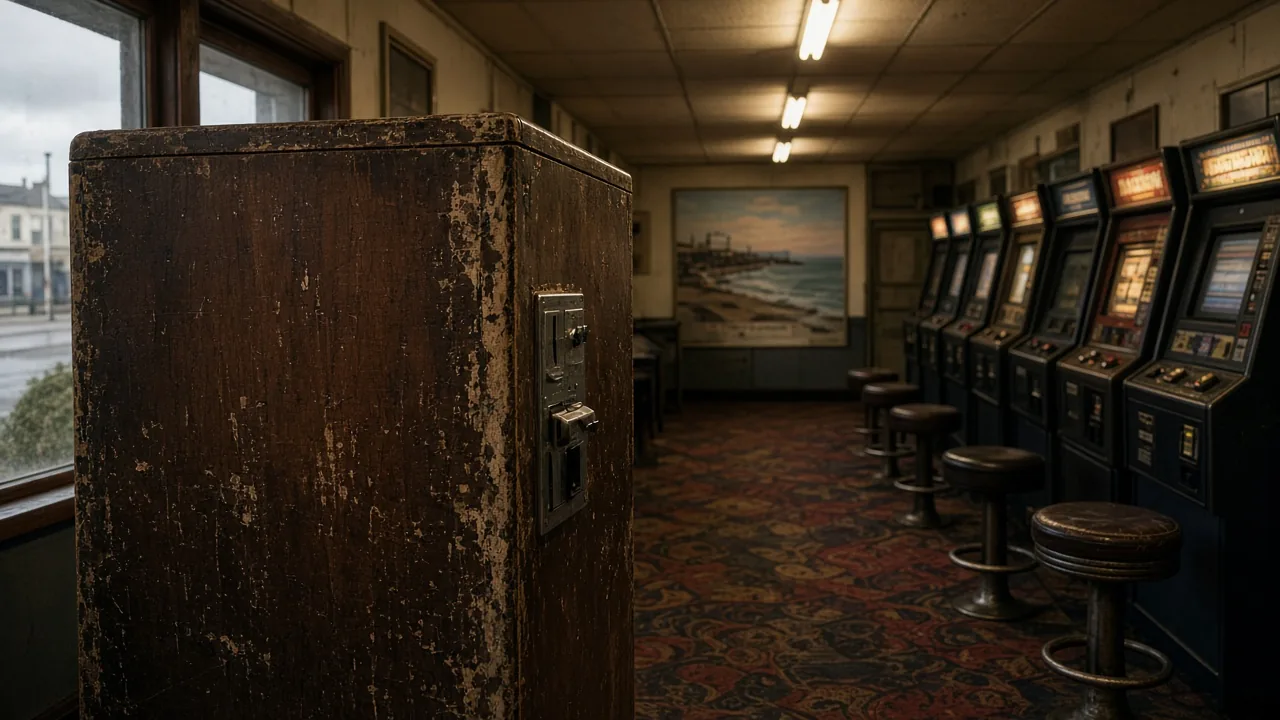
The second meaning is the online one. On a website, "classic" usually describes a game’s design — three reels, a small grid, a short symbol set — rather than any legal category. The online category stretches well beyond the fruit-machine format it grew out of, and the word gets applied loosely to anything that looks older or simpler than a feature-heavy modern release.
The two meanings share a look, not a rulebook. A pub machine is defined by stake and prize limits set in regulation; an online game described as classic is defined by nothing more binding than its presentation. No single product or brand stands for the whole category, and any site suggesting otherwise is selling an image rather than a fact.
So when you see the phrase used in a UK context, ask which sense is intended: the regulated cabinet on licensed premises, or the design language borrowed from it. The answer changes what you should check before you play.
Free Classic Slots Without a Cash Stake
Before putting money into a classic slot, there is a way to learn the format that costs nothing: demonstration play. Most online casinos offering games to players in Great Britain make a free version of a slot available alongside the real-money version, and the free mode runs on the same software. That matters, because the point of free play is not entertainment for its own sake — it is a rehearsal.
What free play is genuinely useful for:
- Learning the interface. Where the stake controls sit, how the paytable opens, what happens when you spin — these are things you would otherwise work out with money on the line.
- Understanding the format. A classic slot is built around a small number of reels and a paytable you can actually read. Free play lets you check how wins land before any cash is involved.
- Testing the pace. Each spin resolves the same way whether cash is staked or not, so you can see whether the rhythm of the game suits you.
What free play does not do is prepare you for the money side. It cannot tell you how a casino handles deposits, what controls it offers on spending, or how its licence stands. Those are questions for the real-money stage, and they are covered separately in this guide.
One point worth knowing about the physical world: Category D machines — the low-stake, fruit-machine style units found in seaside arcades and travelling fairs — have no age restriction, so children can legally play them. Online play is different: the general legal gambling age in the UK is 18, and licensed operators apply that to any real-money game. Free modes sit somewhere in between, and the casino hosting them decides the terms.
Treat a free classic slot as a map, not the territory. It shows you the layout — the reels, the symbols, the controls. The journey with money attached is a separate decision, and a separate checklist.
Is there an age limit for classic slots?
While Category D machines in physical venues have no age restriction, online play in the UK is restricted to those 18 or older.
Can I play without risking money?
Yes, most licensed operators provide free demonstration versions that allow you to learn the interface and mechanics.
Why Classic Fruit Slots Still Look Familiar
Walk into any British pub with a machine in the corner and you already know what a classic fruit slot looks like, even if you have never played one. The format has been part of the country’s visual furniture for decades, and online versions borrow from it deliberately.
The look is built from a short list of ingredients: three reels in a box, fruit symbols, a single win line, and a layout simple enough to read from across the room. Cherries, lemons, melons and plums, alongside bells, bars and sevens, come from the earliest days of mechanical machines, when the symbols were partly a way around restrictions on paying out cash. The fruit stayed long after the workarounds disappeared, because players had already learned to read it at a glance.
That heritage has a regulatory echo worth knowing. The classic British pub fruit machine — Category C under the Gambling Act 2005 framework, with a £1 maximum stake and £100 maximum prize — is the machine most people picture when they hear the word. Category D machines, the low-stake fruit machine style machines found in wider settings alongside coin pushers and crane grabs, extend the same visual family even further. So the imagery is not just nostalgia; it is the standard appearance of machines most Britons have physically encountered.
Online games reproduce this presentation because recognition does a job that tutorials cannot. A three-reel layout with familiar symbols tells you what kind of game you are looking at before you have read a word of the rules. Designers keep the cues — the fruit, the bell, the bar, the mechanical framing — because they compress a great deal of meaning into very little space.
The familiarity cuts both ways, of course: a fruit on the reel says nothing about how the game actually behaves. Appearance is heritage; the rules underneath are a separate matter.

Reading Classic Slot Machine Symbols
A classic slot screen carries a small vocabulary, and once you can read it, most of the apparent mystery disappears.
The standard reel symbols. The traditional reel-based type uses a short cast of characters: fruit such as cherries, lemons, plums and melons, the bell, the bar, and the lucky seven. Each has a specific job. Lower-value combinations tend to be built from fruit, while bars and sevens sit at the top of the pay table. The pay table — usually a small link or button on the interface — tells you exactly what each combination is worth, and it is the only authority on that question. Nothing on the reel face itself carries a stated value.
Visual weight is not value. A flashing symbol or an animated one draws your eye, but appearance carries no rules. The symbol that looks the most exciting is not necessarily the one that pays the most, and a design near-miss — two matching symbols on the first reels and a gap on the third — is a presentation choice, not an indication that a win was somehow close.
Special markers. Many reel-based games mark certain symbols as wild or as triggering a bonus feature. These markers are explained in the pay table, not inferred from the artwork. If a symbol’s role is not stated there, it has none beyond its listed combinations.
One caution that matters. On a Category B3A gaming machine, the outcome is predetermined by the virtual lottery ticket selected when the game starts — the reels and their symbols are a display of a result already fixed, not a mechanism producing it. Reading the symbols fluently is useful; treating them as causes would be a misreading. The same principle is worth carrying into any classic-style game: symbols report outcomes, they do not create them.
Created by the ”Casinouk Game Info” editorial team.