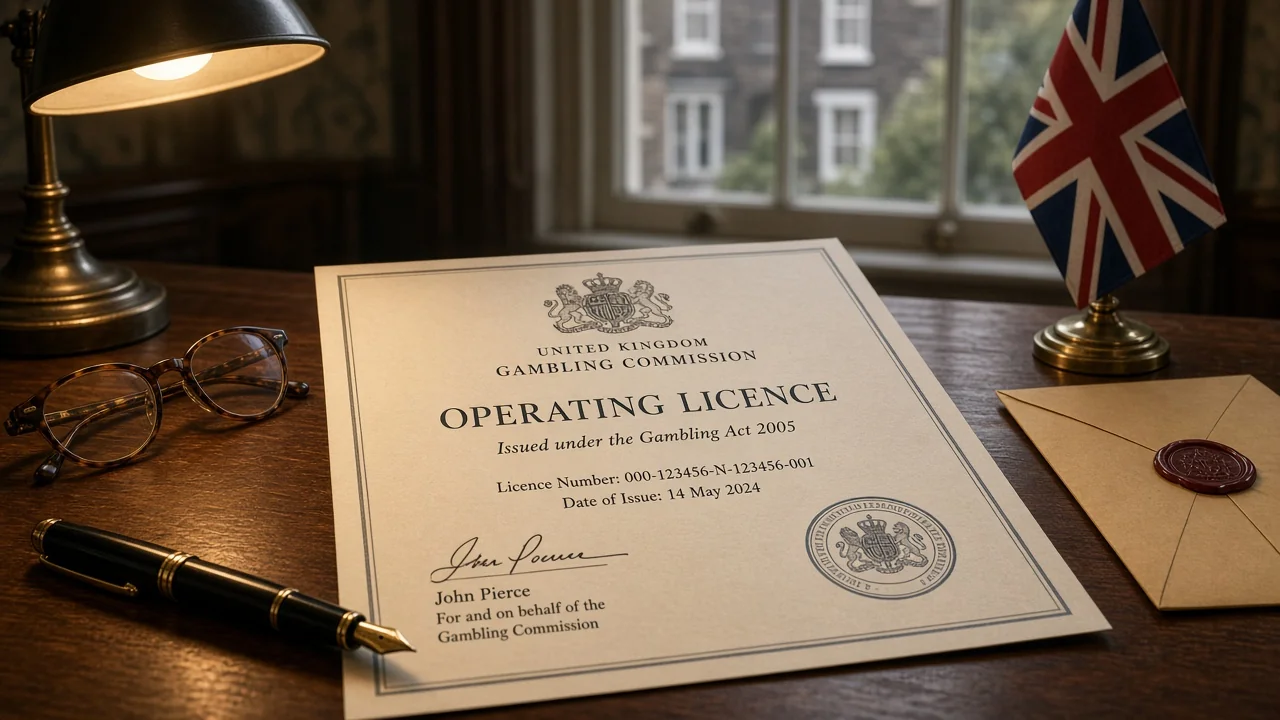
Casinos That Bypass GamStop: UK Guide
 Available in GB
A clear guide to licensing, access, features, reviews and the protection trade-offs for UK players.

Table of Contents
- What Non-GamStop Casinos Actually Are in 2026
- How Online Casinos Outside GamStop Work for UK Players
- Non-GamStop Casino Features You Will Not Find at UKGC Sites
- Top Non-GamStop Casino Sites: What a Shortlist Should Prove
- Curaçao, European and Other International Licences Compared
- What “Outside GamStop” Means for Site Access and Protection
- Which Casinos Accept UK Players Outside GamStop?
- Non-GamStop Casino Reviews for UK Players: What to Check
- The Offshore Non-GamStop Casino Trade-Off
- How to Read a Non-GamStop Casino Review in 2026
What Non-GamStop Casinos Actually Are in 2026
The phrase "casinos that bypass GamStop" gets used loosely, and the looseness causes real confusion. Some people hear it as a trick — a loophole that lets excluded players sneak back into UK sites. Others assume anything outside GamStop must be illegal. Both readings are wrong, and the difference matters if you are trying to understand what you are actually signing up to when you register somewhere new. So let’s start with what the term means, precisely, before anything else.
The definition, stated plainly
A non-GamStop casino is an online gambling site licensed outside the jurisdiction of the UK Gambling Commission (UKGC) and, as a result, not connected to the GamStop self-exclusion database.
That is the whole definition. Nothing about the games, the bonuses, or the payment methods is baked into it. What defines the category is one structural fact: these operators hold their licences elsewhere, and only UKGC-licensed operators are required to integrate with GamStop.
This is not a small technicality or a compliance oversight on the operator’s part. It is the direct consequence of how the UK regulatory system is built. GamStop is not a universal register that all gambling sites in the world plug into. It is a national scheme, and its reach ends where the UKGC’s licence ends.
What GamStop actually does — and does not do
To see why "bypassing GamStop" is really just "being outside its scope", it helps to understand what the scheme covers.
When you register with GamStop, you choose a self-exclusion period: 6 months, 1 year, or 5 years. Once it is active, GamStop blocks you from all UKGC-licensed casinos for the duration you selected. There is no early exit. The exclusion cannot be reversed or shortened before the period expires — not by calling GamStop, not by contacting an operator, not by changing your mind the next morning. That irreversibility is deliberate: the scheme exists precisely for the moments when a person’s resolve fails.
What GamStop does not do is reach beyond the UKGC system. UK residents who self-exclude through GamStop are blocked from UKGC-licensed operators, full stop. The restriction does not extend to offshore gambling sites, because offshore sites have no obligation to check the GamStop register at all. A casino licensed in another jurisdiction is no more connected to GamStop than a shop in another country is connected to your local council’s banned-shoppers list.

So when a site is described as one that "bypasses GamStop", nothing active is happening. The site is not defeating the scheme or exploiting a weakness in it. It simply sits outside the wall GamStop builds — which is exactly why a self-excluded player can still open an account there, and exactly why that fact deserves careful thought before acting on it.
Why the licensing difference exists
The requirement to integrate with GamStop is written into the UKGC’s Licence Conditions and Codes of Practice — specifically condition 3.5.5. Every operator holding a UKGC licence must comply. The logic is straightforward: if the regulator grants you permission to take bets from British consumers, you accept the consumer-safety infrastructure that comes with it, and GamStop is a central pillar of that infrastructure.
An operator licensed in another jurisdiction has made no such undertaking. Its regulator imposes its own conditions — on fairness, on anti-money-laundering, on responsible gambling — but integration with a British self-exclusion register is not among them, and could not sensibly be. No national scheme can compel businesses that fall outside the national regulator’s authority.
The result is a two-tier landscape. UKGC-licensed sites sit inside a system with mandatory self-exclusion, mandatory dispute resolution, and a regulator with enforcement powers over them. Non-GamStop casinos sit outside it, under whatever oversight their own licensing jurisdiction provides — which varies enormously and is examined in detail later in this article. What matters at this stage is only the structural point: the categories differ because their licences differ, not because one group of operators is more or less careful than the other.
Is any of this illegal for the player?
This is the question most people actually want answered, and the answer is clear.
Playing at non-GamStop casinos is not illegal for UK players. UK law does not criminalise players for using offshore gambling sites. You are not breaking the law, and you are not exposed to any penalty, by registering with a site that is not on GamStop. The legal position of the operators — whether they may advertise to British consumers, or in some jurisdictions whether they may serve them at all — is a separate matter, and a more complicated one, covered further on. But the player’s side of it is settled: no offence is committed by the person placing the bets.
One caveat belongs here, because definitions without caveats mislead. "Not illegal" and "fully protected" are not the same thing, and a site that falls outside GamStop also falls outside the broader UKGC consumer-protection framework. Knowing that the door is legal to walk through is not the same as knowing what is on the other side.
Regulatory Gap
While playing at non-GamStop casinos is legal, you operate entirely outside the UKGC consumer-protection framework and have no access to mandatory UK safeguards.
Two distinctions worth carrying forward
Before moving on, fix two things in mind, because the rest of this article builds on them.
First: “non-GamStop” is a statement about licensing, not quality. It tells you the site is outside the UKGC system; it tells you nothing else. Some non-GamStop casinos are run by experienced operators under respectable international licences. Others claim the label while holding no legitimate licence whatsoever. The category contains both, and the later sections on licences and on reading reviews exist because the label alone cannot tell them apart.
Second: GamStop works exactly as designed within its own system. A person excluded through GamStop is genuinely, verifiably blocked from every UKGC-licensed casino until their period expires. What GamStop cannot do is protect someone from themselves everywhere else. The scheme was built to cover a defined perimeter, and the perimeter is the UKGC’s jurisdiction — no further.
With those definitions in place, the next question is practical: how do these sites actually work for UK players, from registration to withdrawal? That is where this article goes next.
How Online Casinos Outside GamStop Work for UK Players
GamStop is a national self-exclusion scheme, and its reach stops at the border of the UKGC licensing system. When you register with GamStop, you choose a period of 6 months, 1 year, or 5 years. For that entire period, every UKGC-licensed operator is required to block your account, and the exclusion cannot be reversed early, no matter how you feel about it three weeks in.
What GamStop does not do is reach operators licensed elsewhere. The restriction applies to the network of UKGC licence holders, because those operators are obliged to integrate with the GamStop database under licence condition 3.5.5. A casino licensed in Curaçao, Malta, Gibraltar, or elsewhere is under no such obligation. Its systems never query the GamStop register, so an excluded player’s details simply do not appear anywhere in its onboarding process.
This is the gap, and it explains why someone in the middle of a self-exclusion period can still encounter online casinos that accept their registration without a second look.

The Operating Model
Non-GamStop casinos are not hidden or clandestine. They run on the same software, the same game providers, and often the same payment processors as their UKGC counterparts. Evolution Gaming, Microgaming, NetEnt, and Pragmatic Play all supply titles to offshore licence holders. What separates them from a UKGC site is the regulatory wrapper around the business, not the product inside it.
That wrapper matters more than most players assume. A UKGC licence brings with it a long list of obligations: GamStop integration, segregated player funds, mandatory alternative dispute resolution, responsible gambling tools, and compliance audits. A Curaçao licence — which is common among non-GamStop casinos — carries a lighter set of requirements and generally provides less player protection than an MGA or Gibraltar licence. Some sites claiming to be non-GamStop casinos hold no legitimate licence at all. From the player’s side, the games look identical. The difference only becomes visible when something goes wrong, and by then it is too late to check.
Is It Legal for You to Play?
This is where most of the confusion lives, so it is worth being precise.
For the player, the answer is straightforward: playing at non-GamStop casinos is not illegal for UK players. UK law does not criminalise individuals for using offshore gambling sites. You will not be committing an offence by registering, depositing, or withdrawing at a site licensed outside Great Britain.
The legal weight falls on the other side of the transaction. Operators providing online gambling services to consumers in Great Britain must hold a UKGC licence regardless of where they are based, and operating without one is a criminal offence. Non-GamStop operators cannot actively market their services to British consumers. Offshore sites that welcome UK players do so quietly — through the player finding them, rather than the operator chasing the player. That distinction is not academic. It defines what you can expect from these sites: no UK-facing advertising, no UK consumer-protection framework, and no recourse through any UK body if a dispute arises.
Mandatory GamStop integration, strict deposit/spin limits, and access to UK-approved dispute resolution.
Offshore licensing, no GamStop connection, and freedom from UK-specific product restrictions.
So the honest framing is this: legal access, yes; regulatory protection, no. You are allowed through the door, but you arrive without the safety net a UKGC site is required to provide.
Why These Sites Exist and Keep Existing
The demand side is obvious — a large self-excluded population, combined with UK restrictions that tighten each year. The supply side is a business model built on serving players the UKGC system either excludes or limits.
The economics are increasingly favourable to that model. One industry commentary on UK gambling taxation reports that Remote Gaming Duty is set to rise from 21% to 40% from 1 April 2026 — a near-doubling of the tax on UK-licensed operators’ gross gambling yield. Every point of that increase is pressure on UKGC sites’ margins, and it is a cost their offshore competitors do not carry. Add the UK’s product restrictions — the £5 spin cap on online slots for players over 25, £2 for 18–24-year-olds, the ban on credit cards since 14 April 2020, the prohibition on autoplay and turbo features — and the offshore pitch writes itself: fewer rules, faster games, more payment options, bigger bonuses.
The product gap is real, too. One operator review reports game libraries exceeding 4,000 titles at non-GamStop casinos, including games not available at UKGC sites, since UK-specific rules on spin speed and feature design push certain titles out of the regulated market entirely. Whether that variety is worth giving up GamStop coverage and ADR access is a separate question, and a personal one.

What This Means When You Are Excluded
If you self-excluded through GamStop, the scheme is doing exactly what it was designed to do within its jurisdiction. Every UKGC-licensed site is closed to you. The fact that offshore sites remain open is not a malfunction of GamStop — it is the boundary of what a national register can enforce against operators it does not licence.
It is also the point worth sitting with before registering anywhere. Players who excluded themselves for gambling-related reasons will find that an online casino outside GamStop offers no structural barrier at all, and many of these sites do not provide the responsible gambling tools — deposit limits, Gamban-style blocking, session reminders — that a UKGC site is required to offer. The friction that was deliberately built into the UK system does not follow you offshore. That is, depending on why you excluded, either the appeal or the hazard — and it is usually both at once.
For those who want a hard barrier rather than a register with boundaries, Gamban and BetBlocker block gambling sites at the device level, independent of any licence, and BeGambleAware and GamCare list routes to free, confidential support.
The next section covers the specific features where non-GamStop casinos differ from UKGC sites in practice — game access, payments, limits, and bonuses — so you can see the full picture before weighing any individual site.
Non-GamStop Casino Features You Will Not Find at UKGC Sites
When a UK player opens a non-GamStop casino for the first time, the differences are not immediately obvious. The lobbies look familiar, the games carry recognisable studio names, and the registration forms ask similar questions. The real distinctions sit in the operational details: what you can deposit with, how much you can deposit, which games are on offer, and how bonuses are structured. These differences exist because the sites answer to a different regulator — or in some cases, to no regulator at all — and each of them cuts both ways.
Broader Game Access
UKGC-licensed sites operate under strict product rules designed to slow play and reduce harm. Turbo spins, slam-stop features, and autoplay functions are all prohibited at UKGC sites, and spins cannot run faster than five seconds. Audio or visual celebrations for a return less than or equal to the stake are banned too. Non-GamStop casinos are not bound by any of these requirements, so the versions of games you encounter there may behave differently from their UK counterparts — faster, louder, and without the forced pauses.
Game Speed
Non-GamStop casinos are not bound by UK rules prohibiting turbo spins, slam-stop features, or autoplay functions.
The sheer volume can also differ. One industry review reports certain non-GamStop platforms offering access to over 4,000 games, including titles that never appear at UKGC sites because studios either cannot or will not adapt them to UK compliance rules. For players used to a mid-sized UK casino, the larger offshore libraries can feel like a different product category altogether.
Whether that difference is a benefit depends on why the UK rules exist in the first place. They are not arbitrary. The slower spin speeds and autoplay bans were introduced specifically to reduce the pace at which players lose money. A library without them is bigger, not safer.
Payment Options: Cards and Crypto
The most visible practical difference is at the cashier. UKGC-licensed operators have been prohibited from accepting credit cards for online gambling since 14 April 2020. Non-GamStop casinos, sitting outside UKGC jurisdiction, may still accept credit cards — which means a UK player can gamble on borrowed money at a site where no UK safeguard prevents it.
Cryptocurrency is the other major gap. Non-GamStop casinos may accept Bitcoin, Ethereum, Litecoin, and other cryptocurrencies, payment methods that UKGC sites do not offer. For players who value transaction speed and privacy, this is often the single feature that draws them offshore. Alongside crypto, these sites commonly support e-wallets such as Skrill and Neteller, as well as voucher payment methods. In terms of timing, e-wallet withdrawals are typically processed within 24–48 hours, cryptocurrency transactions are near-instant, while card and bank transfer withdrawals typically take one to five business days.

Deposit and Withdrawal Limits
UKGC regulation puts a ceiling on what individual players can comfortably spend before checks kick in. Financial vulnerability checks initially applied to players depositing more than £500 per month from August 2024, with the threshold scheduled to fall to £150 per month by February 2025. UKGC operators must conduct a financial risk assessment at a £150 net-deposit threshold over a rolling 30-day period. In addition, the UK online slots stake cap limits bets to £5 per game cycle for players aged 25 and over, and £2 for players aged 18 to 24.
Non-GamStop casinos operate without any of these thresholds. Minimum deposits at non-GamStop casinos typically range from £5 to £20 according to operator-published terms, which is broadly comparable to UKGC sites. The upper end is where they diverge: one affiliate casino review notes that some non-GamStop casinos permit single deposits of £5,000 or more, and that weekly or monthly withdrawal caps commonly range from £5,000 to £50,000. High-stakes players who find UK limits restrictive see this as the decisive advantage. It is also the point where the absence of friction stops being a convenience and becomes a risk factor, because nothing in the system pauses a losing streak to ask whether the money is affordable.
Deposit and Withdrawal Limits
Unlike UKGC sites with strict financial vulnerability checks and stake caps, non-GamStop casinos often permit much higher single deposits and significantly larger weekly or monthly withdrawal ceilings.
Bonus Structures
Bonus offers are where offshore marketing is most aggressive. A single affiliate casino review lists welcome bonuses at non-GamStop casinos reaching up to 200% with 50–300 free spins attached — headline figures that UKGC sites rarely match, partly because advertising standards constrain what they can promote and how. Offshore welcome packages can range further still, with wagering requirements commonly around 40 to 45 times the deposit plus bonus, according to the same type of affiliate casino review coverage.
That wagering figure deserves attention. A large headline percentage is meaningless without knowing what you must do to withdraw anything. Two structural terms matter more than the size of the offer:
- Sticky bonus. The bonus is removed from your balance when you withdraw real funds before completing wagering. You can cash out winnings, but the bonus itself never converts to withdrawable cash.
- Non-sticky bonus. You can withdraw your own deposit at any time, but doing so forfeits the bonus and any winnings tied to it.
These mechanics exist at UKGC sites too, but UK rules at least require terms to be displayed prominently. Offshore, the terms are often buried, and there is no UK body to complain to when a bonus is voided on a technicality. Non-GamStop casinos are not required to provide access to approved alternative dispute resolution services, so a disputed bonus is settled on the operator’s terms or not at all.
What These Features Have in Common
Look across game access, payments, limits, and bonuses, and a pattern emerges: every feature that distinguishes a non-GamStop casino from a UKGC site is the removal of a restriction. Faster games, credit card deposits, crypto, unlimited stakes, larger bonuses — none of these are new products. They are UK safeguards, switched off.
That framing matters for the title question. The features you "will not find" at UKGC sites are missing for reasons, and those reasons are player protection: mandatory GamStop integration, responsible gambling measures, segregated player funds, and compliance audits. Non-GamStop casinos are not bound by any of these requirements, and some may not offer responsible gambling tools at all. A site that lets you deposit £5,000 in a single transaction with a credit card is not offering you freedom in the abstract — it is offering you the absence of a brake that was installed for a reason.
The features are real, and for some players they are genuinely valuable. But they should be weighed as trade-offs rather than treated as upgrades, a distinction the following section turns into a practical framework for comparing specific sites.
Top Non-GamStop Casino Sites: What a Shortlist Should Prove
This page highlights operators worth considering when researching casinos that bypass GamStop in 2026. Use the key details below to assess licensing, bonuses, payout times, and minimum deposits.
License: UKGC Operator Licence · Bonus: £200 welcome bonus · Payout speed: Within 48 hours · Min. deposit: £10 32Red is listed with a UKGC Operator Licence and a £200 welcome bonus. It also offers payouts within 48 hours with a £10 minimum deposit.
License: UKGC Operator Licence · Bonus: £100 bonus · Payout speed: Within 24 hours · Min. deposit: £10 ProgressPlay Limited is a UKGC-licensed operator offering a £100 bonus. Its stated payout speed is within 24 hours, with a £10 minimum deposit.
License: UKGC Operator Licence · Bonus: £20 bonus · Payout speed: Within 48 hours · Min. deposit: £10 Silverbond Enterprises holds a UKGC Operator Licence and offers a £20 bonus. Payouts are stated as being available within 48 hours, with a £10 minimum deposit.
License: UKGC Operator Licence · Bonus: £100 bonus · Payout speed: Within 24 hours · Min. deposit: £10 Genesis Global Limited is listed as a UKGC-licensed operator with a £100 bonus. It states payouts within 24 hours and a £10 minimum deposit.
License: UKGC Operator Licence · Bonus: £100 bonus · Payout speed: Within 24 hours · Min. deposit: £10 LeoVegas appears on the list with a UKGC Operator Licence and a £100 bonus. Its listed payout speed is within 24 hours, alongside a £10 minimum deposit.
License: UKGC Operator Licence · Bonus: £50 bonus · Payout speed: Within 48 hours · Min. deposit: £10 Platinum Gaming Limited is listed with a UKGC Operator Licence and a £50 bonus. It offers stated payouts within 48 hours and has a £10 minimum deposit.
Every "top non-GamStop casino sites" list you come across in 2026 is, at heart, an argument. The site is claiming that the operators it names have been measured against something — a set of criteria — and came out ahead. Most lists never show you the criteria. They show you logos, bonus figures and a "Play now" button, and the measuring happens, if at all, behind the curtain.
This section takes the opposite approach. It sets out what a shortlist of non-GamStop casino sites for UK players actually has to prove before the word “top” means anything, so you can apply the same tests to any list you find — including the ones that never volunteer their methods.
Licence first, everything else second
Before a site can be compared on bonuses or games, it has to pass a single gate: does it hold a genuine licence from a real regulator at all? This is not a formality. Some sites claiming to be non-GamStop casinos operate with no legitimate licence whatsoever, and a shortlist that cannot tell you which regulator issued each site’s licence — and lets you verify it — has skipped the only step that cannot be fixed later.
Curaçao licences are common among non-GamStop casinos, and they generally provide less player protection than MGA or Gibraltar licences. A shortlist that treats all licences as interchangeable is not doing its job. The next section of this article compares the main jurisdictions in detail, so here it is enough to say: a credible list names the licence, names the regulator, and does not dress one jurisdiction up as another.

A second point, awkward but necessary: Anjouan licence terms explicitly prohibit operators from offering services to customers in the United Kingdom, and non-GamStop operators cannot actively market their services to British consumers. A shortlist aimed at UK readers that ignores both facts is being economical with the truth. The licence an operator holds determines whether it is even permitted to serve you — that belongs in any honest ranking, not in the fine print.
Payments: speed and ceilings, not logos
The payment section of a shortlist should answer two measurable questions: how fast do withdrawals actually arrive, and how much can you take out.
On speed, the pattern is reasonably consistent. E-wallet withdrawals are typically processed within 24–48 hours, while cryptocurrency transactions are generally near-instant. Card and bank transfer withdrawals typically take one to five business days. A site’s own cashier page may say something vaguer, so a shortlist worth trusting reports the observed timing, not the marketing claim.
On ceilings, one affiliate casino review reports weekly or monthly withdrawal caps ranging from £5,000 to £50,000 — that is a wide spread, and it is exactly why the figure belongs in a comparison rather than being waved away as "generous limits". A cap at the bottom of that range changes what a big win is actually worth in practice: the headline jackpot is real, but the payout schedule is measured in weeks.
Licence Type Offshore (e.g., Curaçao, MGA, Gibraltar)
GamStop Status Not Connected
UK Player Legality Legal to play
Cryptocurrency support is another differentiator: non-GamStop casinos may accept Bitcoin, Ethereum, Litecoin and other cryptocurrencies, while UKGC-licensed operators have been prohibited from accepting credit cards for online gambling since 14 April 2020. A shortlist should state which methods a site accepts and at what cost — not just that "payments are fast".
Bonuses: the terms are the product
The bonus headline is the least informative number on any casino site. What matters is the structure underneath it, and a shortlist has room to say so.
Two mechanics do most of the work. A sticky bonus is removed from the balance when the player withdraws real funds before completing wagering. A non-sticky bonus allows withdrawal of the player’s deposit, but the bonus is forfeited. The difference between the two is the difference between a bonus that unlocks your own money early and one that does not — and it is invisible in the banner. One affiliate casino review reports offshore welcome packages ranging from 200% to 700%, with wagering requirements commonly around 40 to 45 times the deposit plus bonus. Whether any given offer is generous at that multiplier depends entirely on which of the two bonus types it is, which is why a shortlist that reports the headline and not the mechanics is reporting advertising.
Maximum bet limits while a bonus is active, excluded games and expiry windows belong in the same entry. They are the terms that quietly void winnings.
Limits and game coverage
Two further lines complete a usable comparison. First, deposit and withdrawal limits — including whether the site imposes loss or session limits at all, given that non-GamStop casinos are not bound by UKGC requirements for responsible gambling measures, and may not offer tools such as Gamban or Gamblock. Second, game coverage: what the library contains, who supplies it, and whether live dealer games are included. A shortlist entry that says "over X thousand games" without naming suppliers has told you the size of a box and nothing about its contents.

What the list itself should disclose
Finally, the shortlist owes you its own disclosure. Does it name its licensing evidence, its payment timings, its bonus mechanics and its caps? Does it acknowledge that these sites fall outside UKGC regulation and provide fewer player protections, including mandatory ADR dispute resolution? A list that does all of the above earns the word "top". A list that does none of it has simply arranged some logos in an order.
Curaçao, European and Other International Licences Compared
A licence tells you which regulator — if any — stands behind a casino. For UK players looking at non-GamStop sites, that single detail matters more than any bonus headline, because the licence determines what protection exists when something goes wrong.
Curaçao
Curaçao licences are common among non-GamStop casinos, and the reason is largely commercial: the jurisdiction offers a low-cost, high-volume licensing model that appeals to operators serving international audiences. The trade-off is player protection. A Curaçao licence generally provides less recourse than a European one — dispute resolution is slower, requirements on segregated player funds are weaker, and the regulator’s ability to intervene on a player’s behalf is limited. None of this makes a Curaçao-licensed casino a scam by definition, but it does mean you are relying on the operator’s own conduct rather than a regulator’s enforcement.
European licences: Malta and Gibraltar
At the other end of the spectrum sit the Malta Gaming Authority (MGA) and the Gibraltar Regulatory Authority. Both impose stricter standards on operators: ongoing compliance obligations, clearer complaints procedures and more rigorous financial checks. Among non-GamStop casinos, an MGA or Gibraltar licence is generally the strongest signal of genuine oversight. It still is not a UKGC licence — GamStop integration is not part of the deal — but the gap in protection between an MGA-licensed site and a UKGC-licensed one is far narrower than the gap between a UKGC site and a Curaçao one.
MGA
The Malta Gaming Authority is a European regulator that imposes strict standards on operator compliance and player protection.
Other jurisdictions
Beyond Curaçao and Europe, non-GamStop sites operate under a scattering of other regimes — the Kahnawake Gaming Commission in Canada and Anjouan in the Comoros among them. These vary widely in rigour, and one point is worth flagging early: Anjouan licence terms explicitly prohibit operators from offering services to customers in the United Kingdom. A site advertising an Anjouan licence while courting British players is, at minimum, operating outside its own licence terms.
Why the licence location matters to you
The practical consequences for a UK player are straightforward:
- Complaints. A UKGC-licensed site must give you access to an approved alternative dispute resolution service. A Curaçao or offshore site does not have to offer anything comparable.
- Funds. UKGC rules require segregated player funds. Most offshore regimes do not.
- Accountability. If a site without a legitimate licence simply stops paying, there may be no regulator to appeal to at all — some sites claiming the non-GamStop label operate unlicensed.
One point that sometimes gets lost: playing at an offshore site is not a criminal offence for you as a UK player. The legal exposure sits with the operator, since operators must hold a UKGC licence to advertise or take bets from consumers in Great Britain, and operating without one is a criminal offence. Your risk at a non-GamStop casino is not prosecution — it is having no UK consumer-protection framework behind you if the relationship with the operator turns sour. Checking which licence a site actually holds, and verifying it against the regulator’s own register, is the cheapest way to size that risk before you deposit.
What “Outside GamStop” Means for Site Access and Protection
When a casino describes itself as “outside GamStop”, it is making a narrower claim than it sounds. GamStop is a self-exclusion register: once you register, every UKGC-licensed operator must block your account for the period you chose — 6 months, 1 year, or 5 years — and the exclusion cannot be lifted early. A casino outside that network is simply one that is not connected to the register, because it does not hold a UKGC licence and therefore has no obligation to integrate with it. That is the whole meaning of the phrase.
What the phrase does not tell you is how the site is regulated. A casino can be outside GamStop in three very different ways:
- It holds a legitimate international licence — Curaçao is common, and Curaçao licences generally provide less player protection than MGA or Gibraltar licences.
- It holds no licence at all. Some sites claiming to be non-GamStop casinos operate without any legitimate licence whatsoever, and nothing in their marketing will say so plainly.
- It is licensed somewhere but serves markets its licence terms do not cover.
This is why “outside GamStop” and “outside UK consumer protection” amount to the same thing in practice. The UKGC framework is not just the self-exclusion register. It includes mandatory responsible gambling tools, advertising standards, segregated player funds, compliance audits, and access to approved alternative dispute resolution (ADR). An offshore operator provides none of these by default, because none of them apply to it. The protection you lose is not an optional extra attached to GamStop — it is the entire regulatory structure around it.
Access works differently too. UK residents who self-exclude through GamStop are blocked from UKGC-licensed operators, but the restriction does not extend to offshore gambling sites. If you registered with GamStop and later find that a casino still lets you in, that is not a malfunction or a loophole in your exclusion — it is a site the exclusion was never able to reach. And the legal position is one-sided in a specific way: playing at these sites is not illegal for UK players, and UK law does not criminalise players for using offshore gambling sites. The prohibition runs the other direction — operating without a UKGC licence to serve British consumers is a criminal offence for the operator, not for you.
Summary of Risks
- Being “outside GamStop” means you lose access to mandatory UKGC safeguards and dispute resolution.
- Offshore sites operate under different regulatory regimes, which varies significantly in player protection.
- Legality for the player does not equal protection; you are responsible for managing your own risks without UK-mandated tools.
That asymmetry matters for how you read a site’s claims. “Not on GamStop” tells you the casino cannot be reached by your exclusion. It tells you nothing about whether the casino holds a valid licence, whether your funds are held separately from the operator’s, or who — if anyone — will hear a dispute if a withdrawal goes wrong. Those questions are about the licence behind the site, and the licence is a separate matter from GamStop membership.
The practical takeaway: a site outside GamStop is, by definition, outside the mandatory UKGC safeguards. Treat the two as one package. Checking that a casino is “not on GamStop” answers a question about access; it does not answer any question about protection.
Which Casinos Accept UK Players Outside GamStop?
The honest answer is: no casino is supposed to. Under UK law, any operator advertising to or taking bets from consumers in England, Wales, or Scotland must hold a UKGC licence — and holding that licence means integrating with GamStop. So a site cannot legally both accept British players and sit outside the GamStop database. Operating without a UKGC licence is a criminal offence, full stop. What makes the market murkier is that the offence sits with the operator, not with you.
The player side of the law
UK law does not criminalise players for using offshore gambling sites. If you registered with GamStop, the exclusion blocks you from every UKGC-licensed operator, but it has no legal reach beyond them. Nothing in the self-exclusion scheme compels an offshore site to recognise your status, because nothing in UK law can bind a company the UKGC does not license. That gap is why the question of "which casinos accept UK players" has a practical answer at all, even when the legal answer is that none should.
The operator side: marketing and Anjouan
Non-GamStop operators cannot actively market their services to British consumers. No UK licence means no legal right to advertise here, which is why these sites rely on you finding them rather than the reverse — through search results, affiliate pages, or word of mouth rather than anything resembling a licensed advertising channel.

One licence terms document is unusually explicit on this point. Anjouan licence terms prohibit operators from offering services to customers in the United Kingdom outright. An Anjouan-licensed casino accepting a British player is therefore breaking its own regulator’s conditions, not just UK rules. If a site lists Anjouan as its licence and still takes UK sign-ups, that tells you how much the paper is worth to them — a useful signal before you consider trusting them with a deposit.
Availability is not eligibility
A site that loads from the UK, accepts your payment method, and lets you register has not confirmed you are welcome there. Some sites claiming to be non-GamStop casinos hold no legitimate licence whatsoever; acceptance of your registration is a commercial decision, not a jurisdictional one. Which claims deserve scrutiny — and how to check them — is the subject of the next section.
Non-GamStop Casino Reviews for UK Players: What to Check
A review of a non-GamStop casino is only as good as the evidence behind it. Many reviews you will find online are written by affiliates who earn a commission when you sign up, which does not automatically make them dishonest, but it does mean you should know what to verify yourself. Here is what separates a review worth trusting from marketing copy with a score attached.
Licence status, stated precisely
A credible review names the licence, not just the word "licensed". Check whether the review links the operator to a specific regulator, and then confirm it independently: some sites claiming to be non-GamStop casinos operate without any legitimate licence whatsoever. A review that never specifies a licence jurisdiction is telling you something, just not out loud.
Payment timing, with actual numbers
Vague praise like "fast withdrawals" means nothing. E-wallet withdrawals are typically processed within 24–48 hours, while cryptocurrency transactions are generally near-instant. A review that quotes processing windows for each payment method has done at least some work; one that says "quick and easy" everywhere has not.
Review Checklist
- Verify the specific licence jurisdiction and regulator.
- Check the actual processing times for withdrawals.
- Identify if bonuses are sticky or non-sticky.
- Confirm maximum weekly or monthly withdrawal caps.
- Look for any mention of available complaint or dispute routes.
Bonus terms, including the sticky question
This is where reviews most often gloss over the details that cost you money. Look for whether the review explains the difference between sticky and non-sticky bonuses. A sticky bonus is removed from the balance when the player withdraws real funds before completing wagering; a non-sticky bonus allows withdrawal of the player’s deposit, but the bonus is forfeited. If a review promotes a large welcome package without saying which type it is, or without quoting the wagering requirements, treat it as a brochure.
Withdrawal caps
Casinos can process a withdrawal quickly and still make large winnings painful to collect by capping how much you can withdraw per week or per month. A serious review states the caps. A missing number is a red flag in itself.
Dispute routes
UKGC-licensed sites must provide access to approved alternative dispute resolution (ADR) services. Non-GamStop casinos are not required to do this, so if something goes wrong, you are largely on your own. A good review tells you what happens when the relationship turns sour: whether the operator names any complaint body, and what its licence jurisdiction actually offers in practice.
The test: does the review say anything negative?
Affiliate reviews almost never conclude that a casino is bad, but credible ones still record real drawbacks — slow verification, unresponsive support, restrictive terms. A review with no criticisms at all was written for the operator, not for you.
The Offshore Non-GamStop Casino Trade-Off
An offshore non-GamStop casino is not illegal to use — UK law does not criminalise players for gambling on offshore sites. That is the extent of the reassurance available. Legality for the player is not the same as protection for the player.
GamStop illustrates the gap. If you self-excluded through GamStop, you are blocked from every UKGC-licensed operator for the period you chose, and the restriction cannot be lifted early. Offshore gambling sites sit outside that system entirely, so the exclusion does not follow you there. For someone who self-excluded for gambling-related reasons, this is precisely the problem: the safety net you built has a hole in it, and the hole is shaped like an offshore casino.
The compromises stack up on the practical side too:
- Weaker oversight. Non-GamStop casinos are not bound by UKGC requirements on responsible gambling measures, advertising standards, segregated player funds, or compliance audits.
- Limited dispute protection. They are not required to provide access to approved alternative dispute resolution services, so a disagreement over a withheld withdrawal has no UK body to escalate to.
- Missing tools. Responsible gambling software such as Gamban may not be offered, and the mandatory GamStop connection is absent by definition.
- No licence at all. Some sites presenting themselves as non-GamStop casinos hold no legitimate licence whatsoever — a different category of risk from an operator licensed in Curaçao or elsewhere.
None of this makes offshore play impossible; it makes it unprotected. The decision to play there is a decision to accept that trade-off knowingly, not to discover it after a dispute has already gone wrong.
How to Read a Non-GamStop Casino Review in 2026
A review of a non-GamStop casino is only as good as the claims it makes about specific terms. Three areas deserve the closest attention.
Bonus mechanics
Headline offers are the easiest thing to inflate. One affiliate casino review reports offshore welcome packages ranging from 200% to 700%, with wagering requirements commonly set at 40 to 45 times the deposit plus bonus. A review that quotes the first figure without the second is not telling you the whole story.
Check whether the review identifies the bonus as sticky or non-sticky. A sticky bonus is removed from the balance when you withdraw real funds before completing wagering — a material detail that changes whether the offer is worth taking at all. If a review cannot tell you which type the bonus is, treat the offer as unverified.
Payment timelines
Vague phrases like "fast withdrawals" mean nothing. A usable review states processing times by method: e-wallet withdrawals are typically processed within 24–48 hours, cryptocurrency transactions are near-instant, and card or bank transfer withdrawals take one to five business days. Compare those figures against what the operator’s own terms page says — discrepancies are a warning sign.
Regulatory claims
A review that describes a casino as "fully licensed" without naming the licence jurisdiction has skipped the only check that matters. Look for the licence issuer and the licence number, and remember two things: some sites claiming to be non-GamStop casinos hold no legitimate licence at all, and offshore operators do not provide the UKGC consumer-protection framework, including GamStop integration and mandatory ADR protection.
A credible review makes claims you can test against the operator’s own terms. Anything it declines to specify, you should assume it did not check.
Do UK players need a VPN to access non-GamStop casinos, and do these sites accept GBP?
No, UK players do not need a VPN to access non-GamStop casinos. These sites may accept GBP, but payment options depend on the individual operator.
Is GamStop mandatory for all casinos that accept UK players?
No, GamStop is mandatory for UKGC-licensed operators, not for every casino that accepts UK players. Non-GamStop casinos are licensed outside the UKGC system and are not required to connect to the GamStop database.
Can I trust non-GamStop casinos with my money?
You should check the casino’s licence before depositing, because non-GamStop sites vary considerably in oversight and player protection. Curaçao licences are common and generally provide less protection than MGA or Gibraltar licences.
How Can I Withdraw Winnings from a Casino Not on GamStop?
You may be able to withdraw through an e-wallet, cryptocurrency, card, or bank transfer, depending on the casino. E-wallet withdrawals typically take 24–48 hours, cryptocurrency transactions are generally near-instant, and card or bank transfers usually take one to five business days.
How are the best non-GamStop casinos rated?
They are assessed by factors such as licensing, available payment methods, withdrawal limits, game selection, and bonus terms. You should also compare the level of player protection offered by the licence, as Curaçao generally provides less protection than MGA or Gibraltar.
Written by the editors at Casinouk Game Info.