
Most Trustworthy Online Casinos in the UK
 Available in GB
Use licensing, identity checks, payment safeguards and responsible gambling tools to assess an online casino before playing.
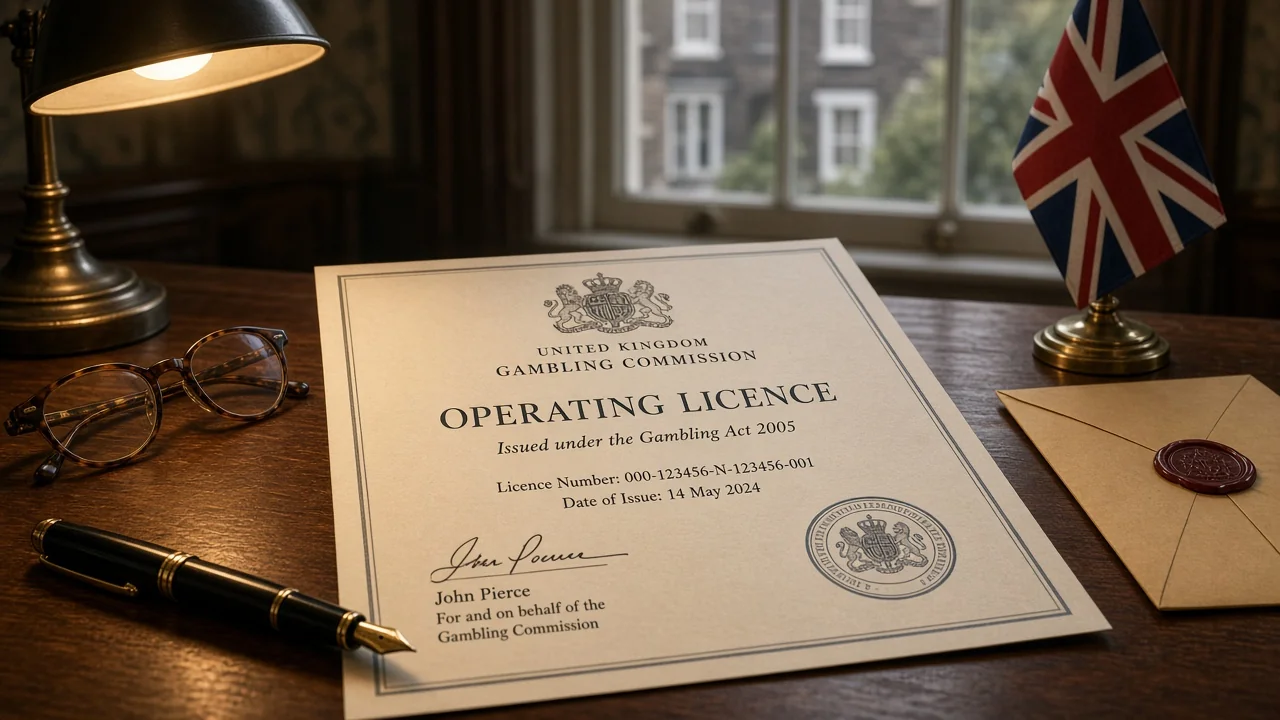
Table of Contents
- What Makes an Online Casino Trustworthy in the UK?
- How to Verify a UKGC Casino Licence
- The Trustworthy UK Online Casinos Shortlist
- Choosing a Trustworthy Online Casino in 2026
- Trustworthy Real-Money Casinos: Payments, KYC and Withdrawals
- How to Read Trustworthy Casino Reviews
- Responsible Gambling Tools That Matter
- Non-GamStop Casinos: What Trust Can and Cannot Mean
- Trustworthy Bitcoin Casinos and Crypto Payment Checks
- Trustworthy Ethereum Casinos: Security and Withdrawal Questions
What Makes an Online Casino Trustworthy in the UK?
"Trustworthy" gets used loosely in casino advertising, so it helps to pin down what the word can actually mean before you act on it. In the UK, trustworthiness is not a matter of reputation or slogan. It is a set of legal obligations that an operator either meets or does not, and most of them can be checked rather than taken on faith.
A UKGC licence comes first
The UK Gambling Commission regulates all forms of gambling in the United Kingdom, and any online casino offering its services to players in Great Britain must hold a valid UK Gambling Commission licence to operate legally. This is the foundation everything else rests on. A licence means the operator has been assessed by the regulator and remains subject to its oversight; no licence means none of the other trust signals matter, however professional the site looks.
Licensing also comes with age enforcement. The minimum age for online gambling in the UK is 18, and licensed operators are required to verify this before allowing play. A casino that checks who you are is complying with the law; a casino that never asks is not.
Your money is kept apart from the operator’s
A licence obliges a casino to hold player funds in separate, segregated accounts, kept apart from the operational funds the business runs on. This matters because it determines what happens to your balance if the operator runs into financial trouble. Money that sits in a segregated account is not available to pay a supplier or cover a payroll shortfall, and that separation is not a courtesy — it is a condition of holding the licence. When you compare operators later in this guide, the level of protection applied to player funds is one of the questions worth asking directly.

The rules are written down and readable
Trustworthy casinos do not rely on you taking their word for anything. UKGC-licensed operators must offer transparent terms and conditions, including clear information on bonuses, withdrawal policies, and verification requirements. In practice, this means the answers to the questions players most often complain about — what a bonus actually requires, how a withdrawal is processed, what documents you may be asked for — should be findable in plain language before you register, not discovered after you have deposited. Vague or buried terms are not just a nuisance; they are a sign that the operator is not meeting a standard it is legally required to meet.
Why this matters more than any single brand
Search for the most trustworthy casino online and you will mostly find lists, and lists are the weakest form of evidence. A brand appearing on ten affiliate sites tells you about marketing budgets, not about how the casino treats players. The criteria above — a valid licence, segregated player funds, readable terms, enforced age checks — are different, because each one is either verifiable or absent.


That is the standard this guide works to. Rather than asking which casino has the loudest reputation, the sections that follow ask whether an operator is legally authorised, how you can confirm that yourself, and what protections stay in place once you have registered and deposited. A casino that satisfies those checks may still differ from its rivals in games, bonuses and sign-up perks, and payment speed — and those differences are worth comparing. But they are secondary. The licence and the obligations attached to it are what make trustworthiness a matter of record rather than opinion, and that is where any sensible comparison starts.
How to Verify a UKGC Casino Licence
Anyone providing online gambling to customers in Great Britain must hold a UK Gambling Commission (UKGC) licence, regardless of where the company is based. A casino can look professional, run polished advertising and still have no legal right to take your bets. The licence is the one thing you can check yourself, in a few minutes, without taking anyone’s word for it.
Where to look
The UKGC maintains a public register of licensed operators. This is the authoritative source — not the licence badge on the casino’s own footer, which anyone can copy and display. Follow the badge link if there is one, but the real test is opening the register yourself and searching for the operator.
Licence Requirement Valid UKGC licence
Fund Protection Segregated player accounts
Game Fairness Independent RNG testing
Dispute Resolution Access to ADR services
You can search by operator name or by licence number. When you find the entry, confirm that the domain listed in the register matches the site you are actually visiting. This matters more than it sounds: a cloned or copycat site can copy a legitimate operator’s branding while operating under no licence at all.
What the register shows
The register lists three licence statuses that are worth telling apart:
- Active — the licence is current and the operator is authorised to offer gambling in Great Britain.
- Inactive — the licence exists but is not in use. An operator running games on an inactive licence is a red flag.
- White label — the site trades under its own brand but operates on another company’s licence. This is legal and common, but it tells you the actual licence holder is a different business. Check that licence holder’s record, not just the brand name on the homepage.
White-label arrangements explain why two casinos with different names can share a licence, and why searching for the brand alone sometimes returns nothing. If the brand doesn’t appear in the register, look in the site’s terms or footer for the operating company, then search for that.
Two extra checks
Licence status is the foundation, but the register also connects to a second layer of protection worth confirming: access to Alternative Dispute Resolution (ADR) services. If a complaint to the casino cannot be resolved, a licensed operator must let you escalate it to an approved ADR provider — an independent body that reviews the case. If you cannot find any ADR information at a casino, that absence is itself information.
Finally, keep in mind that a licence is a snapshot, not a lifetime guarantee. Licences can lapse, be suspended or be surrendered, so a check made when you signed up does not cover the casino forever. If you return to a site after a long break, a minute in the public register is cheap insurance.
Knowing how to find a trustworthy online casino starts here — everything else you evaluate, from payments to game fairness, only counts if the operator is legally authorised in the first place.
The Trustworthy UK Online Casinos Shortlist
Any list of trustworthy online casinos is only as good as the tests behind it. A casino can look polished, run a large advertising budget and still leave you with an unresolved complaint, a stalled withdrawal or funds that vanish if the business fails. So before this shortlist names a single product, here is the honest part: what follows is not a ranking. It is a candidate list, and every name on it — including the ones you check yourself later — has to pass the same regulatory and player-protection checks described in this guide.

What every shortlisted casino has to prove
A UKGC casino earns its place on a trustworthy list only when the following is verifiable, not claimed:
- A current licence. The operator appears on the UK Gambling Commission’s public register, which lists active, inactive and white label licences. An inactive entry is a red flag; a white label entry means the brand runs under another company’s licence, which is legal but worth knowing.
- Segregated player funds. UKGC-licensed casinos must hold player money in separate accounts, kept apart from the operator’s own working capital.
- High fund protection. Player funds are classified as not protected, medium protection or high protection. Only high protection — player money held in an independent trust account — guarantees your balance if the operator becomes insolvent. This is the single most consequential line in a casino’s terms, and the most frequently skipped.
- Independently tested games. Games must use Random Number Generators (RNGs) and be tested for randomness by independent agencies such as eCOGRA, iTech Labs, TST or GLI. Look for a testing seal that links to a live certificate, not a static logo.
- Responsible gambling tools. Deposit limits, session limits, loss limits and self-exclusion must be available and easy to find before you deposit, not buried five clicks deep.
- Transparent terms. Bonus conditions, withdrawal policies and verification requirements must be stated clearly enough that you can read them before signing up, not after.
If any one of these is missing or unverifiable, the casino does not belong on the list — regardless of how well the rest of its marketing reads.
The shortlist
Applying those criteria to the UK market in 2026, one product line stands out as worth your attention:
Jackpot King. A networked jackpot system rather than a single operator, Jackpot King appears across slot titles at UKGC-licensed casinos. It matters here for a specific reason: the progressive jackpots it carries are only legitimate when the host casino holds a valid UKGC licence, segregates player funds and offers high fund protection, and runs RNG-tested games audited by an independent body. In other words, Jackpot King itself is neither trustworthy nor untrustworthy — the trust question is answered by whoever operates the site you play it on.
That is why this section refuses to hand you a numbered ranking. A list that says "casino A is number one" without publishing the evidence for each position is doing marketing, not assessment. The question "are online casinos trustworthy?" has no blanket answer; each operator answers it individually, and the answer can change when a licence is suspended, ownership changes or fund protection is downgraded.
- Verify the operator on the UKGC public register
- Confirm the domain matches the licence record
- Check for independent testing seals (eCOGRA, iTech Labs, etc.)
- Rely solely on the casino’s own branding or footer badges
- Trust lists that do not provide verifiable evidence
- Assume a brand is safe based on marketing budgets
How to assess any candidate yourself
Whether you are evaluating a name from this page or a brand you found elsewhere, run the same sequence:
- Check the licence. Match the operator name and licence number against the UKGC public register and confirm the domain listed there matches the site you are on. White label arrangements should be visible in the register too.
- Read the fund protection statement. It is usually in the terms and conditions under “player funds”. If the wording says funds are not protected, or only medium protected, you know exactly what you are risking by keeping a balance on the site.
- Confirm game testing. Look for certification from eCOGRA, iTech Labs, TST or GLI, and check that the certificate is current and covers the games you intend to play.
- Test the responsible gambling tools before depositing. If you cannot find deposit limits or self-exclusion without an account, that tells you how the operator treats these obligations.
- Read the withdrawal and verification terms. Transparent operators state what documents they need, when they need them and under what conditions they pay out. Vague language here tends to become a problem later.
What a shortlist cannot tell you
A list of trustworthy online casinos has a shelf life. Licences get suspended, terms get rewritten, fund protection levels get revised. The register you check today reflects today, and the operator that passed every test this year can fail one next year. The most useful thing a shortlist can do is not hand you a fixed answer but show you the checks that produced it — licensing, fund segregation and protection, RNG audits, responsible gambling tools and transparent terms — so that when a brand you have never heard of promises the best bonuses and sign-up perks of 2026, you can verify the claim instead of taking it on trust.
That is the standard this guide uses throughout, and it is the standard you should hold every casino to: a UKGC licence on the public register, high fund protection, independently tested games and terms you can actually read. Anything less is a marketing promise, and marketing promises do not pay out.
Choosing a Trustworthy Online Casino in 2026
This page highlights online casinos in the UK market using clear, practical details that can help readers assess trustworthiness. Review the listed licensing, bonus, payout, and deposit information before choosing an operator.
License: UKGC Operator Licence · Bonus: £200 welcome bonus · Payout speed: Within 48 hours · Min. deposit: £10 32Red holds a UKGC Operator Licence and offers a £200 welcome bonus. Its stated payout speed is within 48 hours, with a minimum deposit of £10.
License: UKGC Operator Licence · Bonus: £100 bonus · Payout speed: Within 24 hours · Min. deposit: £10 ProgressPlay Limited holds a UKGC Operator Licence and provides a £100 bonus. Payouts are stated as being processed within 24 hours, with a £10 minimum deposit.
License: UKGC Operator Licence · Bonus: £20 bonus · Payout speed: Within 48 hours · Min. deposit: £10 Silverbond Enterprises holds a UKGC Operator Licence and offers a £20 bonus. Its stated payout speed is within 48 hours, and the minimum deposit is £10.
License: UKGC Operator Licence · Bonus: £100 bonus · Payout speed: Within 24 hours · Min. deposit: £10 Genesis Global Limited holds a UKGC Operator Licence and offers a £100 bonus. The stated payout speed is within 24 hours, with a minimum deposit of £10.
License: UKGC Operator Licence · Bonus: £100 bonus · Payout speed: Within 24 hours · Min. deposit: £10 LeoVegas holds a UKGC Operator Licence and offers a £100 bonus. Payouts are stated as being processed within 24 hours, and the minimum deposit is £10.
License: UKGC Operator Licence · Bonus: £50 bonus · Payout speed: Within 48 hours · Min. deposit: £10 Platinum Gaming Limited holds a UKGC Operator Licence and offers a £50 bonus. Its stated payout speed is within 48 hours, with a minimum deposit of £10.
The criteria in the earlier sections — licensing, fund protection, fair-play testing, transparent terms — only matter if you can actually apply them to a shortlist of candidates. This section turns them into a working decision process: a sequence of checks you can run, in order, before you deposit anywhere. It is deliberately boring. Trustworthy operators are easy to verify precisely because they have nothing to hide.
Step 1: Confirm the licence covers the site you are on
Before comparing anything else, confirm that the operator holds a UK Gambling Commission (UKGC) licence and that the domain you are visiting matches the licence record. A casino group may hold several licences across brands, and an unlicensed clone site can borrow a legitimate operator’s name and logo. The licence is the floor: without it, none of the other checks in this section are worth running.
Step 2: Find out how your money is protected
This is the check most players skip, and it separates otherwise identical-looking UKGC casinos. Player funds at UKGC-licensed casinos fall into three classifications: not protected, medium protection, or high protection. Only high protection guarantees your balance if the operator becomes insolvent — and it works by holding player funds in independent trust accounts, separate from the operator’s own money.
Player funds at UKGC-licensed casinos are classified as not protected, medium protection, or high protection. Only high protection, involving an independent trust account, guarantees your balance if the operator becomes insolvent.
A casino is required to tell you which classification applies, but the wording is often buried in the terms. Look for it before you deposit, not after. Two casinos with the same licence, the same games and the same bonuses can differ completely on this point, and the difference only becomes visible when something goes wrong.
Step 3: Check who tests the games
Every UKGC casino must use Random Number Generators and submit its games to regular independent audits. The names to look for are testing agencies such as eCOGRA, iTech Labs, TST and GLI. A trustworthy casino publishes its testing arrangements rather than simply asserting that its games are fair.
A word of caution about what testing does and does not mean. An audit confirms that the games behave as designed over the long run. It does not mean you will win, and any review that implies otherwise is either careless or selling something.
Step 4: Read the terms before you accept them
UKGC-licensed casinos must offer transparent terms and conditions, covering bonuses, withdrawal policies and verification requirements. "Transparent" means the information is there and readable — it does not mean it is short. Before registering, check:
- the bonus terms, including wagering requirements and any game restrictions;
- the withdrawal policy, including any pending periods and identity-check requirements;
- what happens to inactive accounts;
- how the casino handles disputes.
If any of these are vague or contradictory, treat that as a signal in itself. A casino that cannot describe its own rules clearly is telling you something about how it operates.
Step 5: Verify that identity checks are part of the process
UKGC-licensed casinos must verify players’ age and identity through KYC checks before allowing gambling. This is not a friction to work around — it is a legal obligation, and the absence of identity checks is the clearest possible sign that a site is not UKGC-licensed, whatever it claims. A site that lets you deposit and play with no verification at all is operating outside the UK regulatory framework and outside its protections.
Be prepared for checks to continue after registration. Players may be asked for additional documents if their gambling activity triggers further verification checks — a point raised in more than one operator review, since casinos rarely advertise it up front. If a request for documents arrives mid-relationship, it is a routine part of regulated operation, not a pretext.
Step 6: Confirm the complaint route
Things go wrong even at well-run casinos: a delayed withdrawal, a disputed bonus term, a rejected document. What distinguishes a trustworthy operator is not the absence of problems but the existence of a route through them. UKGC-licensed casinos must provide access to Alternative Dispute Resolution (ADR) services for player complaints, so a complaint you cannot resolve with the casino directly can be escalated to an independent body. Check that the ADR scheme is named in the terms before you need it.
Verify Before Depositing
- Match the operator and licence number against the UKGC register
- Confirm the specific fund protection classification in the terms
- Verify current certification from eCOGRA, iTech Labs, TST, or GLI
- Locate responsible gambling tools like deposit and loss limits
- Identify the approved ADR provider for dispute escalation
Step 7: Look at the responsible gambling tools as a diagnostic
Responsible gambling tools — deposit limits, session limits, loss limits and self-exclusion — are a licensing requirement, so their presence alone proves little. Their visibility tells you more. A casino that puts these controls one tap from the account menu is behaving like a regulated business; one that hides them four clicks deep in the footer is meeting the letter of the rules and hoping you never find them. Since the tools are mandatory, there is no excuse for burying them.
How to weigh what you find
Not every check carries the same weight. In practice:
| Check | Weight | Why |
|---|---|---|
| Valid UKGC licence | Decisive | Everything else depends on it |
| Fund protection level | High | Determines what happens if the operator fails |
| Independent game testing | High | Confirms the games are not rigged |
| Transparent terms | Medium | Affects disputes and withdrawals |
| Visible responsible gambling tools | Medium | Signals attitude, not just compliance |
| Brand familiarity | None | Recognition is not regulation |
That last row deserves emphasis, because it is the one most players get wrong. A familiar name, a large advertising presence and a slick app say nothing about fund protection or dispute handling. Some heavily marketed brands offer weaker player protections than quieter competitors. Conversely, a casino you have never heard of can be entirely sound if it passes every check above.
A repeatable process, not a ranking
The point of running these checks in order is that they produce the same answer regardless of who runs them. You do not need to trust a reviewer’s opinion, a forum thread or an advertisement — you need a licence number, a fund-protection statement, a testing certificate and a named ADR scheme, all of which are checkable facts rather than claims. That is what makes the process repeatable in 2026: the underlying obligations have not changed, and each of them leaves a paper trail a player can read.
Operators come and go, welcome offers rotate, and design trends shift every year. The seven checks above do not. Apply them to any candidate and you will filter out the overwhelming majority of problems before they reach your bank account — which is a better outcome than any ranking can promise.

Trustworthy Real-Money Casinos: Payments, KYC and Withdrawals
Choosing a trustworthy real-money casino is only half the job. The other half begins the moment you register: money has to move in, identity has to be proven, and winnings have to come back out. Each of those steps has rules a UKGC casino cannot skip — and each one gives you a signal about how seriously the operator takes its obligations.
KYC comes before the first spin
Every UKGC casino must verify your age and identity through KYC (Know Your Customer) checks before allowing you to gamble. The minimum gambling age in the UK is 18, and a licensed site has to confirm you meet it — not simply take your word for it. Expect to supply documents such as photo ID and proof of address as part of registration or before your first withdrawal.
Verification does not always end there. Guidance from casino operators indicates that players may be asked for additional documents if their gambling activity triggers further verification checks. A site that requests more evidence after a larger withdrawal is not being difficult; it is complying with the conditions of its licence. What should concern you is the opposite: an operator that never asks.
Illegal Payments
Credit card gambling is prohibited in the UK. Any site accepting credit card deposits is breaking the law and is not a trustworthy operator.
Payment methods: what is permitted and what is not
Credit card gambling is prohibited in the UK. That ban applies across the board, so a site accepting your credit card is breaking the law — a fact that tells you everything about its trustworthiness. Visa Debit and Mastercard-issued debit cards remain permitted, as do e-wallets such as PayPal, Skrill and Neteller.
Deposits made with debit cards and e-wallets are typically instant at UKGC-licensed casinos — the funds appear in your account balance straight away. Prepaid vouchers work differently. PaysafeCard supports deposits but cannot be used for withdrawals, which means any winnings have to leave your account by another route. According to one specialist payment review, unregistered PaysafeCard users face a £40 spending cap, while registered users can load up to £1,000 — a detail worth checking if you rely on prepaid methods. That same review reports that Google Pay does not support online casino withdrawals in the UK at the time of writing.
Withdrawals: realistic windows, not marketing ones
This is where processing times separate honest operators from glossy advertising. The figures that matter:
- E-wallets (PayPal, Skrill, Neteller): processed within 15 minutes to 24 hours after approval. PayPal withdrawals are typically completed within 0–24 hours.
- Debit cards: typically 1 to 5 business days.
- Bank transfers: generally 3 to 5 business days.
Note the phrase that appears in every one of those windows: after approval. The clock starts when the casino has completed its internal checks — including any KYC review it decides to run on your withdrawal — not when you click the button. A site advertising same-day e-wallet payouts is not lying, but it is describing only the final stage of the process.
A trustworthy real-money online casino states these windows in its terms, explains what verification it can request and when, and does not bury withdrawal conditions in vague language. Before you deposit anywhere, find the payments page and read it. If the site is vague about how you get your money back, you have learned something more useful than any bonus headline could teach you.
How to Read Trustworthy Casino Reviews
A casino review is a claim, not a fact. Most reviews you will find online are written by affiliates who earn a commission when you click through and register, which does not make them dishonest — but it does mean you should read them the way you would read any advertorial: with the verification habits described below, not with trust.
Reviewing Casino Reviews
- Treat reviews as a starting inventory of candidates, not final proof
- Verify all checkable claims (licence, ADR, terms) yourself
- Discount vague reputation language like “trusted by thousands”
- Watch for patterns where the same casino always tops every list
Separate the checkable from the decorative
The single most useful thing you can do with a review is sort its statements into two piles.
Pile one — things you can verify yourself:
- The operator’s licence. The UK Gambling Commission maintains a public register of licensed operators, covering active, inactive, and white label licences. If a review names an operator, you can check that name against the register in a couple of minutes. If a review calls a casino “fully licensed” without naming the regulator or the licence holder, that is a gap, not a detail.
- Terms and conditions. UKGC casinos must offer transparent terms covering bonuses, withdrawal policies, and verification requirements. A review that summarises these terms accurately can be checked against the source. One that describes a bonus as “generous” with no reference to wagering requirements cannot.
- Complaints handling. UKGC-licensed casinos must provide access to Alternative Dispute Resolution (ADR) services for player complaints. This is a factual claim a review can make and you can confirm.
Pile two — things you cannot verify and should discount:
- “Trusted by thousands of players.”
- “A reputation for fast payouts.”
- “One of the most reliable names in the industry.”
None of these statements can be checked by you, which is exactly why they appear so often. Reputation language is cheap to write and impossible to falsify — the perfect combination for a reviewer who has not actually looked at anything.
Signals that a review was written to rank, not to inform
A few patterns repeat across low-value reviews:
- The same casino tops every list. When one operator wins “best trustworthiness”, “best payouts” and “best mobile experience” on the same page, the page has one purpose.
- No criticism anywhere. A review of any casino that finds nothing to warn you about — a slow verification process, a limited withdrawal method list, restrictive bonus terms — has not been looking.
- Licence details that don’t match. If a review links to a licence number or operator name, cross-check it against the UKGC register. A mismatch between the domain you’d play on and the domain listed on the licence is the kind of discrepancy a copied review never catches.
What to do instead
Use reviews as a starting inventory of candidates, then confirm each verifiable claim yourself: the licence, the terms, the ADR arrangement. The reviews worth returning to are the ones that cite things you can check and admit the drawbacks. The rest are decoration around an affiliate link.
Responsible Gambling Tools That Matter
A trustworthy UKGC casino is not one that simply pays out winnings. It is one that gives you the machinery to control your own play before it becomes a problem. At every UKGC-licensed casino, a set of responsible gambling tools must be available to you as standard — not hidden behind a support ticket or buried on page forty of the terms.
The core controls break down into four types:
- Deposit limits — a ceiling on how much you can put into your account over a set period.
- Loss limits — a stop that triggers when your net losses reach a level you chose in advance.
- Session limits and reality checks — time-based controls that either cap how long you play or interrupt play with a reminder of how long you’ve been at it.
- Self-exclusion — a full stop, closing your account with that operator for a period you select.
Set these before you need them, not after. A deposit limit you chose on a calm Tuesday protects you far better than one you try to negotiate mid-session on a Friday night — and the better operators make lowering a limit take effect immediately, precisely because the moment you want to lower it is the moment it matters most.
GamStop: the one switch that covers everything
Per-casino self-exclusion only covers one operator. GamStop closes the door across the whole licensed market: every UKGC-licensed casino must be part of the GamStop self-exclusion system, and registering with it blocks your access to all licensed gambling sites — not just the one where things were going badly. You choose the duration, from six months up to five years, and during that window the block applies to all forms of licensed gambling. The next section of this guide looks at what happens when a site advertises itself as being outside that system; the short answer is that it is telling you which protections it lacks.
Financial vulnerability checks
Responsible gambling at a licensed casino is not only about the tools you set yourself. The regulator also requires operators to run financial vulnerability checks — an affordability mechanism designed to flag when play is running ahead of what a player can plausibly sustain. One UK-focused casino review reports the trigger point as £150 in deposits within a rolling 30-day period. Treat that figure as an operator-level claim rather than a settled industry rule: the mechanism exists at every UKGC casino, but the specific threshold a given review quotes is that site’s statement about how the rules are being applied, not a fixed number you can rely on across the board. What you can rely on is the principle — a licensed casino is obliged to look for signs that gambling is outpacing your means, and to act on them.
GamStop
If a casino markets itself as “non-GamStop,” it is signaling that it operates outside the UKGC licensing framework and lacks mandatory UK player protections.
If the tools above sound like friction, that is the point. They are the difference between a casino that treats you as a customer and one that treats you as an account. And if you ever need support beyond the tools, organisations such as BeGambleAware and GamCare exist for exactly that reason — independently of any operator.
Non-GamStop Casinos: What Trust Can and Cannot Mean
Search for a trustworthy casino that is not on GamStop and you will find plenty of sites eager to call themselves exactly that. The label deserves a closer look, because it tells you less about trust than it appears to.
What the label actually tells you
GamStop is the national self-exclusion scheme that every UKGC casino must join. Once you register with GamStop, you are blocked from all licensed gambling sites in Great Britain for a period of your choosing, between six months and five years. That blocking period cannot be shortened on impulse, which is the point of the scheme.
A casino that markets itself as “non-GamStop” is, in effect, advertising that it sits outside this arrangement — and, in practice, outside UKGC licensing altogether. To operate legally in Great Britain, an online casino must hold a valid UK Gambling Commission licence, and that licence comes with GamStop participation attached. There is no category of UK-licensed casino that opts out of GamStop while keeping everything else. The two travel together.
Where trust becomes hard to verify
A non-GamStop site may hold a licence from another jurisdiction, and some do. But the protections you would rely on at a UKGC casino — segregated player funds, mandatory responsible gambling tools, access to alternative dispute resolution, games audited for RNG fairness — are not guaranteed to follow. Whether they exist depends on the regulator behind the licence, and you would need to verify each one yourself rather than assume it.

This is where the word "trustworthy" stretches past its useful meaning. A site can pay out winnings promptly and still lack the structural protections that make a UKGC casino trustworthy: the fund segregation that protects your balance if the operator fails, or the exclusion scheme that protects you from yourself on a bad night. Prompt payouts are a good sign; they are not a substitute for regulation.
Why GamStop participation is a trust criterion
If you are comparing operators, GamStop membership works as a quick filter rather than a marketing point. A casino connected to GamStop is demonstrating that it accepts the obligations of UKGC licensing, including the ones it cannot turn to its advantage. A casino running from those obligations is telling you something too — just not the thing its advertising claims.
There are reasons someone outside a GamStop exclusion period might prefer a site without it, and self-exclusion is a personal decision. But a casino that treats "non-GamStop" as a selling proposition, rather than a legal fact about its licence, is asking you to mistake the absence of a protection for a feature. When you see the phrase, read it as a signal to check who, if anyone, is actually regulating the operator — before your money is the thing being tested.
Trustworthy Bitcoin Casinos and Crypto Payment Checks
Bitcoin does not change what makes a casino trustworthy. A site that takes cryptocurrency is still an online casino, and it lives or dies by the same tests: licensing, identity checks, tested games, workable responsible gambling tools and terms you can actually read.
Crypto Security Standards
Even with cryptocurrency, the fundamental trust requirements remain the same:
- Licensing: A Bitcoin logo is not a substitute for a UKGC licence.
- KYC: Legitimate operators will always require identity verification.
- Fairness: Games must be audited by independent agencies, regardless of the currency used.
- Terms: Withdrawal conditions for crypto must be stated clearly and transparently.
Start with the licence. Any operator providing online gambling to consumers in Great Britain needs a UK Gambling Commission licence, regardless of where the company is based or what currency it accepts. A Bitcoin logo on the homepage is not a licence. Neither is a licence from some other jurisdiction — if the operator serves UK players without a UKGC licence, it is operating outside the framework that gives you Gamstop, fund segregation and access to independent dispute resolution. The UKGC public register settles the question in a minute: search the operator name or licence number and check that the domain listed there matches the site you are on.
Next, look at identity checks. KYC at a crypto casino is not optional decoration. UKGC-licensed casinos must verify age and identity before allowing gambling, and a site that promises fully anonymous play is promising something a licensed UK operator cannot deliver. Anonymity marketed as a feature is, from a player-protection standpoint, a warning sign — it means the checks that block minors, fraud and unaffordable losses are not happening.

Game fairness is the third test. Casino games at UKGC-licensed sites must use Random Number Generators tested for randomness by independent agencies such as eCOGRA, iTech Labs and GLI. This applies whatever the currency in your account. "Provably fair" claims on an unlicensed crypto site are not a substitute for third-party audits; they are unverifiable marketing unless the underlying games carry the same certification you would expect anywhere else.
Finally, read the terms. UKGC-licensed casinos must offer transparent terms covering bonuses, withdrawal policies and verification requirements. A crypto casino should tell you, in plain language, what happens when you deposit and — more importantly — when you withdraw: which methods are permitted, what documents may be requested, and under what conditions. Vague language about crypto withdrawals is where unreliable operators hide.
The short version: assess a Bitcoin casino exactly as you would any other. Licence in the public register, KYC before play, RNG-tested games, transparent terms. If any of these are missing, the currency is the least of your problems.
Trustworthy Ethereum Casinos: Security and Withdrawal Questions
Searching for an Ethereum casino in the UK produces a mixed bag: UKGC-licensed operators that accept crypto alongside fiat, and offshore sites that market themselves on the currency itself. The currency you use does not change the legal position. Any site offering online casino games to players in Great Britain must hold a valid UK Gambling Commission licence to operate legally, regardless of how deposits are taken.

That single fact does most of the work here. A trustworthy Ethereum casino is not a separate category of operator — it is a licensed casino that happens to support deposits and withdrawals in ETH. The checks you should run before sending any funds are the same ones that apply to every UKGC casino.
Confirm before you deposit
- Licence status. The operator’s name and licence details should match the UKGC public register, and the domain you are playing on should be the one listed there.
- Game testing. UKGC-licensed casinos must undergo regular independent audits of game fairness by agencies such as eCOGRA, iTech Labs, TST and GLI. Look for the auditor’s certificate or seal on the site and confirm it relates to the games you intend to play.
- Dispute routes. Licensed operators must provide access to Alternative Dispute Resolution (ADR) services for player complaints. This matters more with crypto, not less: if a withdrawal goes wrong, ADR is the channel through which an unresolved complaint can be escalated.
- Responsible gambling tools. Deposit limits, loss limits, time-outs and Gamstop participation are licence requirements. Their absence tells you the operator sits outside the UKGC framework entirely.
The withdrawal question
Withdrawals are where Ethereum-specific claims deserve the most scepticism. Offshore crypto sites advertise near-instant payouts in ETH, but speed at an unlicensed operator is not a benefit — there is no regulator to complain to if the payout never arrives. At a UKGC-licensed casino, withdrawal terms, processing windows and verification requirements must be set out transparently, and identity checks happen before gambling, not as an excuse to delay a payout later.
One practical point: crypto deposits do not exempt you from KYC. Verification of age and identity is a licence condition, and a site that promises fully anonymous Ethereum play is telling you it is not operating under UKGC rules.
What to take away
Judge an Ethereum casino by the operator behind it, not the currency in front of it. Licence, independent game audits, ADR access and responsible gambling controls — if all four check out, ETH is simply another payment option. If any of them is missing, the convenience of the currency is not worth the risk to your funds.
What makes an online casino trustworthy?
A trustworthy casino holds a valid UK Gambling Commission licence, protects player funds in segregated accounts, provides clear terms, verifies age and identity, and offers responsible gambling tools and ADR access.
How can you verify a UK casino licence?
Search the operator or licence number in the UK Gambling Commission’s public register. Check that the listed domain matches the site you are using and confirm that the licence is active.
Is it safe to give a casino your ID and bank details?
Yes, when you use a properly licensed UK casino, age and identity checks are required before gambling. Player funds must be kept separately from the operator’s business funds, but you should still verify the casino in the UKGC register before providing documents or payment details.
Prepared by the Casinouk Game Info editorial staff.