
Gibraltar Casino Licence: What UK Players Should Know
 Available in GB
Understand the regulator, player protections, payment options and wagering terms linked to Gibraltar-licensed casinos.
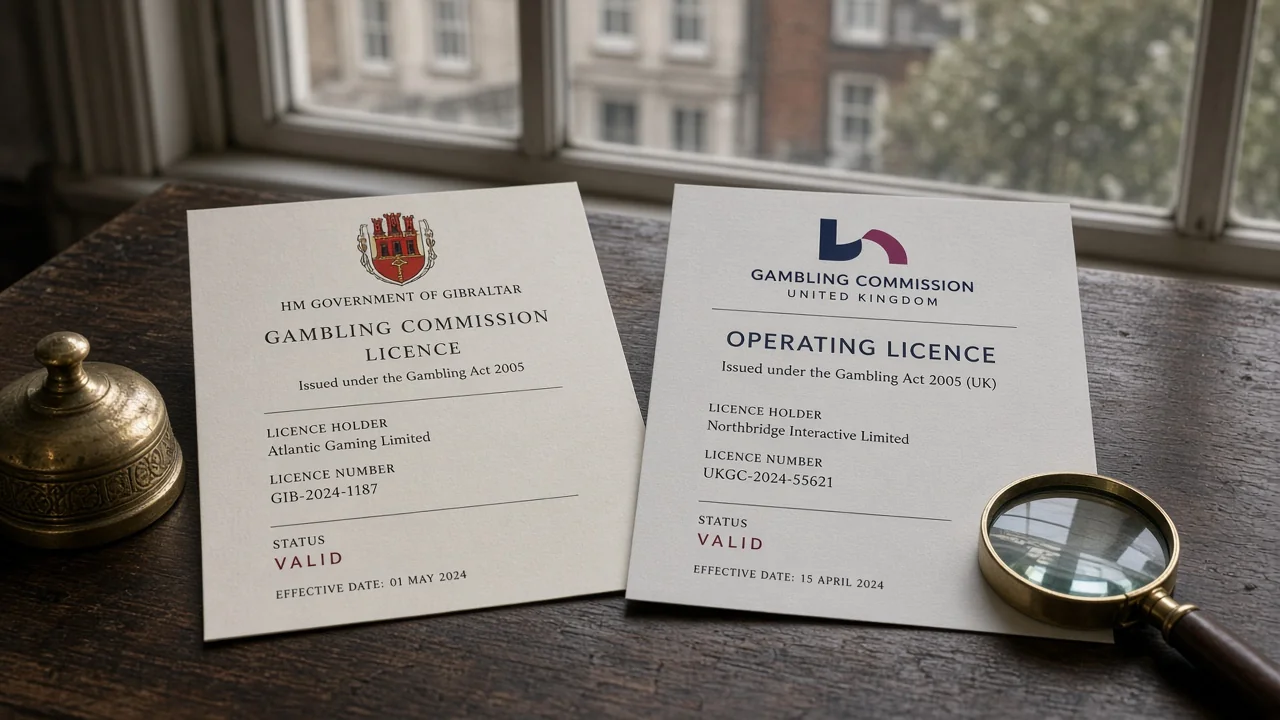
Table of Contents
- What a Gibraltar Casino Licence Actually Means for UK Players
- Gibraltar Casino Regulation: Who Oversees the Site?
- How Gibraltar-Licensed Casinos Differ from UKGC Sites
- Online Casinos in Gibraltar: Games, Tables and Live Dealer Choice
- New Online Casinos in Gibraltar: What Changes for You?
- Gibraltar Casino Sites: How to Judge the Site Behind the Brand
- Top Gibraltar Casino Sites for Payments and Withdrawals
- Gibraltar Slot Sites and the Companies Behind Them
- Real-Money Slots in Gibraltar: Bonuses, Spins and Wagering Terms
- What to Check Before You Register with a Gibraltar Casino
What a Gibraltar Casino Licence Actually Means for UK Players
When a casino advertises itself as holding a Gibraltar licence, it is telling you something specific and worth pausing over: the site operates under a licence issued by a regulatory body outside the United Kingdom, and it is not regulated by the UK Gambling Commission (UKGC). That single fact shapes everything else — the games it can offer, the terms it sets, the protections you can expect if something goes wrong, and the route available to you when it does.
Why the licence’s location matters
Gibraltar is one of several jurisdictions that grant gambling licences to online casinos; Malta, Curacao and Cyprus are other common examples. These licences are real and legally meaningful — but they are meaningful within their own jurisdiction, not within Great Britain’s regulatory framework.
The UK’s system works differently. Under the Gambling Act 2005, operators providing online gambling services to consumers in Great Britain must hold a UKGC licence, regardless of where the company is actually based. A casino licensed in Gibraltar but not by the UKGC falls outside that framework entirely. It does not answer to the UKGC, does not follow the UKGC’s rules, and cannot be compelled to by a British player.
This distinction is not a technicality. It determines who supervises the operator, which advertising and bonus restrictions apply, and — critically — which consumer protections follow you as a UK resident when you open an account.
What a Gibraltar licence does and does not tell you
A licence from Gibraltar is not a blank mark of quality, and neither is it a red flag on its own. Regulatory oversight varies significantly between jurisdictions. Gibraltar, alongside Malta, is among the authorities that maintain rigorous standards; other jurisdictions carry far less stringent rules, and a licence from them may amount to little more than a registration fee. The jurisdiction named in a casino’s footer is therefore the first piece of due diligence, not the last.
What a Gibraltar licence does not do is extend UK protections to you. The consumer protections and dispute resolution processes available to UK players at UKGC-licensed sites may not apply at non-UK licensed casinos, precisely because of their jurisdictional independence. If a withdrawal is delayed or a bonus term is applied in a way you consider unfair, the UKGC has no standing to intervene. Your recourse runs through the casino’s licensing body or its internal dispute process — and how accessible those routes are to a British player depends on the operator and the jurisdiction, not on UK law.
Is it legal for UK players?
UK residents are not prohibited from using overseas gambling websites under current regulations. Registering at a Gibraltar-licensed casino is not, in itself, an illegal act for you as a player. What is illegal — and this is the operator’s problem, not yours — is providing gambling services to consumers in Great Britain without a UKGC licence.
That gap between what is legal and what is protected is the thread running through this whole guide. A Gibraltar-licensed casino may be entirely legitimate under its own law while offering you a materially different level of oversight than the UKGC-licensed sites you may be used to.

What to keep in mind before you read on
Before registering anywhere, understand what you are looking at. A Gibraltar licence means the operator answers to a regulator other than the UKGC, follows rules other than the UKGC’s, and handles disputes through channels other than the UKGC. Whether those rules are rigorous depends on the specific authority; whether those channels work for you depends on the specific operator. Both questions — who oversees the site, and how to judge the company behind the brand — are what the rest of this guide takes apart, section by section, before you decide where your money goes.
Gibraltar Casino Regulation: Who Oversees the Site?
When a casino displays a Gibraltar licence, the body standing behind that licence is the Gibraltar Regulatory Authority (GRA), not the UK Gambling Commission. That distinction shapes everything about how the site is supervised — and what happens when something goes wrong.
Regulatory oversight varies significantly between licensing jurisdictions. Some authorities, such as the Malta Gaming Authority and the Gibraltar regulator, are recognised for maintaining rigorous standards: they review operators, set conditions, and can act when those conditions are breached. Other jurisdictions impose less stringent rules, which is why the country named on a licence page matters more than the word “licensed” itself. A licence is only as strong as the authority that issued it.
For UK players, the practical consequence shows up in dispute resolution. With a UKGC-licensed casino, there is an established complaints process and a regulator with a public register you can check. With a casino licensed elsewhere, disputes rely on the casino’s own licensing body or its internal resolution process — and how accessible that process is to a UK player varies from one operator to the next. If a withdrawal stalls or a bonus term is applied in a way you didn’t expect, you are dealing with the operator and its regulator, not a UK body.
Dispute Resolution
If a dispute arises, you cannot escalate it to the UK Gambling Commission; you must use the operator’s internal process or the GRA.
None of this means a Gibraltar licence is a red flag. The GRA is a well-established authority with a strong track record. But it does mean a licence should be verified rather than treated as a blanket safety guarantee.
In practice, verification takes a few minutes. Find the licence number in the site’s footer, then check it against the register published by the authority that supposedly issued it. Confirm the operating company name matches the brand you’re looking at. If the licence can’t be traced, or the register shows nothing for that operator, treat the site accordingly — whatever the badge on the homepage claims.
How Gibraltar-Licensed Casinos Differ from UKGC Sites
A casino holding a Gibraltar online casino licence and a casino licensed by the UK Gambling Commission may look identical once you are logged in: same slots, same live tables, same deposit form. The differences sit underneath, in the rulebook each operator answers to. Understanding them before you register matters more than any welcome offer, because they determine what happens when something goes wrong.
Regulation and enforcement
The most fundamental difference is simple: a site operating on a Gibraltar casino licence is not regulated by the UK Gambling Commission and does not follow its rules. Gibraltar has its own licensing authority with its own standards, and that authority — not the UKGC — is who the operator answers to. If a dispute arises over a withheld withdrawal or a bonus term, you cannot escalate it to the UK Gambling Commission. Your recourse runs through the licensing jurisdiction or the operator’s own internal complaints process, and how accessible those channels are to a UK-based player varies from site to site.

GamStop and self-exclusion
This is the difference with the sharpest edge. GamStop is the national self-exclusion scheme covering UKGC-licensed operators: register once, and every licensed site in the scheme must block you. A Gibraltar-licensed casino site is not affiliated with GamStop and does not enforce its self-exclusion programme, and is under no obligation to block access to players registered with it.
That cuts both ways. For a player who has never self-excluded, it changes nothing. For a player who self-excluded to control a gambling problem, the absence of GamStop enforcement removes a barrier that was put there deliberately. If you are registered with GamStop, the fact that a Gibraltar-licensed site will still accept you is not a loophole — it is a warning sign about your own position, not the site’s.
Advertising and bonus rules
UKGC-licensed operators face restrictions on how they can advertise and structure promotions. Gibraltar-licensed sites face Gibraltar’s rules instead, which means the marketing you see around them — larger offers, more aggressive claims — has not passed through the UK framework. An offer that would not be permitted in a UKGC context can appear entirely normal on an overseas site. The terms behind those offers deserve the same scrutiny you would apply anywhere else, if not more.
Responsible gambling tools
UKGC rules push operators toward deposit limits, reality checks and loss limits as standard features. Whether a Gibraltar-licensed casino provides equivalent tools depends on the individual operator and its licensing conditions, not on any UK requirement. Before depositing, check what the site actually offers: can you set a deposit limit, and is there a self-exclusion option that works even without GamStop? If the answer is that no meaningful tools exist, treat that as information about how the operator views its players.
Regional variants and unusual rule sets that rarely appear in UK catalogues.
Tables hosted in multiple styles and formats rather than one standardised studio product.
Titles from smaller studios that may not have undergone UKGC compliance.
What this means in practice
None of this makes a Gibraltar licence invalid — Gibraltar is among the more rigorous licensing jurisdictions. But it does mean the protections you may instinctively assume as a UK player do not automatically apply. Verify the licence, read the terms, and go in knowing which rulebook governs the site you are using.
Online Casinos in Gibraltar: Games, Tables and Live Dealer Choice
When a casino site is licensed in Gibraltar, the games you see behind the logo are shaped by rules that have nothing to do with the UK Gambling Commission. That has a direct effect on the catalogue: what you can play, at what stakes, and from which studios the games come. This section is about the games themselves — bonuses, payments and site rankings are covered elsewhere in this guide.
The headline difference: range
The most consistent thing you notice at a Gibraltar-licensed site operating outside the UKGC framework is breadth. Non-UK licensed casinos may offer a wider selection of games than you’d find at a UK-licensed equivalent, and that difference shows up in three places in particular:
- Niche table games. Beyond the standard roulette, blackjack and baccarat, sites outside the UK regulatory net can carry table games that serve smaller audiences — regional variants, unusual rule sets and formats that rarely appear in UK catalogues.
- Live dealer experiences. The live section is often where the range widens most, with tables hosted in multiple styles and formats rather than one standardised studio product.
- Titles from smaller or emerging software studios. UK-facing catalogues are curated partly by regulatory compliance; a studio that hasn’t gone through that process simply isn’t there. Gibraltar-licensed sites can list those games without that filter.
None of this makes the games better or fairer. It makes them more numerous and less filtered. Whether a given title is worth playing still depends on the provider behind it and the licence over the site — covered in the sections on regulation and on judging the site behind the brand.
Stakes: where the £2 question comes in
Stake limits are where game selection meets regulation most visibly. A specialist casino review notes that the UK Gambling Commission imposes a maximum stake of £2 per spin on online slots, and that limit reshapes the entire slot catalogue of a UK-licensed site. Non-UK licensed casinos generally do not have universal maximum stake limits on games.
What this means in practice for the games catalogue:
- Slot titles with high-stakes versions of their betting ranges may appear at Gibraltar-licensed sites in forms that simply don’t exist in the UK version of the same game.
- Table games with flexible bet sizing aren’t capped by an external rule, so the range of minimum and maximum bets is set by the operator, not the regulator.
- The absence of a universal cap is a double-edged feature. For a recreational player choosing bet sizes deliberately, it’s flexibility. For a player who struggles to keep stakes controlled, it removes a guardrail that exists by default at UKGC-licensed casinos.
That last point deserves plain language: a wider game range with higher available stakes is attractive precisely to the players least served by it. A site that lets you raise a stake without limit is not doing you a favour — it’s just not stopping you. Whether that suits you is a judgement only you can make, and it’s worth making it before you sit down at a table, not after.
Live dealer: the format in detail
Live dealer games are worth a closer look because they’re the category where "wider selection" is most concrete. At a Gibraltar-licensed site you may encounter live tables across several distinct formats:
- Classic table streams — roulette, blackjack, baccarat — streamed in real time from studios or, in some cases, land-based floors.
- Game-show style formats built around presenters, wheels and side bets, a category that has expanded rapidly outside more restrictive regimes.
- Niche live variants of table games that sit outside the core casino staples.
The games arrive from the same studios regardless of where you play them — a live table streamed to a UK site and one streamed to a Gibraltar-licensed site may well come from the same provider. What differs is which of those tables the site is allowed, or chooses, to list, and at what stakes you can sit down.
Smaller studios and what they add
Games from smaller or emerging software studios are a genuine feature of non-UK catalogues. At a UKGC-licensed casino, the slot and table offering tilts heavily toward providers that have completed UK compliance processes. A Gibraltar-licensed site faces no such constraint, so its catalogue can include:
- Games from studios in their growth phase, whose titles may not yet appear anywhere in the UK framework.
- Experimental mechanics and formats that larger, more established providers don’t ship.
- Table game variants with unusual rules that appeal to specific player types.
The trade-off is straightforward. Established studios carry established reputations; a small studio’s track record may be thin, and its games won’t have been through the scrutiny a UK listing implies. If a title from a developer you don’t recognise is the reason a site catches your eye, that’s exactly the situation where checking the operator’s licence — not the game’s graphics — should come first.
What the catalogue doesn’t tell you
A large game library is the easiest thing for a casino site to advertise and the hardest thing for a player to verify. Games can be counted on a homepage but filtered by region, restricted by provider, or locked behind account tiers you only discover after registering. The catalogue you browse before signing up is a promise; the catalogue after login is the product.
Two practical habits are worth adopting. First, when a site lists its software providers, look for names you can independently check — providers publish their own lists of licensed casino partners, and a mismatch is a red flag no game count can offset. Second, treat a much larger catalogue as a feature to be managed rather than a pure benefit: more games, higher stakes and fewer filters are exactly the combination that rewards discipline and punishes its absence.
Why New Launches Matter
New sites often provide sharper promotions and the latest platform builds to compete with established brands. However, they lack a verifiable track record, meaning their payout speed and support quality remain unproven until they have operated for some time.
The games at a Gibraltar-licensed casino are, at the table, the same games — the same wheels, the same decks, the same random number generators. What changes is everything around them: which versions exist, who supplies them, and how much of the safety scaffolding around a UK-licensed site you’ve given up to reach them.
New Online Casinos in Gibraltar: What Changes for You?
A new casino launching under a Gibraltar licence arrives on the market with a specific set of trade-offs. On one side sit the reasons players notice launches in the first place: fresh platforms, promotional energy and a product that has been built to compete from day one. On the other side sits a simple truth — a site with no operating history cannot be judged by its track record, because it does not have one yet. This section is about what that gap means in practice, and where the extra scrutiny should go before you register.
Why New Gibraltar-Facing Launches Attract Attention
Gibraltar has long housed the corporate and operational base of major British-facing gambling brands, so a new online casino presenting itself as Gibraltar-based carries a certain inherited credibility — the jurisdiction is associated with established operators rather than with the licensing mills some other territories are known for. That association is partly fair and partly marketing. A new site can lease the same postcode as a household name and still be run by people you have never heard of, under a licence you have not yet checked.
- Verify the licence number against the official GRA register
- Check the operating company name in the footer
- Test withdrawal paths with small amounts first
- Trust a brand name without checking the legal entity
- Assume UKGC consumer protections apply automatically
- Rely on unproven bonus terms without reading the fine print
The appeal of a launch is real all the same. New sites tend to push harder for attention — sharper promotions, more generous introductory structures, a game catalogue assembled to look current. They often use the latest platform builds, which can mean a smoother interface than a site that has been accumulating code for a decade. And because a launch has no reputation to lose yet, it sometimes offers conditions designed specifically to pull players away from incumbents.
None of that tells you anything about how the site behaves when something goes wrong. That part only becomes visible over time.
Launch-Stage Uncertainty Is the Real Variable
With an established casino, you can read years of player reports, regulator actions and complaint threads. With a new site, none of that exists. Everything the operator claims about itself — fairness, payout speed, support quality — is currently unverifiable from outside. This is the defining difference between evaluating a new launch and evaluating an established one, and it applies regardless of where the site is licensed.
That uncertainty does not make a new Gibraltar-licensed casino unsafe. It makes it unevaluated. Those are different problems, and they call for different responses: the first is a reason to walk away, the second is a reason to check more things yourself.
What Deserves Extra Scrutiny on a New Site
Licensing evidence. A footer logo is not a licence. On a new site especially, confirm the operator’s name against the register of the licensing authority and check that the domain you are on is the domain the licence covers. New brands sometimes launch on one domain while the paperwork names another, and occasionally the paperwork names nothing at all. Verification steps for licence claims are covered in detail later in this guide — the point here is that a launch gives you fewer external signals to rely on, so the primary documents matter more, not less.

Terms at launch. Bonus and withdrawal terms on a new site are untested by other players. A wagering rule that reads ambiguously may have been written in good faith, or it may never have been stress-tested by anyone who tried to withdraw under it. Read the withdrawal terms in full before depositing, not after winning. Pay particular attention to anything about account review, source-of-funds requests and conditions attached to promotional balances — the places where undefined terms tend to bite.
Identity checks and timing. Non-UK licensed casinos often allow faster registration with minimal documentation, and one operator-side review reports less demanding Know Your Customer processes at initial sign-up, with fuller checks deferred until a large withdrawal is requested. On a new site, this pattern deserves a specific question: if verification only happens at withdrawal, a launch that has never processed a significant payout has also never run that verification at scale. You do not want your withdrawal to be the test case. Check the KYC policy in the terms, and be prepared to supply documents earlier than strictly required if it speeds things up later.
Withdrawal processing. Ask when the site first paid out, and how. A new casino’s cashier may work flawlessly for deposits — that part is easy — while withdrawal queues, manual review thresholds and payment provider relationships remain unproven. Player forums fill in this picture within months of a launch, which is one argument for letting a new site mature before you commit real money to it.
Support and dispute routes. With a non-UK licensed casino, dispute resolution runs through the site’s licensing body or its own internal complaints process, and how accessible either route is for UK players varies. On a new site you cannot check how disputes have been handled historically, because there is no history. Test support before you deposit: ask a specific question about withdrawal timing or bonus terms and see what comes back. Vague answers to precise questions are diagnostic.
Verification
Always confirm that the domain you are visiting is the specific domain covered by the licence number you found in the footer.
A Sensible Posture Toward New Launches
None of this argues that you should avoid new Gibraltar-licensed casinos entirely. It argues that a launch should be treated as unproven rather than exciting. If you do register with one, do it with amounts you can afford to lose entirely to operational teething problems — not because that is likely, but because it is possible and you have no history to rule it out. Watch how the first withdrawal goes before the second deposit. If the site behaves well for its first several months, it earns the ordinary level of trust you would give any operator; until then, it is a claim, not a record.
Gibraltar Casino Sites: How to Judge the Site Behind the Brand
Search for the best casino sites in Gibraltar and you will mostly find affiliate pages: ranked lists, star ratings, and identical-looking descriptions of the same handful of brands. None of that tells you who actually runs the site, who licenses it, or what happens when something goes wrong. The brand you see in the browser is rarely the whole story, and judging it properly means looking past the logo to the structure underneath.
Start with who owns and operates the site
Every legitimate casino publishes, somewhere in its footer or terms, the name of the operating company and its registration details. That name is more informative than the brand itself. A single operating company may run several casino brands, and its track record — or lack of one — applies to all of them.
Look for:
- A named legal entity, not just a marketing name.
- A registered address in a real jurisdiction.
- A licence tied to that specific entity, not to a partner or parent company in vague terms.
If the footer names a company you can find no trace of anywhere else, treat that as a finding, not a formality.
Verify the licence itself, not the claim of one
Almost every casino site claims to be "fully licensed". The claim costs nothing; the licence does not. A Gibraltar licence is issued by the Gibraltar Gambling Commissioner (the GRA’s regulatory arm), and the strongest evidence you can get is the licence number printed on the site, checked against the regulator’s own records. A site that names its regulator and licence number is at least inviting verification. A site that says "licensed and regulated" without saying by whom is telling you something too.
This matters more with non-UK licensed casinos because there is no UK Gambling Commission backstop. Regulatory oversight varies significantly between jurisdictions — authorities such as Gibraltar and Malta maintain rigorous standards, while others impose far less. The licence label tells you little until you know which authority issued it and what that authority actually enforces.
Check the terms before you need them
The terms and conditions are the closest thing a Gibraltar casino site has to a contract with you. Read them while nothing is at stake, because the moment something goes wrong, they are what the operator will point to. Three areas deserve particular attention: withdrawal conditions, bonus rules, and the dispute process. If the dispute resolution route relies on the casino’s licensing body or an internal complaints process, check whether that process is realistically accessible to a British player — a complaints form that goes to an unstaffed inbox is not a protection.
The same caution applies to identity checks. According to one affiliate-style casino review, non-UK licensed casinos often run less demanding Know Your Customer (KYC) processes at sign-up, with fuller document checks only appearing when a larger withdrawal is requested. That convenience has a cost: verification you passed at registration may still be pending when you try to cash out, and the terms will determine how that plays out.
Credit Cards
Warning Some Gibraltar-facing sites may accept credit cards for deposits, removing a major safeguard used in the UK to prevent gambling with money you do not have.
Reputation, read carefully
Player forums can be useful, but they need the same scrutiny as the casinos they discuss. One furious complaint about a delayed withdrawal tells you little; a pattern of the same complaint against the same operating company tells you a great deal. Look for the operator name in the complaints, not the brand name — again, the company behind the site is the common denominator across its brands.
What protections actually exist for British users?
The final question is the most important one. Consumer protections and dispute resolution processes available to UK players do not automatically apply to non-UK licensed casinos, because those sites sit outside the UK framework. Before registering, check whether the site offers:
- Deposit limits and self-exclusion tools you can set yourself.
- A named, reachable support channel.
- A dispute route that does not simply loop back to the casino.
A Gibraltar casino site that provides these voluntarily is showing you something a licence label cannot: that it treats protections as obligations rather than marketing. A site that provides none of them is not necessarily dishonest — but if it is, you will find out with no one to call. Judge the site before that, not after.
Top Gibraltar Casino Sites for Payments and Withdrawals
This page highlights operators holding a UKGC Operator Licence, with key details to help readers assessing Gibraltar casino options for the UK market in 2026. Use the listed bonus, payout speed and minimum deposit information as a starting point for further checks.
License: UKGC Operator Licence · Bonus: £200 welcome bonus · Payout speed: Within 48 hours · Min. deposit: £10 32Red holds a UKGC Operator Licence and offers a £200 welcome bonus. Its minimum deposit is £10, with payouts stated as being available within 48 hours.
License: UKGC Operator Licence · Bonus: £100 bonus · Payout speed: Within 24 hours · Min. deposit: £10 ProgressPlay Limited holds a UKGC Operator Licence and offers a £100 bonus. It lists a £10 minimum deposit and payouts within 24 hours.
License: UKGC Operator Licence · Bonus: £20 bonus · Payout speed: Within 48 hours · Min. deposit: £10 Silverbond Enterprises holds a UKGC Operator Licence and offers a £20 bonus. The minimum deposit is £10, while payouts are stated as being available within 48 hours.
License: UKGC Operator Licence · Bonus: £100 bonus · Payout speed: Within 24 hours · Min. deposit: £10 Genesis Global Limited holds a UKGC Operator Licence and offers a £100 bonus. It has a £10 minimum deposit and lists payouts within 24 hours.
License: UKGC Operator Licence · Bonus: £100 bonus · Payout speed: Within 24 hours · Min. deposit: £10 LeoVegas holds a UKGC Operator Licence and offers a £100 bonus. Its minimum deposit is £10, with payouts stated as being available within 24 hours.
License: UKGC Operator Licence · Bonus: £50 bonus · Payout speed: Within 48 hours · Min. deposit: £10 Platinum Gaming Limited holds a UKGC Operator Licence and offers a £50 bonus. It lists a £10 minimum deposit and payouts within 48 hours.
When you compare the top Gibraltar casino sites, the differences that affect your money day to day are not the game catalogues or the welcome banners — they are the payment terms. What you can deposit with, what currency your balance sits in, and how long a withdrawal takes matter more once you realise that a Gibraltar-facing casino operates outside the UK regulatory framework. None of these sites are regulated by the UK Gambling Commission, so the payment protections you may be used to do not automatically apply.
Currencies you may encounter
Gibraltar-licensed sites frequently operate in multiple currencies. You may see balances denominated in pounds sterling, but also euros, US dollars, and in some cases cryptocurrencies such as Bitcoin. Before you deposit, check two things: which currency your account will be set up in, and whether the site converts deposits automatically. If your account is in euros and you deposit in pounds, the site — or your bank — will apply a conversion, and you have no UKGC-style requirement working in your favour to keep that cost fair or transparent.
Alternative payment methods
Beyond the debit cards and mainstream e-wallets you already know, non-UK licensed casinos often accept alternative payment methods, including cryptocurrencies and region-specific e-wallets that UKGC-licensed casinos do not offer. Some of these methods are convenient. Others exist because they are harder to reverse and harder to trace, which cuts both ways: faster for you, faster for a bad actor too.
A short list of what to verify before choosing a payment method:
- Whether the deposit method is also available for withdrawals. Some sites accept a method going in but not coming out, forcing you through a different route with its own verification steps.
- Whether cryptocurrency transactions are near-instant in practice. Crypto withdrawals can be processed within hours or near-instantly — but only if the site actually initiates them promptly. The blockchain is fast; the cashier queue may not be.
- Whether there are fees attached. A site outside the UK framework can set its own fee structure, and it is under no UK obligation to display it prominently.
Credit cards: the exception that needs a warning
At UKGC-licensed casinos, credit card gambling is banned outright. Some Gibraltar-facing sites still accept credit cards for deposits. That option exists precisely because these operators sit outside UK rules — and it removes a safeguard that was put in place for a reason. Depositing money you do not yet have, on a site with no UKGC oversight and no automatic access to UK-based support services, is a materially riskier act than the same deposit on a UK-regulated platform. If a site makes credit card deposits easy, treat that as a reason for caution, not convenience.
Processing speed and what to check before withdrawing
Non-UK casinos may process withdrawals within hours — faster than the multi-day timelines many players associate with larger platforms. Speed, however, is a claim, not a guarantee. Before you deposit, find the withdrawal policy in the terms: which methods qualify, whether identity verification happens at deposit or only when you request a larger sum, and what the site says about processing windows. Non-UK casinos often run less demanding Know Your Customer checks at sign-up, which means verification can arrive late in the process — right when your money is on the line.
Essential Checklist
- Confirm the licence via the official regulator’s register
- Read withdrawal and bonus terms thoroughly before depositing
- Be aware that GamStop does not apply to these sites
- Check if your preferred payment method is available for withdrawals
One practical habit: test the withdrawal path with a small amount before committing serious funds. On a site regulated outside the UK, your recourse if a payment stalls is the licensing body or the casino’s own dispute process — not the UK Gambling Commission. The top casino sites serving Gibraltar handle payments well. The ones that do not tend to reveal it here first, and it costs you far less to find out with a modest sum than with a large one.
Gibraltar Slot Sites and the Companies Behind Them
When you open a Gibraltar-facing slot site, you are looking at three different layers of business, and each one tells you something the other two don’t.
The first layer is the brand. This is the name you see in the logo, the domain you type into your browser, the marketing voice that greets you with a welcome offer. Brands come and go — they can be retired, relaunched or sold — and the brand alone tells you almost nothing about who is legally responsible for your money.
The second layer is the operating company. This is the entity that actually holds the licence, processes your deposits, and carries the legal obligation to pay your withdrawals. A single operator can run multiple slot-site brands from one licence, which is why two sites that look entirely different can turn out to be the same business underneath. If a dispute arises, it is the operating company you are dealing with, not the logo.
The third layer is made up of the software providers — the studios that build the slots themselves. Larger providers supply many hundreds of sites; smaller studios often appear on only a handful. The mix of providers on a site is a useful signal of its scale and ambitions, but it is not a safety guarantee: a well-known game studio does not vet the operator that hosts its titles on your behalf.
Separating these layers matters because a glossy brand can sit on top of a thin operating company, and a strong game catalogue does not compensate for weak ownership. Before registering, look for the operating company’s name in the site’s terms or footer, and check it against the licence details rather than the brand name alone.
Stake limits: what changes outside the UK framework
In Great Britain, online slots carry a stake cap. According to one specialist casino review site, the UK Gambling Commission imposes a maximum stake of £2 per spin on online slots — a restriction designed to limit how quickly players can lose money at speed.
Gibraltar-facing slot sites that operate as non-UK licensed casinos sit outside this framework. Non-UK casinos generally do not have universal maximum stake limits on games, which means the per-spin cap you are used to may simply not exist. Higher stakes make sessions more volatile and losses faster to accumulate, so the absence of a limit should be treated as a cost of playing there, not a perk.
It is also worth knowing that licensing systems elsewhere distinguish between business-to-consumer and business-to-business licence categories — internet gaming licences issued under Anjouan law, for example, are granted in both B2C and B2B forms. In practice this means one licence may cover the site you play on, while a separate licence covers the company supplying its games. Checking which one your chosen site holds — and which regulator issued it — is more informative than any brand promise.
Real-Money Slots in Gibraltar: Bonuses, Spins and Wagering Terms
Real-money slot play is where the financial mechanics of a Gibraltar-licensed site differ most visibly from what UK players are used to. Because these casinos operate outside the UK Gambling Commission’s framework, the bonus rules you encounter are set by the operator and its licensing jurisdiction, not by UKGC consumer protections.
Welcome Offers and Match Percentages
Non-UK licensed casinos can offer larger welcome bonuses, free spins, and more flexible wagering requirements than UK-licensed casinos. One affiliate casino review reports welcome bonuses with match percentages ranging from 200% to 500% — a range worth treating as an example of what marketing pages advertise, not as a market standard you should expect everywhere. A headline figure that large always comes with conditions attached, and those conditions live in the terms, not the banner.
Free Spins Packages
Welcome packages at non-UK licensed casinos may contain hundreds of free spins, according to a single operator-style review. The relevant question is rarely how many spins you get, but which slots they apply to, whether winnings are credited as cash or bonus funds, and what must happen before those winnings can be withdrawn.
Wagering Requirements and Cashback
Wagering requirements — the multiple of your bonus you must bet before withdrawal — determine whether an offer has any real value. Some non-UK casinos offer lower wagering requirements or no-wagering cashback offers, according to one affiliate casino review, but this is a claim about specific operators rather than a general rule. Cashback structures deserve particular attention: check whether the refund is paid in withdrawable cash or in bonus funds that restart the wagering cycle.
Reading the Terms Before You Deposit
Before accepting any offer, establish three things. First, the full withdrawal conditions: some promotions cap what you can withdraw from bonus winnings. Second, whether deposited funds and bonus funds are treated separately, which affects how quickly your own money can be withdrawn. Third, what happens if you withdraw early — some operators void bonus winnings entirely.
Bonuses at non-UK licensed casinos may also have unclear or restrictive terms, and dispute resolution runs through the casino’s licensing body rather than any UK channel. A larger offer with opaque terms is worth less than a smaller one you actually understand.
What to Check Before You Register with a Gibraltar Casino
By this point you know where a Gibraltar licence sits relative to UK regulation, how the games and bonuses work, and what separates a brand from the company running it. What remains is the decision itself. Before you create an account — especially at a new online casino targeting Gibraltar or UK visitors — run through the following checks.
Verify the licence. Find the licence number in the site footer and confirm it against the register of the authority that issued it. A Gibraltar licence means the site answers to the Gibraltar regulator, not the UK Gambling Commission, so the UKGC register will not list it — and neither the UKGC nor UK-based dispute services can step in if something goes wrong.
Read the bonus and withdrawal terms before depositing. Sites outside the UK framework are not bound by UKGC bonus limitations, so terms can be more generous and more restrictive at the same time. Check the wagering conditions attached to any offer, and look for withdrawal caps or dormant-account clauses in the payment terms.
Understand when identity checks happen. Registration at non-UK licensed casinos often moves quickly with minimal documentation, but that changes when you request a large withdrawal. Know which documents you will need and when, so verification does not stall your first cash-out.
Confirm the payment methods. Check that your preferred deposit and withdrawal options are supported, in a currency you use. Remember that credit card gambling, banned at UKGC-licensed casinos, may be accepted here — with the responsible gambling risks that entails.
Check the safety net. Look for deposit limits, self-exclusion tools and accessible support. These sites are not part of GamStop, so if you are registered with it, that protection stops at the door. Help services such as BeGambleAware and GamCare remain available to you regardless of where you play.
If a site fails any of these checks, the choice is simple: don’t register.
Can I use cryptocurrency at UKGC-licensed casino sites?
No. The material only identifies cryptocurrencies as payment options that non-UK casinos may support; UKGC-licensed sites are subject to UKGC rules.
Can I use a credit card to deposit at a UK gambling site?
No, not at a UKGC-licensed casino: credit card gambling is banned there. Some non-UK casinos may accept credit cards, but they operate outside the UKGC framework.
Is cryptocurrency accepted for iGaming deposits in the UK?
It may be accepted by non-UK casinos, which often support cryptocurrencies such as Bitcoin. Those sites are not regulated by the UK Gambling Commission, so you should verify the operator’s licence and payment terms.
Created by the ”Casinouk Game Info” editorial team.