Curaçao Casino Licence UK: What It Means
 Available in GB
A practical guide to offshore licensing, player protections, UK access, and the terms that matter before you deposit.

Table of Contents
- What a Curaçao Casino Is — and What Its Licence Actually Means
- How the Curaçao Online Casino Model Works in Practice
- What to Expect from a Licensed Curaçao Casino
- Curaçao Casino Licence UK 2026: The Regulatory Reality
- Curaçao Casinos Accepting UK Players: What Changes for You
- Curaçao Casinos Outside GamStop: Access Without the Safety Net
- What a Curaçao Casino Site May Offer British Players
- How to Check a Curaçao Casino Licence Before You Deposit
- Welcome Bonuses, Free Spins and Deposit Terms to Read Closely
- Curaçao Gambling and Gaming Licences: The Terms in Plain English
What a Curaçao Casino Is — and What Its Licence Actually Means
When a website calls itself a "Curaçao casino," it is telling you one specific thing: the company behind it holds a gambling licence issued by the authorities of Curaçao, a small island nation in the southern Caribbean. That licence is real, it exists, and it means something — but what it means is very different from what many British players assume. This section explains the distinction, because almost every practical question that follows on this page — how fast you can withdraw, what happens if a dispute goes wrong, which bonuses you can trust — depends on getting this part right.
The offshore licence in plain terms
A Curaçao online casino is one example of a broader category: non-UK licensed casinos. These are gambling sites operating under licences granted by regulatory bodies outside the United Kingdom. Curaçao is one of the best-known of these jurisdictions; others include Malta, Gibraltar and Cyprus. Some of these authorities — Malta and Gibraltar in particular — are recognised for maintaining rigorous standards. Others operate with less stringent rules. A licence is not a single, uniform product: the question that matters is not “is it licensed?” but “licensed by whom, and under what conditions?”
What all non-UK licensed casinos have in common is that they are not regulated by the UK Gambling Commission and do not follow its rules. This is not a technicality or a loophole that affects only the fine print. The UKGC sets the rules that shape the entire experience of gambling at a British-licensed site: how your identity is verified, how complaints are escalated, what protections apply to your deposits, and what the operator must do when a player shows signs of harm. A casino licensed in Curaçao answers to Curaçao’s regulator, not to the UKGC — and the distance between those two frameworks is wider than most players expect when they first sign up.
Why this matters for a UK player
Here is the part that surprises people. UK residents are not prohibited from using overseas gambling websites under current regulations. A British player can open an account at a Curaçao casino site, deposit, and play without breaking UK law themselves. At the same time, operators must hold a UKGC licence to advertise or take bets from consumers in England, Wales or Scotland — and operating without one is a criminal offence on the operator’s side, not the player’s.
The result is an asymmetry worth stating clearly. You can legally sit on one side of the transaction. The protections you are used to, however, sit on the other side and stay there. Consumer protections and dispute-resolution processes available to UK players — the ones backed by the UK Gambling Commission and by UK consumer law — may not apply to a non-UK licensed casino, precisely because of its jurisdictional independence. If something goes wrong at a UKGC-licensed site, there is a regulator with authority over the operator and a complaints process that operator is obliged to engage with. At a Curaçao casino, dispute resolution runs through the licensing body in Curaçao or the operator’s own internal process. Whether that route is accessible, responsive or effective for a player sitting in Britain is a separate question — and one this page returns to later.
What a licence does — and does not — tell you
A licence is evidence of one thing: a company submitted to some authority and received permission to operate. It is not, by itself, evidence of safety, fairness, or consumer protection at the level a UK player would recognise. Treating "licensed" as a synonym for "trustworthy" is the single most common mistake people make when they encounter Curaçao casinos UK players frequently see advertised.
The honest framing is this:
- A Curaçao licence means the operator exists in a regulated framework — a loose one, with rules set outside the UK and enforced by an authority you will likely never interact with directly.
- It does not mean UKGC oversight. No UKGC rules apply: not its requirements on verification timelines, not its advertising restrictions, not its self-exclusion framework.
- It does not mean UK-style dispute resolution. If a withdrawal stalls or an account is closed, your recourse is the operator and its regulator, not a British authority.
- It does not automatically mean a bad-faith operator. Some Curaçao casino sites run honest businesses. Some do not. The licence alone cannot tell you which is which — which is why the rest of this page focuses on what you can check for yourself.
The context you need for everything that follows
Once the distinction between an offshore licence and UK regulation is clear, several things that look like advantages start reading differently. A site with lighter sign-up requirements is also a site with lighter obligations to you. A bonus that would not be permitted under UK rules is also a bonus whose terms you have no UK framework to challenge. Faster access, broader game catalogues and more flexible payment options are real features of the offshore model — and they exist partly because the regulatory cost of offering them is lower.
None of this tells you whether you should or should not play at a Curaçao online casino. It tells you what you are choosing between: a site that operates inside a framework designed around UK consumer protection, and one that operates outside it. The sections that follow look at how these casinos work day to day, what their licences actually cover, what UK players can expect in practice, and — importantly — how to check whether a claimed Curaçao licence is genuine before any money changes hands. The licence is where the story starts, not where it ends.
Typically faster with lighter KYC processes at initial sign-up.
Broader options including cryptocurrencies and non-UK e-wallets.
Can be faster via crypto, but KYC checks often occur at this stage.
How the Curaçao Online Casino Model Works in Practice
Legal categories matter, but they don’t tell you what it’s actually like to sit down at one of these sites and play. This section walks through the player journey at a Curaçao online casino — from signing up to cashing out — and shows where the experience differs from what a UKGC-licensed operator would give you.
Registration: Quick by Design
The first thing most players notice is the sign-up form, or rather the absence of one. A Curaçao-licensed online casino typically asks for an email address, a password, and basic personal details, and then lets you deposit and play within minutes. There is no lengthy identity check at the door.
The reason is structural. UK licensing rules require operators to verify a player’s identity before they can gamble, which is why UKGC-licensed sites ask for documents upfront. Curaçao-licensed sites work the other way round: verification, where it happens at all, tends to arrive later in the relationship — often only when you request a withdrawal above a certain size.
Industry reviews of non-UK casinos consistently describe lighter Know Your Customer processes, particularly at initial sign-up, and this is one of the clearest practical differences you’ll encounter. It’s faster. It’s also worth understanding what that speed trades away: the checks that a UK site runs before your first deposit exist partly to keep underage and excluded gamblers off the site, and a lighter process filters out fewer of them.
Deposits and Payments
Once registered, you’ll find the payment options broader than what a UK site can offer. UKGC regulations ban credit card gambling outright, so a licensed British operator cannot accept your card no matter how good your credit. Non-UK licensed casinos are not bound by that rule, and some do accept credit cards — a point worth pausing on, because borrowing to gamble is a recognised risk factor for harm, and the UK ban exists for that reason.
Beyond cards, these sites often support:
- Cryptocurrencies, including Bitcoin, which can settle in minutes
- Region-specific e-wallets that UK sites don’t typically carry
- Standard debit options for players who prefer familiar methods
Currency support is similarly broad. A Curaçao casino online will commonly run accounts in euros, US dollars, and cryptocurrencies alongside other options, which matters if you’re a UK player deciding whether to hold a balance in pounds or in something else. Check the currency options before you deposit, because conversion fees — where they exist — come out of your balance, not the casino’s margin.
Withdrawals: Fast Where It Counts
Withdrawal speed is one area where these sites can genuinely outperform UK operators. Because the payment rails are different, withdrawals may be processed within hours, and cryptocurrency transactions can be near-instant once the casino approves them. Compare that with a UK site, where card withdrawals routinely take longer to clear.
But read the fine print on that word "approves". The KYC check that was skipped at registration frequently reappears at the withdrawal stage. This is the moment when the casino asks for your passport, proof of address, or source-of-funds documents — and if there’s a problem with those documents, your withdrawal sits still while it’s resolved. The speed is real; it’s also conditional on the operator’s own procedures.
Important Consumer protections and dispute-resolution processes used by the UK Gambling Commission do not apply to these sites.
What’s Different at the Tables
In-game, the most noticeable difference for a UK player is stakes. The UK Gambling Commission caps online slot stakes, and a single industry review puts that cap at £2 per spin for UK players. Non-UK licensed casinos generally have no universal maximum stake limits, so the same game on a Curaçao site may allow bets far above what its UK counterpart permits.
Whether that’s a feature or a hazard depends entirely on your bankroll discipline. Higher limits mean more flexibility for players who want it, and faster losses for players who don’t. No operator on either side of that distinction is required to tell you which category you fall into.
When Something Goes Wrong
The final stage of the player journey is the one nobody plans for: a dispute. If a UKGC-licensed site refuses your withdrawal or closes your account, you have a defined escalation route, ending with the regulator itself. On a Curaçao site, dispute resolution relies on the casino’s licensing body or on its internal complaints process — and how accessible either of those is to a UK-based player varies considerably from operator to operator.
In practice, this means the practical protections you have are largely the ones the operator chooses to offer, enforced by a regulator you’d have to contact from abroad. That’s not automatically a disaster — many disputes are resolved simply because the casino values its reputation — but it is a structural asymmetry you should know about before, not after, the first disagreement.
The Trade in Summary
The practical model, then, is this: fast entry, wide payments, high limits, quick payouts when everything runs smoothly — and a thinner safety net when it doesn’t. Every one of those conveniences is real. Every one of them also shifts a little more responsibility from the operator onto you.
What to Expect from a Licensed Curaçao Casino
When a casino site describes itself as "licensed" and displays a Curaçao badge in its footer, that word is doing less work than most players assume. A licence is a real thing — but what it guarantees depends entirely on who issued it and what that authority actually requires. Understanding the gap between a Curaçao licence and UKGC supervision is the difference between reading a badge as a fact and reading it as a marketing claim.
Regulatory Differences
While a Curaçao licence is a legitimate regulatory framework, it is independent of the UK. This means the operator follows rules set outside the UK, which affects everything from advertising to how they handle your complaints and player safety.
What a Curaçao licence actually covers
A casino licensed in Curaçao operates under the rules of that jurisdiction, not under the UK Gambling Commission. This is not a loophole or an accident — it is the entire point of the arrangement. Operators base themselves offshore precisely because they want to run their business under a different rulebook, and that rulebook is written for a different market.
The practical consequences show up in the areas where regulation matters most to a player:
- Who supervises the operator. The licensing authority in Curaçao sets its own standards for how the casino must operate. Those standards are not UKGC standards, and the casino does not follow UKGC rules.
- How disputes are handled. If something goes wrong — a delayed withdrawal, a closed account, a disputed bonus — your complaint goes to the casino’s licensing body or to the operator’s own internal process. How accessible either route is to a UK player varies considerably between sites.
- What protections you can call on. The consumer protections and dispute resolution processes that exist for UK players at UKGC-licensed casinos may not apply at all to a non-UK licensed casino, precisely because the operator sits outside that jurisdiction.
None of this means a Curaçao licence is fake. It means "licensed" is a relative term, and the frame of reference is not the one a British player is used to.
The difference between licensed and protected
It helps to compare jurisdictions, because offshore licensing is not a single category. Regulatory oversight varies significantly between jurisdictions: authorities such as the Malta Gaming Authority and the Gibraltar regulator maintain rigorous standards, while others operate with far less stringent rules. A licence from a demanding authority tells you something concrete about the operator. A licence from a lighter-touch authority tells you less — it may confirm that a company registered somewhere and paid a fee, without confirming much about how it treats its customers day to day.
So the honest way to read a Curaçao licence is as one data point in a trust assessment, not as a conclusion. It is evidence that an operator has gone through some formal process. It is not evidence that:
- your dispute will be resolved quickly or fairly;
- the site offers the responsible gambling tools a UK player would expect;
- the games, bonuses and withdrawals are supervised to UK standards.
If a site leans heavily on its licence as proof of trustworthiness, treat that as a signal to look further, not as a reason to stop looking.
Access is not the same as endorsement
There is a separate question people often confuse with licensing: can a UK resident use an overseas gambling site at all? Under current regulations, UK residents are not prohibited from using overseas gambling websites. Being able to open an account and deposit, however, says nothing about the quality of the licence behind it. A door being open is not the same as the room being safe.
The realistic expectation
Go in with a clear picture. A licensed Curaçao casino can be a legitimate, functioning business — many are. But the licence you see is not a UK licence, the rules protecting you are not UKGC rules, and the safety net you may be picturing is not the one that will catch you. Verify the licence, read the terms, and assume that if something goes wrong, the resolution process runs through the operator and its regulator — not through anything based in Britain.
Curaçao Casino Licence UK 2026: The Regulatory Reality
This list helps readers assess UK-licensed casino operators when researching the relevance of a Curaçao casino licence for the UK market in 2026. Use the key licence, bonus, payout and deposit details as a starting point for further checks.
License: UKGC Operator Licence · Bonus: £200 welcome bonus · Payout speed: Within 48 hours · Min. deposit: £10 32Red holds a UKGC Operator Licence and offers a £200 welcome bonus. It lists payouts within 48 hours and a £10 minimum deposit.
License: UKGC Operator Licence · Bonus: £100 bonus · Payout speed: Within 24 hours · Min. deposit: £10 ProgressPlay Limited is listed with a UKGC Operator Licence and a £100 bonus. Its stated payout speed is within 24 hours, with a £10 minimum deposit.
License: UKGC Operator Licence · Bonus: £20 bonus · Payout speed: Within 48 hours · Min. deposit: £10 Silverbond Enterprises holds a UKGC Operator Licence and offers a £20 bonus. Payouts are stated as being available within 48 hours, with a £10 minimum deposit.
License: UKGC Operator Licence · Bonus: £100 bonus · Payout speed: Within 24 hours · Min. deposit: £10 Genesis Global Limited is a UKGC-licensed operator offering a £100 bonus. It lists payouts within 24 hours and a £10 minimum deposit.
License: UKGC Operator Licence · Bonus: £100 bonus · Payout speed: Within 24 hours · Min. deposit: £10 LeoVegas holds a UKGC Operator Licence and offers a £100 bonus. Its stated payout speed is within 24 hours, alongside a £10 minimum deposit.
License: UKGC Operator Licence · Bonus: £50 bonus · Payout speed: Within 48 hours · Min. deposit: £10 Platinum Gaming Limited is listed with a UKGC Operator Licence and a £50 bonus. Payouts are stated as being completed within 48 hours, with a £10 minimum deposit.
Let’s answer the question this page exists to answer, without hedging: a Curaçao casino licence is not a UK licence. Non-UK licensed casinos operate under licences granted by regulatory bodies outside the United Kingdom, and Curaçao is one such body. The UK Gambling Commission does not regulate them, does not supervise them, and does not follow their conduct — that is not a grey area, it is the definition of what an offshore licence is.
This matters because the UK regulatory framework is built on a simple principle: any operator providing online gambling services to consumers in Great Britain must hold a UKGC licence, regardless of where the company is physically based. A casino can be incorporated on the other side of the world, run its servers from a third country and take deposits in Bitcoin — the location is irrelevant. If it accepts players from England, Wales or Scotland, UK law expects it to be licensed here. Operating without a UKGC licence while doing so is a criminal offence on the operator’s side.
A Curaçao licence, then, does not bring a casino into the UK system. It brings it into a different system entirely.
- Verify the specific licence number and authority
- Check the terms and conditions for withdrawal rules
- Use independent UK help services like GamCare
- Assume a licence equals UK-style consumer protection
- Rely on the casino to enforce GamStop exclusions
- Treat the licence as a guarantee of safety
What a Curaçao licence does not give you
When a Curaçao casino displays its licence number at the bottom of its homepage, that document has real meaning — just not the meaning many British players assume. It is a licence issued under Curaçao’s laws, to be interpreted by Curaçao’s regulator, under standards Curaçao itself sets. It is not a bridge to British oversight.
The practical consequences run in one direction only. Non-UK licensed casinos are not regulated by the UKGC and do not follow its rules, and that covers more than the obvious:
- No UKGC rulebook. Non-UK casinos are generally not bound by UKGC advertising restrictions, bonus limitations, or self-exclusion guidelines. The restrictions that shape how UKGC-licensed sites advertise, how they structure offers and which tools they must provide simply do not apply.
- No UK-based dispute resolution. Consumer protections and dispute resolution processes available to UK players may not apply to non-UK licensed casinos, because those protections are anchored in UK jurisdiction and the operator is not. If something goes wrong — a frozen withdrawal, a disputed bonus, a closed account — you cannot escalate the matter to the UK Gambling Commission. It has no authority over the operator and no mechanism for taking up your case.
- No automatic safety net. The protections you may be used to at UKGC-licensed casinos exist because a British regulator compels them. Remove the compulsion, and the protections become optional — present if the operator chooses to offer them, absent if it doesn’t.
Why this stays true in 2026
There is no sign of convergence. The UK framework remains the UK framework: a licensing regime for operators serving Great Britain, a public register you can check, and enforcement powers exercised over licence holders. A Curaçao licence sits entirely outside that machinery, and holding one does not move an operator any closer to it. The only thing that would subject a casino to UKGC oversight is a UKGC licence — not a good track record, not a professional-looking site, not a licence from anywhere else.
This also applies to the variants of the question people ask. Are Curaçao casinos licensed? Some are — by Curaçao, to Curaçao’s standards. Are Curaçao crypto casinos and Bitcoin casinos licensed in Curaçao a safe bet under UK rules? The crypto element changes nothing about jurisdiction: a Bitcoin deposit goes to the same offshore-licensed operator a card deposit would, with the same absence of UK oversight attached.
The uncomfortable summary
None of this tells you a Curaçao-licensed casino is dishonest. Plenty of offshore operators run clean businesses, and UK regulation is not the only standard of competence in the world. But competence and consumer protection are not the same thing, and the second one is what you lose sight of when an offshore licence is mistaken for a domestic one.
A Curaçao licence answers the question "who licensed this operator?" It does not answer "which protections apply to me?" For a British player, the answer to the second question is: Curaçao’s — or, in practice, whatever the operator voluntarily offers. If you choose to play at such a site, do it knowing that is the deal.
Curaçao Casinos Accepting UK Players: What Changes for You
The first question most British players ask is whether they are allowed through the door at all. Under current regulations, UK residents are not prohibited from using overseas gambling websites. Access is one thing; protection is another, and the gap between the two is where most of the practical risk lives.
Access is not endorsement
It helps to separate two questions that often get blurred together. Question one: can you, as someone living in the UK, open an account at a Curaçao-licensed casino? Nothing in the current rules stops you from doing so. Question two: does that site then answer to any UK authority? It does not. A Curaçao licence is not a UK licence, and playing there does not place you under the umbrella of the Gambling Act 2005 framework that governs UKGC-licensed casinos.
Curaçao casinos are not affiliated with GamStop and are not obligated to recognise or enforce self-exclusion registers.
The distinction matters because players sometimes assume that if a site accepts them — takes their registration, their deposit, their play — someone British is watching over the transaction. With a Curaçao-licensed operator, that assumption fails. Oversight sits with the licensing jurisdiction, and dispute resolution runs through the casino’s licensing body or its own internal process, which varies in how accessible it is to a player based in Britain.
Is it legal in the UK?
Using an overseas site as a player is not the same as operating one. An operator must hold a UKGC licence to advertise or take bets from consumers in England, Wales, or Scotland, and operating without one is a criminal offence — but that obligation falls on the operator, not on you. The legal exposure in this arrangement is not yours.
What you give up is structural. UK-style safeguards — from the UKGC’s supervision of operator conduct to UK-based support services — do not follow you to an offshore site. Consumer protections available to UK players may not apply to non-UK licensed casinos, because those casinos sit outside the UK regulatory framework entirely.
What you may notice that’s different
Once inside, the differences are practical rather than abstract:
- Games. A wider selection, including niche table games, live dealer experiences, and titles from smaller or emerging software studios that don’t appear on UK-licensed platforms.
- Bonuses. Larger welcome offers, free spins, and more flexible wagering requirements than UK-licensed casinos typically provide.
- Credit cards. Some non-UK licensed casinos accept credit card deposits — a payment method banned at UKGC-licensed casinos. If you use one, the money is credit, and losing it costs more than losing it.
The first two are the pitch. The third is the small print most people scroll past.
Is a Curaçao casino safe?
The honest answer is that "licensed" and "protected" are not synonyms here. A Curaçao licence tells you an operator has been through some licensing process in its own jurisdiction. It does not tell you that your funds, your disputes, or your wellbeing are covered to UK standards. Whether a specific site deserves your trust depends on its individual record — licensing, reputation, and how it has treated players who had a problem — not on the logo in its footer.
So weigh access and protection separately. You can get in. That is the only part of the UK experience that carries over.
Curaçao Casinos Outside GamStop: Access Without the Safety Net
GamStop is the national self-exclusion scheme for British gamblers. You register once, choose a period, and every UKGC-licensed gambling site in the country is supposed to block your account for the duration. It is not a perfect system, but it is a single register that licensed operators are required to honour.
Curaçao casinos have no connection to it. Non-UK casino sites are not affiliated with GamStop and therefore do not enforce its self-exclusion programme. If you have registered with GamStop and open an account at a Curaçao-licensed casino, nothing in that site’s licensing obliges it to recognise your exclusion, check the register, or refuse your deposit. Your exclusion applies to the sites that signed up to it — and the site you are now looking at never did.
Why the sites stay open
This is not an accident of technology. Non-GamStop casinos are not obligated to block access to players registered with the scheme, because the scheme’s authority ends at the border of UK licensing. A Curaçao licence places the operator under a different regulatory regime, one that is generally not bound by UKGC advertising restrictions, bonus limitations or self-exclusion guidelines. The UK regulator can require a British-licensed operator to participate in GamStop; it cannot require the same of a company it does not license.
B2B Licence
A licence issued to suppliers of gaming services to other operators, rather than to the casino that serves players directly.
The practical consequence is simple: self-exclusion only works where it is enforced. On an offshore site, the only person enforcing it is you.
Access is not a feature
Some marketing for these sites presents exactly this as a selling point — the "not on GamStop" angle is used to attract players precisely because they are excluded. If you are excluded for a reason — lost money you could not afford, tried to stop and could not, made a promise to someone you care about — then a site that stays open during your exclusion is not offering you freedom. It is offering you the absence of the barrier you deliberately put in your own way.
This is worth saying plainly. For anyone experiencing gambling harm, a Curaçao casino’s independence from GamStop is a risk, not a benefit. The site will not remind you that you are mid-exclusion. It will not step in when you deposit again. There is no UK-based support service attached to the platform, and the consumer protections and dispute processes available to UK players may not apply at all, because the operator sits outside that framework.
What you can still do
None of this means you are helpless, but the responsibility shifts onto you:
- Treat your GamStop registration as real. If it was a genuine attempt to stop, a site that ignores it is not a loophole — it is the thing the registration was meant to protect you from.
- Do not rely on the casino to intervene. Any deposit limits or cool-off tools that exist on the site are ones it chose to offer, not ones a regulator required, and they may be weaker or easier to reverse than UK equivalents.
- Use the UK help services directly. BeGambleAware, GamCare and Gamblers Anonymous are available to UK residents regardless of where they gamble. They do not depend on the casino’s cooperation.
The honest summary is this: Curaçao casinos remain accessible during a GamStop exclusion because no rule binds them to it, and the safety net that exists on UK-licensed sites simply is not there. If you are gambling responsibly and know the difference, that is one thing. If you are excluded and looking for a way around it, the way around it is the part you should be worried about.
What a Curaçao Casino Site May Offer British Players
If you have only ever played at UKGC-licensed casinos, the game catalogue on a Curaçao-licensed site can look noticeably different. None of what follows is a recommendation — it is a description of what the format makes possible, and why that possibility cuts both ways.
A broader games lobby
Non-UK licensed casinos may offer a wider selection of games than their British counterparts. That includes niche table games that rarely appear on UK sites, live dealer experiences from a wider pool of studios, and titles from smaller or emerging software providers that never enter the UK market at all. The reason is structural: a UK-facing operator can only stock games that have passed the UKGC’s approval process, which limits both what can be offered and who can offer it. A site licensed in Curaçao buys content from whoever will sell to it.
For a player used to a fairly standardised British lobby, the practical result is variety — some of it genuinely interesting, some of it filler. A longer list is not the same as a better one, and studio names you don’t recognise are worth a quick check before you trust them with a deposit.
Licence Verification
Look past the logo to find the specific name of the regulatory body listed in the footer.
Locate the operator’s registered company name and licence reference number in the terms or ‘About’ section.
Check the operator’s details against the official published database of the issuing authority.
Stake limits
This is where the difference is most visible on a day-to-day basis. The UK Gambling Commission imposes a maximum stake of £2 per spin on online slots — a figure that, according to one operator review, is the single biggest reason players cite for looking offshore. Non-UK casinos generally have no universal maximum stake on their games, so a Curaçao site can let you bet more per spin than any legal British one.
Whether that is freedom or risk depends entirely on your bankroll discipline. The £2 limit exists specifically to limit losses on a high-speed, high-loss product. Its absence is a feature only in the way an unfenced cliff is a feature.
Software and availability
Because a Curaçao operator is not working within UK advertising rules, bonus limitations or self-exclusion guidelines, it can also package its content differently — bigger promotions, different game bundles, payment options UK sites cannot offer. That flexibility is the commercial pitch of the model. It is not a safety claim, and it should not be mistaken for one. Regulatory oversight varies significantly between offshore jurisdictions: some authorities, such as Malta and Gibraltar, maintain rigorous standards, while others apply far less stringent rules. A broader lobby tells you nothing about which category you are in.
If you are comparing sites, casino reviews and licence-checking matter more than catalogue size. The next section covers how to verify a Curaçao licence before you part with any money — a step worth taking however impressive the games list looks.
How to Check a Curaçao Casino Licence Before You Deposit
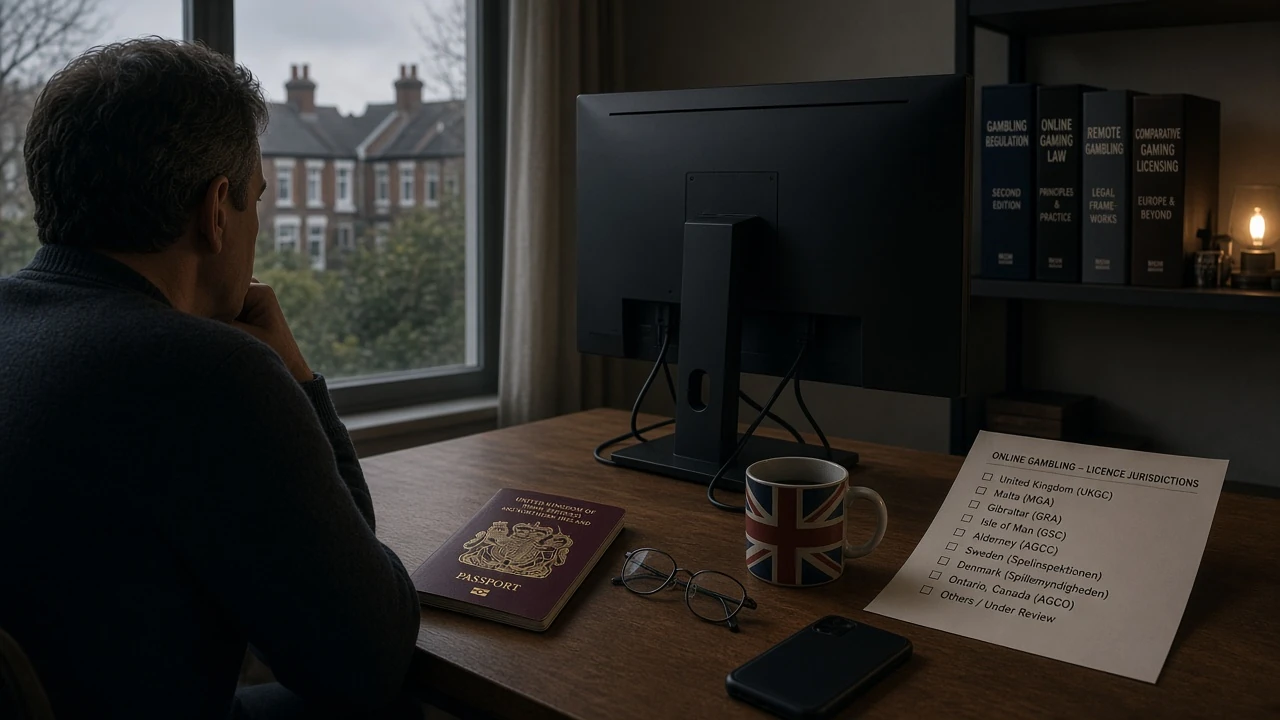
A licence badge in a casino footer is a claim, not a proof. Operator sites copy logos, keep expired credentials on display, and sometimes name authorities they were never registered with. Before any money leaves your account, spend a few minutes doing what the badge alone cannot do for you.
Step 1: Find the actual licensing authority
Read the licence wording, not just the crest. Curaçao-licensed sites operate under an offshore framework, and the authority named may not be Curaçao at all. Some operators in this space hold an Internet Gaming Licence issued by Anjouan Gaming, which is the designated regulatory authority for licensing and supervising internet gaming operations under Anjouan law. That is a different jurisdiction, a different register and a different supervisory body from anything on the islands of the former Netherlands Antilles. If the site only says “fully licensed” without naming anyone, treat that as a warning sign in itself.
Step 2: Match the licence to the operator
Once you have the authority’s name, look for the operator’s registered company name and licence reference, usually in the terms and conditions or the "about" page. Then check that against the authority’s own published information rather than the casino’s copy of it. Anjouan Gaming issues, supervises and enforces Internet Gaming Licences within its jurisdiction, in both B2C and B2B categories — a B2B licence alone does not authorise the site to take your bets directly. The operator’s name on the licence should match the name running the website; a licence held by an unrelated holding company you cannot trace is a gap, not a formality.
Step 3: Assess whether the details hold together
Credibility shows itself in small consistencies. Look for a working registration number, a named entity, terms that reference the licensing law, and contact details that match. Regulators do act — licences can be suspended while a licence holder is under investigation — but an offshore authority’s reach ends at its own borders, so the practical consequence for you as a UK player may be limited regardless.
Step 4: Remember what the check does not cover
Verification confirms that a regulator exists and that the operator is connected to it. It cannot tell you whether disputes will be resolved in your favour, whether the UKGC’s protections apply — they do not — or whether the site is right for you. A verified licence is one part of a trust assessment, not the whole of it.
Is it legal to play at a Curaçao casino in the UK?
Yes, UK residents are not prohibited from using overseas gambling websites under current regulations.
Does a Curaçao licence mean the site is safe?
Not necessarily. It confirms the operator is in a regulated framework, but it does not guarantee UK-standard consumer protection or dispute resolution.
Can I use my credit card to deposit?
Unlike UKGC-licensed sites, some Curaçao-licensed casinos may accept credit card deposits, though this carries higher risk.
Welcome Bonuses, Free Spins and Deposit Terms to Read Closely
The welcome package is usually the first thing you see on a non-UK licensed casino site, and it is often the most aggressive marketing you will encounter anywhere in gambling. Because Curaçao-licensed operators are not bound by UKGC rules on promotions, they can offer larger welcome bonuses, free spins and more flexible wagering requirements than UKGC-licensed casinos — and some push the numbers further than a British site ever could.
How big the offers can get
A single affiliate review in this niche reports welcome bonuses with match percentages ranging from 200% to 500%. Treat that as a claim by one promotional source, not an established market norm — but it tells you the direction of travel. The same applies to packages containing hundreds of free spins: one operator-facing review cites them, and the figure should be read as marketing, not as a promise of value. Larger headline numbers are cheap to print when the terms attached to them are doing the real work.
Wagering requirements
According to an operator’s own promotional review, some non-UK casinos offer lower wagering requirements or no-wagering cashback. If true, that is a genuine improvement on the terms you may be used to. The problem is that you cannot verify the claim from the banner — you have to open the terms and conditions and find the actual rules, which is exactly where the appeal of the offer tends to fall apart.
What to check before you deposit
- Wagering rules. Which games contribute, at what rate, and within what timeframe.
- Deposit and withdrawal conditions. Unclear or restrictive bonus and withdrawal policies are a known feature of non-UK licensed casinos, and this must be disclosed plainly: the terms may not be what the headline implied.
- Currency of the bonus. Many of these sites operate in euros, US dollars or cryptocurrencies, so a bonus figure may not translate into the amount you expect.
- Payment method restrictions. Some bonuses exclude specific deposit options, including e-wallets or crypto, from qualifying.
None of this means the offers are dishonest. It means the size of the bonus is a marketing statement, and the terms and conditions are the actual contract. If a site makes the second hard to find, that tells you something the banner did not.
Curaçao Gambling and Gaming Licences: The Terms in Plain English
If you have read casino sites or player forums for any length of time, you will have met the phrases "Curaçao gambling licence" and "Curaçao gaming licence" used interchangeably. In everyday usage, they mean the same thing: a licence issued by a regulator based in Curaçao that allows an operator to run an online casino. Neither phrase points to a specific document or licence category, and neither tells you anything about the scope of what the operator is actually permitted to do.
When a licence is formally granted, it is issued under defined categories rather than as a single generic permission. That structure is easier to see in a comparable offshore framework. Anjouan Gaming, for example, is the designated regulatory authority for licensing and supervising internet gaming operations under Anjouan law, and it issues internet gaming licences in two categories: B2C, covering operators that serve players directly, and B2B, covering suppliers of gaming services to other operators. The same authority can suspend or revoke a licence — a step that has been taken, with one internet gaming licence suspended pending investigation. Curaçao’s own licensing framework follows the same logic of defined categories rather than a blanket "gambling licence", even though marketing copy rarely reflects that.
The practical takeaway is about precision. A site stating that it holds a "Curaçao gaming licence" is telling you where it is licensed, not what its licence covers, whether it is a B2C operator or a B2B supplier, or what conditions attach to it. To find that out, you need the licence number and the name of the issuing authority — the verification steps covered earlier in this article.
One further distinction worth keeping in mind: "gambling" and "gaming" are not different products in this context. Casino games, sports betting and lotteries may each be licensed separately in some jurisdictions, but in the loose shorthand of casino marketing, the two words are synonyms. Treat any site that treats the wording itself as a selling point with a measure of scepticism; the wording is the easiest part to get right.
Can I use a credit card to deposit at a UK gambling site?
No, credit card gambling is banned at UKGC-licensed casinos. Some non-UK casinos may accept credit cards for deposits.
What is a UK gambling licence?
A UK gambling licence is authorisation from the UK Gambling Commission to operate under UK rules, including requirements for verification, advertising, self-exclusion and consumer protection.
Who do I complain to about a UK casino?
For a UKGC-licensed casino, start with the operator’s internal complaints process. If the dispute is not resolved, the relevant dispute-resolution route is tied to the UK regulatory framework; for a Curaçao casino, complaints go to the operator or its Curaçao licensing body instead.
Can I win jackpots from free spins?
Yes, free spins can be part of casino welcome packages, and winnings may be subject to the applicable bonus terms.
Do I need to deposit to use these spins?
Not necessarily. Some casinos offer free spins as part of a welcome package, while the specific conditions depend on the bonus terms.
What makes a non-UK casino better than a UK one?
Non-UK casinos may offer more games, larger bonuses, more flexible wagering requirements, alternative payment methods, faster registration and fewer universal stake limits. These features come with less UK-style regulatory protection and no UKGC oversight.
How to get a gambling licence in United Kingdom?
An operator must obtain authorisation from the UK Gambling Commission to offer gambling services under UK rules. A non-UK licence, such as a Curaçao licence, does not replace a UKGC licence for operating with consumers in Great Britain.
Prepared by the Casinouk Game Info editorial staff.