
Trusted UK Casino: Regulation, Safety and Fair Play
 Available in GB
Understand the regulatory, safety and payment checks that distinguish a reliable casino from an unlicensed operator.

Table of Contents
- The UK Regulation and Safety Framework Behind a Trusted Casino
- How Responsible Gambling Protection Works at UK Casinos
- What Makes an Online Casino the Most Trustworthy Choice?
- Trusted Real-Money Casinos: Security, Verification and Fair Play
- Trusted Casino Apps for UK Players
- How to Read Trusted Casino Reviews Without Taking Them on Trust
- How to Check Whether an Online Casino Is Trusted
- Games and Payment Methods at Trusted UK Casinos
- Free Spins: What to Check Before Calling an Offer Reliable
- Trusted UK Casinos with Fast Payouts
The UK Regulation and Safety Framework Behind a Trusted Casino
When a UK player types "trusted online casino" into a search box, what they are really asking is whether a site will pay out, protect their data, and not vanish overnight. None of that is a matter of individual reputation. In Great Britain, it is a matter of law, and the framework behind it is specific enough that you can check most of it yourself.
Who Regulates Gambling in Great Britain
The UK Gambling Commission regulates all forms of gambling in the United Kingdom. It was established under the Gambling Act 2005, the primary legislation governing gambling in Great Britain, and assumed its full powers in 2007. Any operator offering online casino services to consumers in Great Britain — slots, table games, live dealer tables — must hold a remote operating licence from the UKGC, regardless of where the company is actually based. A licence issued anywhere else does not substitute for it. A casino licensed in another jurisdiction that accepts British players without a UKGC licence is operating illegally in Great Britain, no matter how professional its website looks.
This page highlights UK casino operators with clear licensing, bonus, payout-speed and minimum-deposit information. Use the overview to identify which options match your priorities when considering a trusted UK casino for 2026.
License: UKGC Operator Licence · Bonus: £200 welcome bonus · Payout speed: Within 48 hours · Min. deposit: £10 32Red holds a UKGC Operator Licence and offers a £200 welcome bonus. Its stated payout speed is within 48 hours, with a £10 minimum deposit.
License: UKGC Operator Licence · Bonus: £100 bonus · Payout speed: Within 24 hours · Min. deposit: £10 ProgressPlay Limited holds a UKGC Operator Licence and offers a £100 bonus. Payouts are stated as being within 24 hours, and the minimum deposit is £10.
License: UKGC Operator Licence · Bonus: £20 bonus · Payout speed: Within 48 hours · Min. deposit: £10 Silverbond Enterprises holds a UKGC Operator Licence and offers a £20 bonus. Its stated payout speed is within 48 hours, with a £10 minimum deposit.
License: UKGC Operator Licence · Bonus: £100 bonus · Payout speed: Within 24 hours · Min. deposit: £10 Genesis Global Limited holds a UKGC Operator Licence and offers a £100 bonus. Payouts are stated as being within 24 hours, and the minimum deposit is £10.
License: UKGC Operator Licence · Bonus: £100 bonus · Payout speed: Within 24 hours · Min. deposit: £10 LeoVegas holds a UKGC Operator Licence and offers a £100 bonus. Its stated payout speed is within 24 hours, with a £10 minimum deposit.
License: UKGC Operator Licence · Bonus: £50 bonus · Payout speed: Within 48 hours · Min. deposit: £10 Platinum Gaming Limited holds a UKGC Operator Licence and offers a £50 bonus. Its stated payout speed is within 48 hours, with a £10 minimum deposit.
The Commission does not hand licences out casually. It issues operating, personal, and premises licences, and before granting any of them it assesses the applicant’s identity and ownership, finances, integrity, competence, and criminality. Application fees are non-refundable whether or not the licence is granted, and the standard processing time is approximately 16 weeks. That is a meaningful barrier to entry — companies do not spend months and non-refundable fees on a licence they expect to lose for cutting corners.
The Public Licence Register
The single most useful trust tool available to a UK player costs nothing and takes a couple of minutes. The UK Gambling Commission maintains a public register of current operating and personal licences, which includes active, inactive, and white label licences. You can search it by operator name or licence number and confirm the listed domain.
This matters because licence claims on casino sites are not always what they seem. A site may display a licence number that belongs to a different company, or a licence that has lapsed, or a licence held by a white label partner rather than the brand you see. Checking the operator against the register and confirming that the domain you are visiting is the one actually listed turns a marketing claim into a verifiable fact. If the name on the site and the name in the register do not match up through a traceable connection, that is a reason to stop, not to keep reading.

Age and Identity Checks
The minimum age for online gambling in the UK is 18, and this is enforced earlier than many players expect. UKGC-licensed casinos must verify players’ age and identity through KYC (Know Your Customer) checks before allowing gambling — not after a deposit, not at the point of withdrawal, but before you can play. Operators must verify each new customer’s date of birth before accepting deposits.
For you as a player, this means being asked for documents when you register: proof of age, proof of identity, and typically proof of address. A casino that lets you deposit and play without any verification is not being convenient; it is breaching its licence conditions. The friction is the point. The same checks that confirm you are old enough also make it harder for someone else to gamble using your identity, and they underpin the anti-money-laundering obligations that licensed operators carry.
What Happens to Your Money: Segregated and Protected Funds
Licensing determines whether a casino is legal. Fund protection determines what happens to your balance if things go wrong. These are separate questions, and the second one deserves more attention than it usually gets.
UKGC-licensed casinos must hold player funds in separate, segregated accounts, kept apart from the operator’s own operational money. Segregation is the baseline. Beyond it, the Commission classifies player funds into three tiers:
- Not protected — funds are segregated, but if the operator becomes insolvent, you are an ordinary creditor and may lose your balance.
- Medium protection — segregation plus additional arrangements, giving you a somewhat stronger claim in an insolvency.
- High protection — player funds are held in independent trust accounts, and only this tier guarantees your funds if the operator becomes insolvent.
A casino can be fully licensed, audited, and reputable while offering only medium protection — which is why "licensed" and "your money is safe in every scenario" are not the same statement. Operators are required to tell you which tier applies, and the difference between the tiers is worth knowing before you keep a large balance sitting in an account. If a site makes its fund-protection level hard to find, that is itself information.
Why the Framework Comes Before Everything Else
Trust in the UK casino market is often discussed as though it were a feeling — a site looks professional, reviews are positive, withdrawals have worked so far. The British regulatory framework replaces that feeling with structure. A remote operating licence, verified against a public register. KYC checks before gambling begins. Player funds segregated from operational funds, with a stated protection tier.
Everything else you might use to judge a casino — game fairness audits, complaint procedures, withdrawal speeds, responsible gambling tools — sits on top of this framework and only means something because of it. An unlicensed site offering the fastest payouts and the friendliest support is offering you things it has no obligation to honour. A licensed one is offering you things it is legally required to provide, with a regulator empowered to act when it does not.
Regulator UK Gambling Commission (UKGC)
Minimum Age 18
Fund Protection Three tiers (Not protected, Medium, High)
Self-Exclusion GamStop
That is the working definition of a trusted UK casino for 2026, and it is not a matter of taste: it is a licence you can check, a register you can search, verification you will experience firsthand, and a stated level of protection for your balance. Before comparing sites on anything else, confirm these foundations — because every other comparison is only as trustworthy as the framework underneath it.
How Responsible Gambling Protection Works at UK Casinos
A licence tells you a casino passed scrutiny before it opened its doors. Responsible gambling protection is what keeps working after you have registered, deposited and started playing. At a UKGC casino, these safeguards are not marketing extras — they are licence conditions the operator must meet, and they apply whether you play slots, table games or anything else on the site.
Deposit limits, loss limits and session limits
The first layer of protection sits inside your account settings. Every UKGC casino must give you tools to control your own play before it becomes a problem:
- Deposit limits cap how much money you can put into your account over a set period.
- Loss limits cap how much you can lose before the account stops you.
- Session limits restrict how long a single playing session can run.
Setting a deposit limit is not a signal of weakness; it is the single most practical thing you can do when opening an account. A site that buries these tools five clicks deep or makes them hard to find is telling you something about its priorities. A site that puts them in the account menu and at registration is behaving the way a licensed operator should.
Reality checks and taking a break
Alongside the limits, licensed casinos offer reality checks — periodic on-screen reminders of how long you have been playing and how much you have spent. They interrupt the state a slot machine is designed to produce, where an hour feels like ten minutes.
If a break is needed, most operators offer a time-out: a short, reversible cooling-off period during which you cannot play. It is distinct from full self-exclusion, which we come to below, and it is useful when you want to stop for a weekend rather than make a longer commitment.
GamStop: the one switch that covers everything
The strongest tool in the UK system is GamStop. Every UKGC casino must be part of the GamStop self-exclusion scheme, and it works differently from the self-exclusion offered by any single operator: registering with GamStop blocks you from all licensed gambling sites, not just one.
GamStop lets you exclude yourself for a period of six months to five years. Once the exclusion is active, licensed operators are expected to prevent you from gambling — closing the loophole of simply signing up elsewhere, which is how single-site self-exclusion fails in practice. A casino advertising itself as “not on GamStop” is advertising that it operates outside the UK licensing system, which should end the conversation about whether it can be trusted.
For device-level blocking, Gamban and similar software can be installed across phones, tablets and computers. A casino that participates in GamStop but steers you away from device blocking tools is worth noting; a site connected to Gamban and openly signposting it is meeting the standard.
- Verify the licence on the UKGC public register
- Check for GamStop participation
- Set deposit and loss limits early
- Play on sites without a UKGC licence
- Ignore the fund-protection tier level
- Bypass KYC verification steps
Financial vulnerability checks
The most recent, and least understood, layer of protection is the financial vulnerability check. According to a UKGC-announced framework reported in a dedicated industry review, licensed casinos must run these checks when a user deposits £150 or more within a rolling 30-day period. The purpose is to detect signs of harmful or unaffordable spending early — before losses become a crisis — rather than to police ordinary play.
If your gambling activity triggers further verification checks, you may be asked to provide additional documents. This is not the casino accusing you of anything; it is the operator demonstrating, on the record, that it looked at whether the play was affordable. Casinos are required to conduct affordability checks to prevent harm and to stay on the right side of their licence, so document requests tied to higher spending are the system working, not malfunctioning.
Complaints when protection fails
Safeguards only mean something if there is a route to challenge their absence. Licensed casinos must provide access to Alternative Dispute Resolution (ADR) services, and must acknowledge complaints and issue a final response within eight weeks. If you set a limit and the operator failed to apply it, or if self-exclusion was not honoured, that is a complaint with a formal process behind it — first to the operator, then to an ADR body, and beyond that to the UK Gambling Commission itself.
What this means for choosing a site
When you compare trusted UK casino sites, the responsible gambling section deserves as much attention as the game library. Before registering, check that the operator:
- holds a UKGC licence and appears in the public register;
- participates in GamStop (and states this plainly);
- offers deposit, loss and session limits plus reality checks;
- explains its verification requirements and withdrawal policies in transparent terms and conditions;
- signposts help services such as BeGambleAware and GamCare.
A licence obliges the operator to do all of these things. But verifying that they are actually there takes minutes, and it tells you whether you are dealing with a casino that treats the licence as a set of duties or as a piece of paperwork. That distinction, more than any welcome offer, is what separates a trusted UK casino site in 2026 from a site that is merely licensed on paper.
If the tools are not enough
Every safeguard above assumes you are still able to make the decision yourself. If gambling has stopped being a choice, GamStop covers the exclusion side, and GamCare and BeGambleAware offer free, confidential support — by phone and online, for gamblers and for the people around them. Reaching out to them is a smaller step than the alternative.
What Makes an Online Casino the Most Trustworthy Choice?
There is no single answer to the question of which casino is the most trusted in the UK, and any page that hands you a confident ranking without showing its evidence is asking you to trust the ranking instead of the operator. What you can do is narrower and more useful: look at the signals that a genuinely accountable operator cannot fake cheaply, and treat their absence — rather than a polished homepage — as the deciding fact.
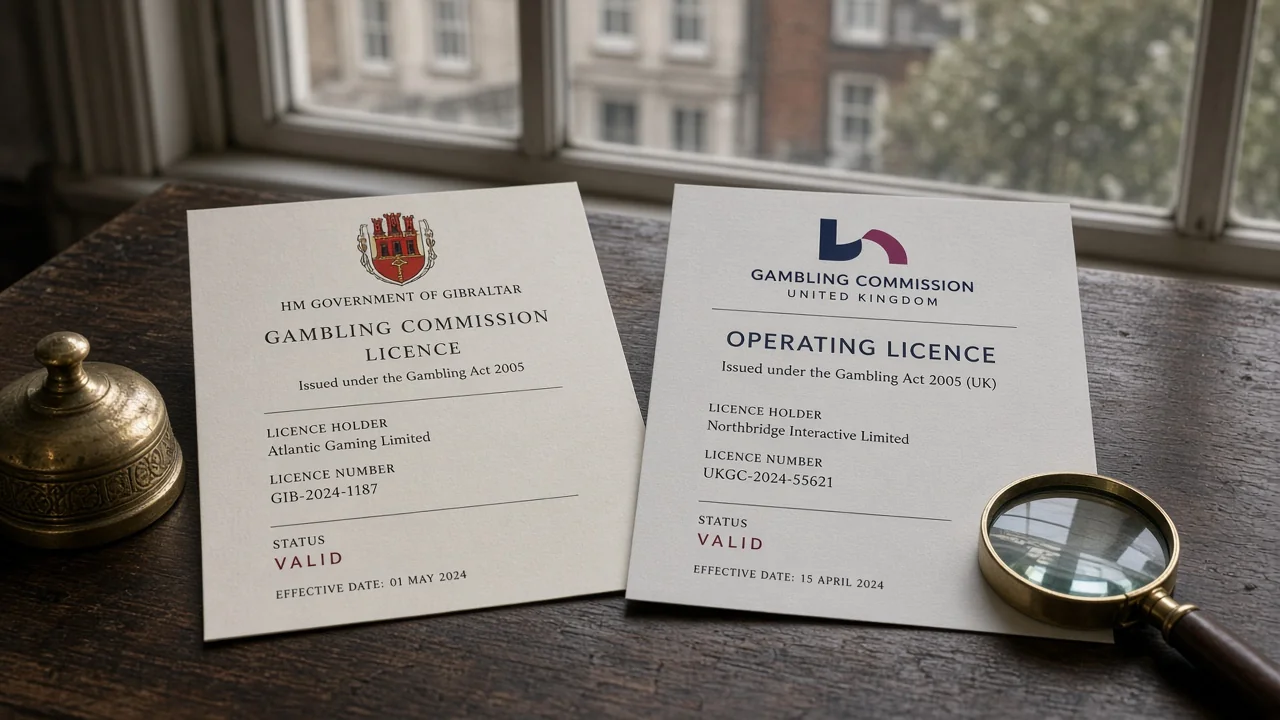
The licence is the floor, not the badge
Every casino serving players in Great Britain must hold a UK Gambling Commission (UKGC) licence, and the Commission maintains a public register of licensed operators covering active, inactive, and white label licences. A trustworthy operator makes this check easy: the licence number appears in the site footer and matches the register entry, including the domain the licence covers.
This matters because the licence is the only thing that makes the rest of the trust signals enforceable. Terms and conditions, complaint handling, game audits — all of these are obligations attached to a licence, not voluntary gestures. An offshore site can copy the design and even the wording, but it cannot copy the accountability.
Terms you can actually read
UKGC-licensed casinos must offer transparent terms and conditions, with clear information on bonuses, withdrawal policies, and verification requirements. In practice, the difference between operators is how much work they make you do to find that information.
A trustworthy casino makes its terms and conditions easy to find and simple to understand, rather than burying important withdrawal or bonus rules in complex legal language.
A trustworthy casino puts the terms in plain language, states upfront what documents verification requires, and spells out the conditions attached to any bonus before you claim it. A site that merely looks polished buries the withdrawal rules three clicks deep or writes them in language you need a lawyer to parse. That is not a style choice — it is a filter. If you cannot determine from the terms when and how you get your money out, you are being asked to deposit on faith.
Complaints must have somewhere to go
No operator gets every decision right, so the measure of trust is what happens when something goes wrong. Licensed casinos must provide access to Alternative Dispute Resolution (ADR) services for player complaints, which means an independent body reviews the dispute rather than the casino marking its own homework.
Look for two things: a complaints procedure that is easy to find, and a named ADR provider you can contact if the casino’s own response does not settle the matter. An operator that makes its complaint route hard to locate is telling you how it expects disputes to end.

Independent oversight of the games
Trust in game outcomes cannot rest on the operator’s word. Casino games at UKGC-licensed sites must use Random Number Generators (RNGs), and those RNGs must be tested for randomness by independent agencies. Licensed casinos undergo regular independent audits of game fairness by agencies such as eCOGRA, iTech Labs, TST, and GLI.
When you are comparing operators, check whose testing certificates are published and whether they are current. A certification logo with no link, or a certificate that cannot be matched to the site, is decoration. A dated certificate from a named testing house, verifiable against that house’s own records, is evidence.
How your money is protected if the operator fails
This is the signal most players never check, and it separates the serious operators from the rest. UKGC-licensed casinos must hold player funds in separate, segregated accounts from operational funds, but the level of protection varies: funds can be classified as not protected, medium protection, or high protection. Only high protection — which involves holding player funds in independent trust accounts — guarantees your balance if the operator becomes insolvent.

The classification is disclosed in the casino’s terms, though not always prominently. An operator that states its fund-protection level plainly, in a place you can find without hunting, is showing you the same transparency it shows the regulator.
Accountability versus polish
A site can look impressive and still fail every test above. Good design, a large games library, and generous-sounding promotions are available to anyone with a budget. The signals that cannot be bought are the ones that impose obligations on the operator: a licence that can be revoked, audits it must pass, an ADR scheme it cannot bypass, and a fund-protection classification it must disclose.
So when you ask what the best trusted casino in the UK is, reframe the question. Ask instead: does the licence check out against the public register? Are the terms written to be understood or to be skipped? Is there a complaint route that ends outside the casino’s control? Are the games tested by an agency that answers to nobody in the operator’s management? Is your balance protected in a way that survives the operator’s failure?
An operator that passes those questions is a trustworthy choice regardless of its marketing budget. One that fails any of them is asking you to accept risk it has declined to manage — and no amount of polish changes what that is.
Trusted Real-Money Casinos: Security, Verification and Fair Play
Playing with real money changes what you should expect from a casino. A site can look flawless and still treat your balance carelessly, or run games that have never been independently tested. Once your own funds sit in an account, the questions become concrete: who verifies you, where your money is kept, what happens if the operator fails, and whether the games are genuinely random. A UKGC casino operating legally in Great Britain is required to answer each of these — in ways you can check before you deposit.
Visa Debit and Mastercard-issued cards are the standard for funding accounts.
Fast options including PayPal, Skrill, and Neteller.
Dependable but generally slower than digital wallet methods.
KYC: verification happens before you can gamble
Every UKGC-licensed casino must verify your age and identity through KYC (Know Your Customer) checks before allowing you to gamble. This is not a formality bolted on after registration: it is a condition of holding the licence. The minimum age for online gambling in the UK is 18, and operators must confirm your date of birth before accepting deposits.
In practice, KYC means supplying proof of identity — a passport or driving licence, and typically proof of address — which the casino checks against records. If your documents do not match, or the operator cannot confirm you are who you claim to be, the account should not proceed to real-money play.
Verification does not necessarily end there. According to operator-published guidance, players may be asked for additional documents later, if their gambling activity triggers further verification checks. A request for a source-of-funds document or a fresh ID scan mid-relationship is not, by itself, a sign of a dishonest casino — it is part of how licensed operators are expected to police their own customer base. What separates a trustworthy operator is that these requests are explained, referenced in the terms you agreed to, and resolved through a documented process rather than an indefinite account freeze with no explanation.

Segregated funds and what "protected" actually means
This is the part of casino trust that most players never read, and it is the part that matters most when things go wrong.
UKGC-licensed casinos must hold player funds in separate, segregated accounts, kept apart from the operational money the business runs on. Segregation is mandatory. Protection is not — and the two are not the same thing.
Player funds at UKGC-licensed casinos fall into three categories:
- Not protected. Your money sits in a segregated account, but if the operator becomes insolvent, you are an ordinary creditor and may recover little or nothing.
- Medium protection. There are arrangements intended to give players a better position than ordinary creditors in an insolvency, but no guarantee.
- High protection. Player funds are held in independent trust accounts, which keeps them outside the operator’s estate. Only this level guarantees your funds if the operator fails.
A casino’s tier must be disclosed in its terms. If you are depositing a sum you would care about losing to an administrative failure, this disclosure is worth thirty seconds of reading — it is the difference between getting your balance back and joining a creditor queue.
Independent RNG testing and fair play
Trust in the games themselves rests on a mechanism most players never see: the Random Number Generator. Every casino game at a UKGC-licensed site — slots, table games, anything whose outcome is not a live physical event — must use an RNG to produce results, and that RNG must be tested for randomness by independent agencies.
The testing bodies you will encounter include eCOGRA, iTech Labs, TST and GLI. Their role is to confirm that game outcomes are statistically random and not tilted by the operator: that a slot’s stated odds correspond to what the RNG actually produces, over millions of simulated rounds. Audits are regular and ongoing, not a one-off licence condition.
Two practical points follow. First, testing agencies typically issue certificates, and reputable operators publish or link to them. A casino that names its testing agency but never shows a certificate is asking you to take its word for it. Second, the return-to-player (RTP) figure a game displays is only meaningful because an independent body has verified the engine behind it — an untested RTP is marketing copy.
What about welcome bonuses and crypto?
Two things players search for under "trusted" deserve direct treatment here.
Attention Using cryptocurrency does not grant you the same protections as a UKGC licence; always verify the operator is registered with the Commission.
Bonuses. A welcome bonus does not make a casino trusted, but bonus terms are a reliable test of whether it deserves the label. UKGC-licensed casinos must provide transparent terms and conditions, including clear information on bonuses and withdrawal policies. Wagering requirements should be stated plainly, not buried in an expandable panel. An operator that obscures the conditions attached to its promotions is showing you how it handles the fine print everywhere else. Whether any specific offer is worth taking is a separate question — but a trustworthy real-money casino lets you answer it before you commit, not after.
Crypto. Be careful here. The protections described in this section — KYC before gambling, segregated funds, Gamstop participation, independent RNG testing, access to Alternative Dispute Resolution — attach to a UKGC licence. A crypto casino serving UK players without one sits outside all of them. “Crypto” is not a trust signal; the licence behind the deposit method is. If a site accepts cryptocurrency but cannot be matched against the UKGC public register, the protections you would rely on with a debit-card deposit simply do not apply.
The honest summary
There is no number-one real-money casino that outranks the rest on trust — only operators that meet a verifiable standard and operators that do not. The standard is checkable: KYC before you gamble, disclosed fund-protection tier, independent RNG audits by a named agency, and terms written clearly enough that you understand the bonus and withdrawal rules before your first deposit. A casino that satisfies all four is handling your real money the way UK regulation requires. A casino that makes any of them hard to verify has told you something too — just not in words.

Trusted Casino Apps for UK Players
An app is not a casino. It is a piece of software that connects you to one, and everything that decides whether your money is safe — the licence, the identity checks, the complaints process — belongs to the operator behind it, not to the icon on your home screen. That distinction is the whole basis for judging whether a casino app deserves your trust.
The app inherits the licence, not the other way round
A UKGC casino must hold a valid UK Gambling Commission licence to operate legally in Great Britain, and that licence covers every channel through which it takes bets, including its app. So the first check is not the app store listing but the operator: confirm the licence against the UKGC’s public register before you download anything. A polished app attached to an unlicensed operator is exactly as unsafe as a polished website attached to one.
The reverse also matters. A licensed operator’s app is covered by the same obligations as its site: transparent terms, complaint handling through approved dispute resolution, and age and identity verification before you can gamble. If an app offers to let you play before any KYC check, that is a warning sign about the operator, not a convenience feature of the app.
What the app should carry over
Once you know the operator is licensed, the app itself should give you the same protections you would have in a browser:
- Responsible gambling tools — deposit limits, session limits, loss limits and self-exclusion, all settable from within the app rather than only on the website.
- Gamstop participation — a UKGC-licensed casino must be part of the GamStop scheme, which blocks access to all licensed gambling sites. Self-excluding from the app alone, while the mobile site still works, defeats the purpose; the scheme is designed to cover every route in.
- Segregated player funds — again a property of the operator, so check the fund-protection level before depositing through any channel.
Practical steps before installing
Verify the operator on the UKGC register, confirm the app genuinely belongs to that operator rather than an imitator, and check that the responsible gambling tools are reachable inside the app. Where the app falls short of the site — limits you can only set on desktop, for instance — treat that as a gap in the operator’s compliance, because that is what it is.
A trusted casino app for UK players is simply the mobile face of a trusted UKGC casino. Assess the operator first; the app is the easy part.
How to Read Trusted Casino Reviews Without Taking Them on Trust
A casino review is a claim, not evidence. Most review sites earn commission when you click through and register, which does not automatically make them dishonest, but it does mean their incentives are not identical to yours. The way to use them is not to believe or dismiss them wholesale, but to test what they say.
Verifying a Review
- Check if the operator’s licence number is provided
- Match the licence number against the UKGC public register
- Verify if the review mentions any specific drawbacks
- Confirm the review is not just repeating marketing copy
Verify the licence claim yourself
Nearly every review of a UKGC casino states that the operator is licensed. That is easy to check and impossible to fake convincingly. The UK Gambling Commission maintains a public register of licensed operators, covering active, inactive, and white label licences. Search the operator name or licence number, and confirm the listed domain matches the site you intend to join. A review can be wrong; the register cannot be talked around. If the operator is not there, nothing else in the review matters.
Read the terms, not the summary
Reviews tend to describe bonuses and sign-up perks in glowing shorthand. The operator’s own terms and conditions are the document that actually governs your account. Licensed casinos must present transparent terms covering bonuses, withdrawal policies, and verification requirements. When a review summarises an offer, open the terms page and compare: does the wagering requirement match, is the withdrawal policy stated as clearly as the review implies, and are verification requirements mentioned at all? A reviewer who glosses over withdrawal conditions is telling you where their attention ends.
Look for the complaint route
This is the test most reviews skip. UKGC-licensed casinos must provide access to Alternative Dispute Resolution (ADR) services for player complaints. A genuinely accountable operator publishes how to complain, who handles disputes, and what the escalation path is. If a review tells you a casino is trustworthy but never mentions how you would raise a problem with them, treat that as a gap in the review, not a sign that problems never occur.
Signs a review deserves less weight
- It ranks operators without saying what the ranking is based on.
- It links every recommendation with a tracking URL and no critical notes.
- It repeats the operator’s own marketing copy word for word.
- It has no date, so you cannot tell whether the licence or terms have changed since publication.
Signs a review deserves more weight
- It cites specifics you can check: licence numbers, terms, withdrawal conditions.
- It mentions at least one drawback per operator.
- Its claims match what the UKGC register and the operator’s terms say when you verify them.
The working rule is simple: let reviews point you towards casinos worth investigating, then do the verification yourself before you register. A review can save you time; it should never replace your own check against the register and the terms.
How to Check Whether an Online Casino Is Trusted
You can verify a single casino in a few minutes, and you should do it before you register rather than after something goes wrong. Here is a sequence that works for any UK-facing site.
Step 1: Confirm the licence
Legal operation in Great Britain requires a valid UK Gambling Commission (UKGC) licence — regardless of where the operator is based. The UKGC maintains a public register of licensed operators, including active, inactive, and white label licences. Search the register by the operator name or the licence number shown in the site’s footer, then confirm that the domain listed on the licence matches the site you are on. A logo alone proves nothing; a matching register entry does.
Step 2: Check age and identity requirements
A casino that lets you deposit without first confirming your age is not cutting red tape — it is breaking the rules. UKGC-licensed casinos must verify players’ age and identity through KYC checks before allowing gambling. If a site’s sign-up flow suggests verification is optional or can be skipped until later, treat that as a warning sign rather than a convenience.
Verifying a Casino
Locate the UKGC licence number, usually found in the website footer.
Search the operator’s name or licence number on the official UK Gambling Commission public register.
Confirm that the domain you are currently visiting is the one specifically listed under that licence.
Step 3: Inspect the responsible gambling tools
Before registering, open the site’s responsible gambling section. A licensed casino must offer tools such as deposit limits, session limits, loss limits, and self-exclusion, and must be part of Gamstop, the scheme that blocks access to all licensed gambling sites for a period of six months to five years. If you cannot find these tools without logging in, or Gamstop is only mentioned in fine print, the operator is treating player protection as a compliance footnote.
Step 4: Review how player funds are treated
Licenced casinos must hold player funds in separate, segregated accounts from operational funds, but segregation is not the whole story. Funds are classified as not protected, medium protection, or high protection — and only high protection, which involves holding player funds in independent trust accounts, guarantees your money if the operator becomes insolvent. This classification is disclosed on the operator’s own terms, so find it before you deposit, not after a withdrawal stalls.
What this checklist does not cover
Game fairness audits, withdrawal speeds, and bonus conditions matter too, but they are separate questions. This sequence answers one thing only: whether the operator is accountable to a regulator you can actually check. If any of the four steps fails, stop there — nothing further about the site is worth your time.

Games and Payment Methods at Trusted UK Casinos
Trust at a UKGC casino doesn’t stop at the licence. It runs through two things you touch every session: the games themselves and the money moving in and out of your account. Both are governed by rules you can check before you play.
Fair games, verified independently
Every casino game at a UKGC-licensed site — slots, roulette, card games — must run on a Random Number Generator (RNG). An RNG produces outcomes that cannot be predicted or influenced by the operator, which is what makes a spin or a deal genuinely random rather than shaped in the house’s favour behind the scenes.
Randomness isn’t taken on trust. Games must be tested for randomness by independent agencies such as eCOGRA, iTech Labs, TST and GLI. If a casino can’t point to independent testing of its games, that’s a gap in the chain of accountability, not a technicality.
What you can pay with
The payment rules in Great Britain are unusually clear-cut:
-
Debit cards — Visa Debit and Mastercard-issued debit cards are allowed for funding your account.
-
Credit cards — prohibited for gambling purposes in the UK. Credit card gambling was banned outright, so any site accepting one is operating outside the rules that apply here.
-
Prepaid cards — PaysafeCard and similar prepaid options support deposits, but they do not support withdrawals. If you fund your account this way, plan a different route for getting winnings back out, such as a debit card or bank transfer.
-
E-wallets — PayPal, Skrill and Neteller are widely available at licensed casinos.
-
Bank transfer — a slower but dependable option, accepted by licensed operators.
How fast money moves
Deposits via debit cards and e-wallets are typically instant, so funds appear in your account without a wait. Withdrawals are a different matter: e-wallet withdrawals (PayPal, Skrill, Neteller) are processed within 15 minutes to 24 hours after approval, while debit card and bank transfer withdrawals take longer — generally 1 to 5 business days for debit cards and 3 to 5 business days for bank transfers.
The phrase "after approval" matters. Before a withdrawal is released, the casino checks it against its verification requirements, which is covered in more detail elsewhere on this page.
Putting it together
Fair, independently tested games and a payment system built around debit funding rather than credit are both products of the same regulatory framework. When you’re weighing up trusted casino games in the UK, the question isn’t whether the site looks modern — it’s whether the games are certified random and the payment methods follow the rules that licensed operators are bound by.
Final Checklist
- A valid UKGC licence is the foundation of all player protections.
- Responsible gambling tools must be easily accessible and functional.
- Fund protection tiers vary, so understand your level of security.
- Independent RNG testing ensures game fairness.
Free Spins: What to Check Before Calling an Offer Reliable
A free-spins offer at a UKGC casino is only as good as the conditions attached to it. The headline number of spins tells you almost nothing; the terms tell you everything.
Wagering requirements
The first thing to look at is the wagering requirement — how many times you must play through winnings from the offer before they can be withdrawn. A dedicated casino review site has reported that the UKGC has capped wagering requirements for UK casino bonuses at 10 times, and the same source treats requirements of 10x or lower as the preferable end of the scale for fair bonuses. Until you see that cap confirmed in the operator’s own terms, treat any stated figure as a claim to verify, not a fact.
Transparent terms
UKGC-licensed casinos must offer transparent terms and conditions, including clear information on bonuses and withdrawal policies. In practice, that means the conditions for a free-spins offer should be stated in plain language before you opt in: which games the spins apply to, how long the offer stays valid, what happens to winnings, and whether any verification steps sit between you and a withdrawal. If any of these are buried, ambiguous, or missing, the offer fails the reliability test regardless of how generous it looks.

The licence check that comes first
Before evaluating any specific promotion, confirm the operator against the UKGC public register. An attractive offer from an unlicensed site carries no protection at all — the transparent-terms and dispute-resolution obligations described elsewhere in this article only bind operators the Commission actually regulates.
What free spins are not
Free spins are a promotional restriction, not free money. They sit on top of a deposit and withdrawal process you still have to trust: identity verification, segregated player funds, and complaint routes. Judge the offer by its terms; judge the casino by its licence. The two checks are separate, and you need both before any spin is genuinely reliable.
Trusted UK Casinos with Fast Payouts
Getting money out is where a casino’s real character shows. Deposits are instant almost everywhere; withdrawals are where delays, checks and small print live. Before you judge a UKGC casino by its payout speed, it helps to know what is actually within the operator’s control.
What "fast" means in practice
No withdrawal leaves a UK-licensed casino instantly, because each one passes through approval and, where required, verification checks. The payout method you choose then determines the typical window:
- E-wallets (PayPal, Skrill, Neteller): processed within 15 minutes to 24 hours after approval. This is the fastest route widely available to UK players.
- Debit cards: typically 1 to 5 business days once approved.
- Bank transfers: also 1 to 5 business days, with larger sums sometimes sitting at the slower end through no fault of the casino.
A casino that approves a PayPal withdrawal quickly but quotes the same "1 to 5 days" for a bank transfer is not being slow — that is simply how the rails work.
Approval is the part worth checking
Two withdrawals to the same e-wallet can take wildly different times at the same casino, and the difference is almost always the approval stage. A pending period while the operator reviews the request, or a request for identity documents, can add time that has nothing to do with the payment method itself.
This is why withdrawal speed is a weak trust signal on its own. A casino that takes its verification duties seriously will occasionally hold a payout — that is the regulator’s framework working, not a operator trying to keep your money. What distinguishes a trustworthy operator is not the absence of checks but clear, published withdrawal policies and a stated process for releasing funds.
A practical read on payout claims
When a site advertises itself as having the fastest payouts for UK players, treat the claim as a starting point, not a conclusion:
- Find the withdrawal terms — a trusted online casino publishes them in full.
- Check whether the advertised speed refers to approval time or total time to your account. The two are regularly conflated.
- Confirm your method of choice is actually available for withdrawals, not only deposits. Prepaid cards such as PaysafeCard support deposits but do not support withdrawals, so winnings routed in that way need an alternative exit.
The casinos that deserve the "fast payout" label are the ones that combine quick e-wallet processing with transparent, verifiable terms — and tell you plainly what happens when a check slows things down.
What payment methods are commonly used at UK online casinos?
UK online casinos commonly accept Visa Debit and Mastercard debit cards, bank transfers, and e-wallets such as PayPal, Skrill, and Neteller. PaysafeCard can be used for deposits but not withdrawals, while credit cards are prohibited for gambling in the UK.
What is a UK gambling licence?
A UK gambling licence is a licence issued by the UK Gambling Commission that allows an operator to offer online casino services legally to consumers in Great Britain. The operator must meet requirements covering ownership, finances, integrity, competence, and criminality.
How to verify a UK casino licence?
Search the UK Gambling Commission’s public register by the operator’s name or licence number, then check that the casino’s domain appears in the listing. Make sure the company and website shown on the casino match the registered details.
How do I know if a casino is licensed in the UK?
Check the casino in the UK Gambling Commission’s public register and confirm that its domain is listed under the relevant operator. A licence from another jurisdiction does not authorise a casino to accept players in Great Britain.
What is the fastest payment method for withdrawals?
E-wallets such as PayPal, Skrill, and Neteller are generally the fastest listed withdrawal methods, with processing typically taking from 15 minutes to 24 hours after approval. PayPal withdrawals are typically completed within 0–24 hours.
Prepared by the Casinouk Game Info editorial staff.