Online Casino Malta MGA Licence UK Explained
 Available in GB
Understand the MGA’s role, UK legal limits, operator checks, bonus terms and self-exclusion considerations before choosing a casino.
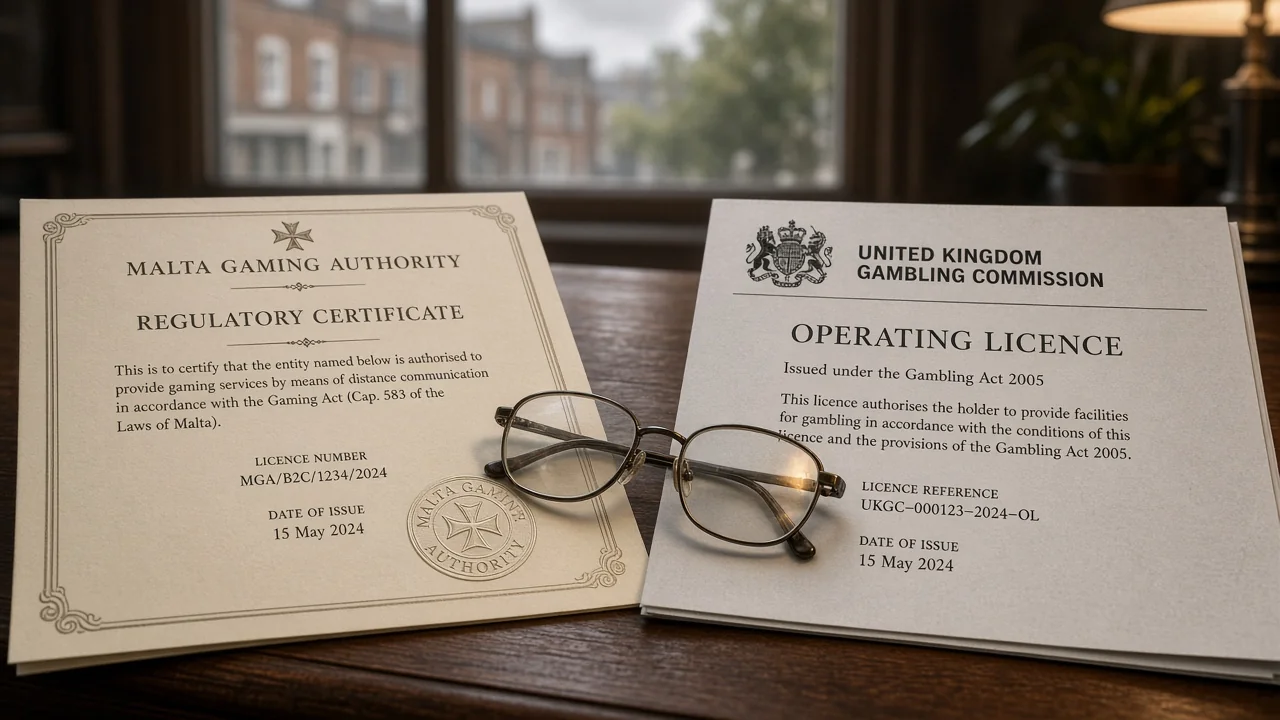
Table of Contents
- What an MGA Licence Means — and What It Does Not Mean in the UK
- MGA Casinos and UK Players: The Legal Position in 2026
- How to Check Whether a Malta Casino Can Legally Serve You
- MGA Casino Sites: What to Examine Before You Register
- Choosing Among Malta-Linked Online Casinos Without Relying on Rankings
- Malta Gaming Authority Casino Oversight and Its Limits
- Bonuses and Deposits: Read the Terms Before Accepting an Offer
- What UK Self-Exclusion Means for Casinos Outside GAMSTOP
- New MGA Casinos in 2026: Why ‘New’ Is Not a Safety Test
- Malta Online Casinos: The Regulatory and Consumer Checklist
What an MGA Licence Means — and What It Does Not Mean in the UK
The Malta Gaming Authority (MGA) is the national regulator for gambling in Malta, and its licence is one of the most widely held in the European online casino industry. When a casino describes itself as "MGA licensed", it means the company has passed Malta’s own approval process: it is registered there, supervised there, and answerable to that regulator for how it treats the players it is authorised to serve.
That last phrase matters more than it first appears. A licence is permission to serve a specific market, not a universal stamp of approval. An MGA licence authorises an operator to offer gambling in the jurisdictions that licence covers. It does not, on its own, authorise anything in Britain.
Why the licence exists
The MGA’s job is comparable to that of any national gambling regulator: it vets the companies that apply to it, checks their ownership and finances, sets conditions on how they operate, and can discipline or revoke the licences of operators that break its rules. For a Maltese-licensed casino, the MGA is the body that sets out player-protection requirements, handles complaints, and holds the company to account.
This page highlights operators relevant to the UK market when researching Malta MGA licence topics for online casinos in 2026. Use the listed licence, bonus, payout speed and minimum deposit details as a quick reference when assessing each option.
License: UKGC Operator Licence · Bonus: £200 welcome bonus · Payout speed: Within 48 hours · Min. deposit: £10 32Red holds a UKGC Operator Licence and offers a £200 welcome bonus. Its stated payout speed is within 48 hours, with a £10 minimum deposit.
License: UKGC Operator Licence · Bonus: £100 bonus · Payout speed: Within 24 hours · Min. deposit: £10 ProgressPlay Limited holds a UKGC Operator Licence and provides a £100 bonus. Payouts are stated to arrive within 24 hours, and the minimum deposit is £10.
License: UKGC Operator Licence · Bonus: £20 bonus · Payout speed: Within 48 hours · Min. deposit: £10 Silverbond Enterprises holds a UKGC Operator Licence and offers a £20 bonus. The stated payout speed is within 48 hours, with a £10 minimum deposit.
License: UKGC Operator Licence · Bonus: £100 bonus · Payout speed: Within 24 hours · Min. deposit: £10 Genesis Global Limited holds a UKGC Operator Licence and offers a £100 bonus. It lists payouts within 24 hours and a £10 minimum deposit.
License: UKGC Operator Licence · Bonus: £100 bonus · Payout speed: Within 24 hours · Min. deposit: £10 LeoVegas holds a UKGC Operator Licence and offers a £100 bonus. Its stated payout speed is within 24 hours, with a £10 minimum deposit.
License: UKGC Operator Licence · Bonus: £50 bonus · Payout speed: Within 48 hours · Min. deposit: £10 Platinum Gaming Limited holds a UKGC Operator Licence and offers a £50 bonus. Payouts are stated to arrive within 48 hours, and the minimum deposit is £10.
None of that is trivial, and none of it is fake. Malta’s regulatory regime is a serious one, and a casino holding an MGA licence has cleared a genuine vetting process. The problem for a UK reader is not the quality of the licence — it is the question of whom that licence permits the casino to serve.
What the licence does not do in Britain
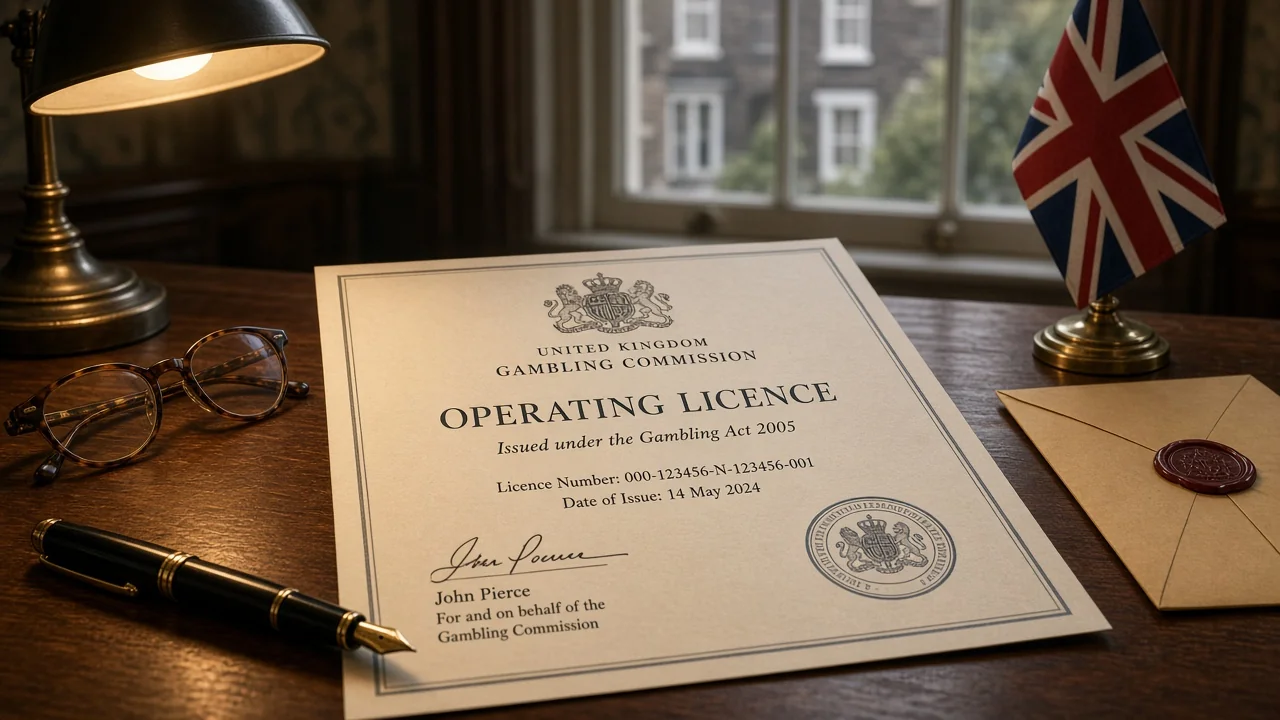
Under the Gambling Act 2005, any company offering gambling services to UK players must hold a licence from the UK Gambling Commission (UKGC), regardless of where the company is registered or licensed. Malta is not an exception, and neither is any other jurisdiction: an operator based in Malta, Gibraltar, the Isle of Man or anywhere else needs the UKGC’s permission before it may lawfully take customers in Great Britain.
This is the single most common point of confusion around Maltese-licensed casinos. Players see an MGA badge in a casino’s footer, conclude the site is "licensed" in a general sense, and assume that licensing covers them. It does not. An MGA licence does not make a site legal for UK players without additional UKGC approval. Only UKGC-licensed casinos are legally allowed to serve UK-based players — a rule that applies whether the operator’s head office is in Valletta, London or anywhere else.
So the realistic picture has two distinct categories:
- Casinos holding both an MGA licence and a UKGC operating licence. Some large operators are licensed in several jurisdictions, and Malta is a common one. For a UK player, the licence that matters is the UKGC one; the MGA licence governs what the same company does elsewhere.
- Casinos holding an MGA licence only. These sites may be perfectly legitimate for players in the markets their licence covers, but they have no authorisation to serve Britain. If you are in the UK, they are outside the system that exists to protect you, whatever the badge in the footer suggests.
Why the distinction is worth understanding
The distinction is not a technicality. The UKGC’s rules for its licensees — from self-exclusion to payment restrictions to the conditions attached to bonuses — exist because Parliament decided British players should have them. A casino with no UKGC licence has made no commitment to any of that, because it has not been asked to. The MGA may require similar things of its licensees for its own markets, but its requirements are not a substitute for the ones that apply to you.
There is also a practical consequence. When something goes wrong — a withheld withdrawal, a disputed bonus, a closed account — the body you can complain to is the regulator that covers you as a player. If that regulator is not involved, the Maltese badge on the homepage will not change who answers your complaint or according to which rules.
Where to verify any of this
You do not have to take a casino’s word for its licensing status, in either direction. The UKGC maintains a public register of current operating and personal licences, and you can check any casino’s claimed licence there. If a site says it holds UKGC approval, the register will confirm or contradict it — and a claim that cannot be confirmed is worth treating as a claim, not a fact. How to read that register in detail is covered further on.
For now, the working summary is simple. An MGA licence is real, but it is Malta’s permission, not Britain’s. What decides whether a casino can lawfully serve you is whether the UKGC has also licensed it — and that is the question to settle before anything else about a site is worth discussing.
Regulator (Malta) Malta Gaming Authority (MGA)
Regulator (UK) UK Gambling Commission (UKGC)
Key Requirement UKGC licence is mandatory for UK players
MGA Casinos and UK Players: The Legal Position in 2026
If you are in Great Britain and you open a casino site licensed only by the Malta Gaming Authority, the question is not whether the site is well run. The question is whether it is allowed to take your bets at all. In 2026, the answer turns on a single principle: any company offering gambling services to UK players must hold a licence from the UK Gambling Commission (UKGC), regardless of where the company is registered or where else it is licensed. Malta is no exception to that rule.
Why a Malta licence alone is not enough
The MGA is a genuine regulator, and a Maltese operating licence is a real document with real obligations attached. But its territorial reach ends where its jurisdiction ends. An operator based in Malta that wants to serve customers in Great Britain needs a UK remote operating licence on top of its MGA authorisation. Without it, the site is not a legal option for you, however professional its website looks and however many other markets it serves lawfully.
This is worth stating plainly because the framing you often see — "Malta-licensed casinos accepting UK players" — quietly inverts the logic. The MGA licence does not confer any right to accept UK players; the UKGC licence does. Where an operator holds both, the Malta licence may support its infrastructure or its European operations, but your legal relationship as a British player rests with the UKGC.
The pattern is not unique to Malta
Malta is the jurisdiction you hear about most often, so it is easy to assume it occupies some special grey area. It does not. The same rule applies across the board:
- A Gibraltar licence is no longer sufficient for UK players, who must use UKGC-licensed sites.
- An Isle of Man licence does not allow a site to operate legally in the UK without a UKGC licence.
- A Curaçao licence does not permit legal access to UK players.
- A Spelinspektionen (Swedish) licence does not allow a site to operate legally in the UK either.

The pattern should tell you something: this is not hostility towards Malta specifically. It is the UK’s general position that the licence of the country where the gambling happens — here, where the player is — governs the activity. An operator that holds only a foreign licence and continues to serve British customers is not operating in a gap in the law. It is operating without one.
What this means for your decision
The practical consequence is straightforward. When you see an online casino described as Malta-based, Malta-registered, or MGA-licensed, treat that as background information, not as a green light. The only question that determines whether the site may lawfully take your play is whether it appears in the UKGC’s public register with a remote operating licence covering casino activity.
An operator that serves UK players without that licence faces real consequences: operating without a UKGC licence is prohibited and may lead to financial penalties, domain blocking, and criminal prosecution. Those consequences fall on the operator, not on you — but they explain why such sites can behave unpredictably, from sudden domain changes to abrupt withdrawal problems, when enforcement tightens.
- Verify the casino in the UKGC public register
- Check that the trading name matches the licence holder
- Ensure the site offers UK-compliant safeguards
- Assume an MGA licence allows UK access
- Rely on marketing terms like “Malta-licensed”
- Trust a casino that lacks a direct link to the UKGC register
There is a second consequence that matters more to your safety. Operating without a UKGC licence means operating outside the UK’s player-protection framework entirely:
- GAMSTOP does not apply. GamStop is mandatory for all UKGC-licensed operators and does not apply to MGA-only casinos. If you self-exclude through GAMSTOP, that exclusion blocks you from UKGC-licensed online gambling sites for six months, one year, or five years — but an MGA-only site will not recognise it.
- UK consumer protections do not travel with you. The rules on credit card bans, stake limits on slots, and financial vulnerability checks exist because the UKGC requires them of its licensees. A site that never entered that system never agreed to any of them.
- Complaint routes change. With a UKGC licensee, the regulator’s framework, including its licence conditions and codes of practice, sits behind your dispute. With an unlicensed-for-UK site, your recourse is the Maltese regulator’s process, if the site is genuinely MGA-licensed at all, and that process was not designed around UK consumer law.

The uncomfortable part
Searches for Malta-licensed sites are frequently driven by one motive: finding casinos outside GAMSTOP, outside affordability checks, or outside stake limits. It is worth being honest with yourself about what that purchase actually is. You would not be finding a cleverer way to gamble; you would be finding a way to gamble without the safeguards that exist because enough people needed them. The marketing of such sites leans on “freedom” language precisely because the substance is the absence of protection.
None of this makes an MGA-licensed casino a scam. Many are legitimate businesses serving markets where they are fully authorised. The point is narrower and more important: legitimacy in Malta and legality for you in Great Britain are two different things, and in 2026 only the second one decides whether the site may lawfully accept your bets.
So when you next see a list of "Malta online casinos for UK players," read it as a list of sites whose UK status is unproven until you have checked the one register that settles the matter — the UKGC’s own. The next section explains exactly how to do that check, and what licence numbers, trading names, and listed conditions tell you.

How to Check Whether a Malta Casino Can Legally Serve You
Everything you need to answer this question sits in one place: the UK Gambling Commission’s public register. The Commission maintains a register of current operating and personal licences, and it is the only source that settles the matter for Great Britain. A Malta licence, however prominently displayed, tells you nothing about legality here — the relevant question is whether the operator also appears in the UKGC register.
The register check, step by step
Search using the operator name or the licence number shown in the site’s footer. A UKGC-licensed casino is required to display its licence number on its website with a link to the official register, so you should be able to copy that number directly rather than guessing at the company behind the brand.
Once you find an entry, check three things:
- Licence number. Confirm the number in the register matches the one on the casino site. A mismatch is disqualifying on its own.
- Trading names. The register lists the names under which the licence holder operates. The site you are on should appear among them. Brands are frequently run under licence by a parent company, so the brand name alone is not proof — the trading name entry is.
- Conditions and sanctions. The register can show any conditions attached to the licence and any sanctions the operator has received. This is where you learn whether the company has a history the homepage will not mention.
What the register does not show
The register lists UKGC licences only. It will not confirm or deny an MGA licence, and it is not meant to. If a casino advertises a Malta licence, that is a matter for the Malta Gaming Authority’s own records — but for a player in Great Britain, the check is already complete once you know whether the UKGC entry exists. If it does not, the site is not legally serving you, whatever else it holds.
A practical note on look-alikes
Some sites replicate the UKGC badge without holding the licence it represents. Clicking the badge should take you to the register entry for that specific licence number. If the badge is decorative — no link, no number, or a number that returns nothing — treat that as your answer.
The check takes a few minutes. It is the only part of choosing a casino where verification is genuinely public, free, and conclusive.
Verifying a Licence
Locate the licence number or the official UKGC badge in the casino’s website footer.
Click the badge link or manually enter the licence number into the UKGC public register.
Check that the licence number, trading names, and operator identity in the register match the website you are using.
MGA Casino Sites: What to Examine Before You Register
A casino site that mentions Malta is telling you where it is regulated — not whether it is entitled to take your money. The Malta Gaming Authority (MGA) issues real, meaningful licences, but the only permission that matters for a player in Great Britain is a UK Gambling Commission (UKGC) licence. Any company offering gambling services to UK players must hold one, regardless of where the company is registered. An MGA licence on its own does not make a site legal for you.
That distinction is the first thing to look for when you open a casino site, and it sets the tone for everything else you inspect. A site that displays an MGA logo prominently while staying quiet about UKGC status is not lying — it is just hoping you will not ask. Here is what to check before you create an account.
The licence footer
Every regulated casino site carries licence information in its footer. Read it as a claim, then verify it:
- Which regulator is named? If the site names only the Malta Gaming Authority, it holds no UKGC approval, and offering you play from Britain would be unlawful.
- Is there a licence number? A UKGC-licensed operator must display its licence number or badge with a link to the official register. A badge without a link, or a link that leads nowhere, is a warning sign.
- Does the trading name match? The UKGC register shows a casino’s licence number, trading names, and any conditions or sanctions attached to the licence. The name in the site’s footer should appear there. Large operators run many brands under one licence, so the trading name on the site and the name on the register may differ — check the register entry to confirm the brand is covered.
Self-exclusion signals
Look for the GAMSTOP logo alongside the licence details. GamStop is mandatory for all UKGC-licensed operators and does not apply to MGA-only casinos. Its absence tells you the site sits outside the UK’s national self-exclusion scheme. Its presence, linked to the scheme itself rather than to a copied image, is consistent with UKGC compliance.
What the site says about safeguards
A site regulated for the UK market has to prompt you to set a financial limit before your first deposit, and it must not accept credit card payments from UK players. Neither of these is a marketing feature — both are legal requirements. Their absence, or a deposit page that takes cards without restriction, tells you the site was not built for British regulation.
Bonuses deserve the same scepticism. An MGA-branded site may advertise welcome offers that look generous, but the terms attached to them are what matter. UK rules require bonus promotions to disclose wagering requirements, time limits, and withdrawal restrictions from the outset. If you have to hunt through pages of terms to find how a bonus is actually released, treat that as information about the operator, not just about the offer.
Games and software
References to Malta online slots, or to studios like NetEnt, Evolution, or Pragmatic Play, tell you about content — not about legality. The same games appear on UKGC-licensed and MGA-only sites alike. A rich lobby is not evidence of a safe or legal operation, and a modest one is not evidence of the opposite. Weight the licence first and the game catalogue a distant second.
Registration Checklist
- Is the operator listed on the UKGC public register?
- Does the trading name match the licence holder?
- Is the GAMSTOP logo present and functional?
- Are financial limits and credit card restrictions in place?
The honest summary
When you examine MGA casino sites, you are really performing one test with several steps: does this operator hold UKGC approval for serving players in Great Britain, and does everything on the site — licence number, register link, GAMSTOP integration, deposit rules, bonus terms — support that answer? Malta tells you who oversees the operator somewhere in the world. Only the UKGC register tells you who oversees it for you.
Choosing Among Malta-Linked Online Casinos Without Relying on Rankings
Search for the best Malta casino and you will find no shortage of lists — top ten sites, best MGA casino bonuses, best online roulette casino Malta, even the best bitcoin casino Malta. What you will not find, in almost any of them, is an explanation of how the ranking was produced. Who tested the casinos, against what criteria, and whether the operator paid for its place are questions these pages answer rarely or never. A ranking that cannot show its working is marketing dressed as journalism, and it deserves no more weight than an advertisement.
You can do better with a small number of checks you perform yourself. None of them requires expertise — only the UKGC public register and a habit of reading what operators publish about themselves.
Start with the only ranking that matters: legality
Before comparing bonuses, games or payment speeds, ask one question — does this operator hold a UKGC operating licence? Only UKGC-licensed casinos are legally allowed to serve UK-based players, regardless of where the company is registered or which other regulator licenses it. A Maltese licence is a real licence with real obligations attached, but it does not authorise the site to take customers in Britain.

This means the first comparison point is binary, not graded. A casino is either on the UKGC public register or it is not, and no volume of five-star reviews changes that. Once you have filtered on this, the pool of candidates worth examining further shrinks considerably — and that is the point.
Compare ownership, not logos
Regulators, when they decide whether to grant an operating licence, assess identity and ownership, finances, integrity, competence, and criminality. You can borrow the same framework in miniature. The UKGC register shows a casino’s licence number, its trading names, and any conditions or sanctions attached to its licence. Trading names matter more than players tend to realise: the brand on the homepage is often not the licensed entity behind it, and several brands can sit under one licence holder.
A sanction or condition on the register is not automatically disqualifying — regulators attach conditions for many reasons — but it is information, and a ranking site that never mentions it has told you something about the thoroughness of its research.
Read the terms the operator wrote about itself
Player safeguards and stated terms are the most honest comparison material available, because the operator publishes them voluntarily. Deposit limits, self-exclusion tools, withdrawal conditions, dispute procedures — compare these side by side across two or three candidate casinos rather than trusting a summary written by someone with a commercial interest in your click. Where a site’s own terms are vague on a point that matters to you, treat the vagueness as a finding, not a formatting quirk.
Comparison Points
An MGA licence confirms Maltese regulation but does not grant permission to serve UK players.
UKGC-licensed sites must follow GAMSTOP and UK consumer protection rules.
The UKGC public register is the only definitive source for confirming a site’s UK status.
Treat bonus comparisons with particular suspicion
Lists of the best Malta casino bonuses are among the most heavily commercialised content in this niche. An affiliate earns when you sign up through their link, which is not in itself a sin, but it does mean the "best" label and the financial incentive point in the same direction. The terms attached to an offer — which the operator must disclose — tell you more than any ranking of offer size ever will. A large headline offer with restrictive conditions is a worse deal than a modest one you can actually clear.
What to do instead of trusting a list
A workable comparison routine, in order:
- Check the UKGC public register for the operator’s licence, its number and its trading names.
- Look for conditions or sanctions on that licence, and weigh what they imply.
- Read the operator’s own published terms on withdrawals, limits and safeguards.
- Only then consider games, bonuses and convenience.
The inconvenient truth is that the hard part of the comparison — legality and ownership — takes ten minutes and is publicly verifiable, while the easy part — which site has the nicer lobby — is the part ranking sites spend all their words on. That division of effort is not accidental. When a list is long on sparkle and short on register checks, you now know what it is for.
Malta Gaming Authority Casino Oversight and Its Limits
When a casino displays a Malta Gaming Authority licence, the badge tells you something real — just not everything you might assume. The MGA regulates online casinos registered in Malta, and its oversight covers areas such as licensing standards, player fund segregation, dispute channels and anti-money-laundering obligations for the operators under its supervision. For a player sitting in Malta or in jurisdictions that recognise MGA licensing, that framework does meaningful work.
For a player in the UK, the picture is different, and the difference matters more than the badge.
What the MGA label actually signals
An MGA licence tells you that an operator has passed a licensing process in Malta and is answerable to a regulator there. It is a statement about where the company is supervised — not about who it is allowed to serve. That distinction is the whole issue for British players.
A casino can hold a Malta licence and be entirely legitimate as a business, while still lacking any permission to offer its services in Great Britain. The MGA licence does not create that permission, and no amount of compliance in Malta substitutes for it.
Where the protection stops
The hard limit is jurisdiction. An MGA licence does not make a site legal for UK players without additional UKGC approval. The UK regulator — the Gambling Commission — is the authority that decides who may serve customers in Britain, regardless of where the operator is registered or which other licences it holds.

This means the protections that flow from UK regulation, from GAMSTOP participation to the safeguards written into UKGC licence conditions, attach to UKGC-licensed operators. They do not travel with a Maltese licence. A site regulated only by the MGA sits outside that framework for UK purposes.
The practical consequence cuts both ways. If something goes wrong at a Malta-licensed casino without UK authorisation, you are dealing with a regulator whose remit does not extend to protecting consumers in Britain in the way the UKGC’s does.
Checking what a licence is worth
The reliable way to establish where an operator stands is the UKGC’s public register of current operating and personal licences. It shows a casino’s licence number, its trading names, and any conditions or sanctions attached to its licence — information that tells you whether an operator is authorised to serve you, not merely that it is licensed somewhere.
Why lists of "MGA-licensed casinos" mislead
Search results frequently offer lists of Malta-regulated casinos. Such a list proves nothing about legality for a UK reader: an entry can be genuinely MGA-licensed and still unlawful to use from Britain. The licence that matters is the one you can verify yourself in the UKGC register — the rest is geography, not permission.
Bonuses and Deposits: Read the Terms Before Accepting an Offer
A bonus is a contract, not a gift. Whether a Malta casino offers a matched deposit, free spins or a no-deposit amount, the money arrives attached to terms that decide whether it is ever worth anything. Those terms — wagering requirements, time limits and withdrawal restrictions — must be disclosed from the outset by operators that hold a UKGC licence, and that rule exists because the terms are where the offer is actually defined.
Summary
- An MGA licence is a genuine regulatory tool, but it does not equal UKGC authorisation.
- Always verify an operator’s status via the UKGC public register before depositing.
- Operating without a UKGC licence means you are outside the UK’s player-protection framework, including GAMSTOP.
Wagering requirements and time limits
The wagering requirement states how many times you must play through a bonus before any winnings from it become withdrawable. The time limit states how long you have to do it. Both numbers sit in the promotion’s terms and conditions, and the honest ones state them next to the headline offer. If you have to hunt through the footer to find the playthrough figure or the expiry window, that placement is itself information about the operator.
No-deposit offers
A no-deposit bonus from an MGA-licensed site is the same structure with the entry price removed. The terms still govern it: withdrawal restrictions on winnings, expiry periods, game restrictions. The smaller the headline, the more carefully the conditions deserve reading.
Deposits from the UK
Two payment rules matter before you fund an account. First, operators serving UK players are prohibited from accepting credit card payments for gambling — any site that takes your credit card is not operating within the UK framework, regardless of where its licence was issued. Second, operators must prompt you to set a financial limit before your first deposit, and light-touch financial vulnerability checks apply once your net deposits exceed £150 in a rolling 30-day period. These are affordability controls, and their absence on a site is a signal about who that site expects to serve.
Payment method is not a loophole. A bitcoin casino advertising itself as Malta-based still falls under the same licensing reality as any other MGA-licensed site: without a UKGC licence it cannot legally serve you in Britain, and cryptocurrency deposits do not change that. They do change something else — once deposited, crypto is harder to reverse and harder to trace, which makes the operator’s trustworthiness matter more, not less.

The uncomfortable economic note
Bonus generosity is partly a function of tax. Sources disagree on the exact measure: one version states Remote Gaming Duty is 21% of gross profits for online gaming, rising to 40% from 1 April 2026; another states it is 21% of gross profits on online casino GGR without the increase. Whichever figure holds, an operator paying UK duty and the statutory levy has a structural reason to offer less than one that does not. The bigger bonus on the unlicensed site is not generosity — it is the cost of the safeguards you are giving up.
What UK Self-Exclusion Means for Casinos Outside GAMSTOP
GAMSTOP is the national online self-exclusion scheme that lets you block yourself from all UKGC-licensed gambling sites in one step. When you register with GAMSTOP, you choose a period of six months, one year, or five years, and every licensed operator covered by the scheme must refuse you access for that entire duration. You cannot lift the exclusion early once it is in place.
The critical point for this article: GAMSTOP is mandatory for all operators holding a UK Gambling Commission licence, and it does not apply to casinos licensed only by the Malta Gaming Authority. A site with no UKGC licence sits outside the scheme entirely. Your GAMSTOP registration has no effect there — you can open an account, deposit, and play without the block following you.
Some marketing leans on exactly this. Sites are advertised to UK searchers as "not on GAMSTOP", which sounds like a feature if you have excluded yourself and want back in. Read it the other way: the phrase is a description of a gap in your protection, not a benefit. If an operator is not on GAMSTOP, it is because it is not licensed to serve you in the first place.
Protection Gap
MGA-only casinos do not recognize GAMSTOP exclusions, meaning self-exclusion tools will not work on these sites.
This creates the sharpest practical risk in the whole Malta-licensing question. Self-exclusion works as a safety net precisely because it is enforced across every legal option at once. A UKGC-licensed casino cannot accept you while your exclusion runs — that is a condition of its licence. An MGA-only site faces no such obligation, because it is already operating outside the UK regulatory perimeter. For someone who excluded themselves for a reason, that difference is not a technicality.
If you have registered with GAMSTOP or are considering it, treat that decision as the boundary of where you should play at all. The scheme’s value comes from its reach across legal operators; stepping outside that reach means stepping outside every protection that comes with it, self-exclusion being only the most visible.
The durations themselves are worth knowing before you register. Six months is the shortest option, five years the longest, and during any of them your accounts with licensed operators are closed to you. Choosing the shorter period does not make the exclusion lighter in scope — it covers exactly the same sites for less time.
New MGA Casinos in 2026: Why ‘New’ Is Not a Safety Test
New Malta-licensed casino sites launch throughout the year, and their marketing leans heavily on the launch itself: fresh design, generous opening offers, a modern platform. None of that changes the one question that matters if you are in Great Britain — does the operator hold a UK Gambling Commission (UKGC) licence?
Any company offering gambling services to UK players must hold a UKGC licence regardless of where it is registered. An MGA licence does not make a site legal for UK players without additional UKGC approval. This rule is completely indifferent to the age of the site. A casino that opened this year under a Malta Gaming Authority licence is in exactly the same legal position as one that has held an MGA licence for a decade: if there is no UKGC operating licence behind it, it is not permitted to serve you.

In practice, a new launch adds uncertainty rather than removing it. A site with a long history at least has a track record of complaints, regulatory actions and payout behaviour you can look up. A brand-new operator has none — you cannot yet see how it handles disputes, withdrawal delays or account closures, because those situations have not occurred publicly. Newness is not evidence of wrongdoing either, but it is evidence of nothing at all.
So treat "launched in 2026" as a neutral fact about a website, not as a quality signal. The check remains the same one that applies to any Malta-linked site: verify the operator against the UKGC’s public register before you register, deposit or accept an opening bonus. If the register has nothing to match, the launch date was never the issue.
Malta Online Casinos: The Regulatory and Consumer Checklist
Search for a Malta online casino and you will find two very different things wearing the same label: operators that hold a Malta Gaming Authority (MGA) licence and also serve Britain legally, and operators that hold only the MGA licence. The label itself does not tell you which is which. What follows is the checklist that does — the same questions, in the same order, that this article has applied throughout, gathered in one place so you can run through it before you open an account anywhere in 2026.
Step one: establish the licensing jurisdiction
A site may be registered in Malta, run its servers there, and display the MGA logo prominently in its footer. None of that answers the question that matters to you. Under the Gambling Act 2005, any company offering gambling services to UK players must hold a UK Gambling Commission (UKGC) licence, regardless of where it is registered. An MGA licence does not make a site legal for UK players without additional UKGC approval.
Does an MGA licence make a site legal in the UK?
No. An MGA licence only authorises an operator in Malta; a UKGC licence is required to legally serve players in Great Britain.
How can I tell if a casino is truly UKGC licensed?
Search for the operator’s name or licence number in the UK Gambling Commission’s official public register.
What is the risk of playing on MGA-only sites?
You may lack access to UK-specific protections like GAMSTOP, credit card bans, and specific consumer dispute routes.
So the first thing to establish is not whether a casino is "licensed" — most are, by somebody — but licensed by whom, and for which market. Many searches for the best Malta online casinos surface sites that are perfectly legitimate for players in other European countries and, at the same time, not permitted to serve you. Both facts can be true of the same website. If a review or comparison page treats the MGA seal alone as proof of legality for a British reader, that page has not done its job.
Step two: check the UKGC public register
Once you know the operator’s name, the verification route is short. The UKGC maintains a public register of current operating and personal licences, and you can search it by operator name or licence number.
The register tells you more than a yes or a no. It can show the licence number, the trading names attached to it, and any conditions or sanctions the Commission has attached. Trading names matter more than they sound: the brand you see in the browser is frequently not the legal entity that holds the licence, and the register is where that relationship becomes visible. A site claiming UKGC approval that does not appear in the register — under any of its names — is making a claim you cannot verify, and an unverifiable claim is, for your purposes, a false one.
This check takes minutes. It is the single highest-value thing you can do before registering, and it replaces the word of whatever affiliate page led you to the casino in the first place.
Step three: confirm the self-exclusion position
Not on GAMSTOP is advertised by some Malta-licensed sites as a feature. Read it as a disclosure instead. GAMSTOP is mandatory for all UKGC-licensed operators and does not apply to MGA-only casinos. If you have registered with GAMSTOP — at any duration — an MGA-only site will not honour that registration, because it sits outside the scheme entirely.
For a player who has never self-excluded, this is background information. For a player who has, it is the difference between a block that works and a block that does not. Decide which category you are in before you get as far as a deposit screen, not after.

Step four: read the promotional terms as terms
Real-money play in Malta-linked casinos comes with bonus offers, and the offers worth reading are the ones where the reading is uncomfortable. Wagering requirements, time limits, and withdrawal restrictions should be disclosed from the outset — where they are not, that absence is itself information about the operator.
The wider point applies to UKGC-licensed sites too: a promotion is a contract, not a gift. But at an MGA-only site, you are reading that contract without the consumer framework a UKGC licence brings with it, which raises the cost of skipping the fine print rather than lowering it.
What "new" changes — and what it does not
New Malta online casinos appear constantly, and launch date is a poor proxy for anything. A newly launched site faces exactly the same two questions as an established one: does it hold a UKGC licence, and does it appear in the public register? Newness adds uncertainty — a shorter track record, an unproven complaints history — but it cannot subtract the licensing requirement. A site that is both new and unable to pass step two has failed the only test that matters.
Why this checklist instead of a top list
Search results for the best malta online casinos in 2026 will offer you rankings. This page does not, deliberately. A ranking implies that someone has verified the legal status of every listed operator for British players, and ranking pages rarely show their working. A checklist asks you to verify one operator — the one you were about to join — against the public record. It is slower than trusting a list. It is also, unlike a list, checkable.
The checklist, condensed
- Jurisdiction: Identify where the casino is licensed. Malta alone is not a licence to serve you.
- UKGC status: Confirm the operator holds a UKGC licence. Only UKGC-licensed casinos are legally allowed to serve UK-based players.
- Register: Search the UKGC public register by name or licence number; check trading names, conditions, and sanctions.
- Self-exclusion: If you use GAMSTOP, confirm the site sits inside the scheme — MGA-only sites do not.
- Promotional terms: Read wagering requirements, time limits, and withdrawal restrictions before accepting anything.
Run a candidate site through those five steps and the Malta question resolves itself. The sites that survive are the ones where the label was never the point — the licence was.
Do MGA casinos offer no-deposit bonuses to UK players?
MGA-only casinos are not legally allowed to serve UK-based players. A casino must also hold UK Gambling Commission approval before it can offer gambling services to customers in Great Britain.
How do you check a Malta casino licence?
Check the casino on the UK Gambling Commission’s public register to verify whether it has a current UKGC licence, and review the listed licence number, trading names, conditions, or sanctions. An MGA licence alone does not authorise the casino to serve UK players.
Are UK casinos regulated?
Yes. Casinos serving UK players must be licensed by the UK Gambling Commission and comply with its ongoing regulatory requirements.
Who is the regulator for casinos in the UK?
The UK Gambling Commission is the regulator for casinos serving players in the UK. The Malta Gaming Authority regulates MGA-licensed operators in Malta, but its licence does not replace UKGC approval.
Who do I complain to about a UK casino?
Complain to the regulator responsible for the licence covering you as a player. For a UKGC-licensed casino, this is the UK Gambling Commission; an MGA-only casino does not provide the same UK regulatory protection.
Which licence should a new entrant choose?
A company planning to serve players in Great Britain needs a UK Gambling Commission operating licence, regardless of where it is registered or holds other licences. An MGA licence may be relevant for Malta or other covered markets but is not sufficient for the UK.
Who needs a UK gambling licence?
Any company offering gambling services to players in the UK needs a UK Gambling Commission licence, regardless of its registration location or licences held elsewhere.
Created by the ”Casinouk Game Info” editorial team.