Non-UKGC Licensed Casinos: What UK Players Should Know
 Available in GB
Explore overseas licensing, GamStop independence, accountability and the risks involved when choosing a casino outside UKGC oversight.
Table of Contents
- What Non-UKGC Casinos Are and How They Differ from UK-Licensed Sites
- How to Assess Casino Sites Without a UKGC Licence
- Non-GamStop Casinos: What Their Independence Means
- Online Casinos Outside the UKGC Framework
- Why Some Players Consider a Non-UKGC Casino
- Regulation Beyond the UK: Strengths, Gaps and Accountability
- Choosing a Non-UKGC Casino in the UK Without Overlooking the Risks
- Can a UKGC Casino Be Outside GamStop?
- How to Check an Online Casino Licence
- What It Means When a Casino Is Not Licensed by the UKGC
What Non-UKGC Casinos Are and How They Differ from UK-Licensed Sites
When you look for somewhere to play online in 2026, every casino you encounter falls into one of two categories: it either holds a licence from the UK Gambling Commission, or it does not. That distinction sounds simple, but it shapes almost everything about how a site behaves — which rules it follows, which protections you can rely on, and what happens if something goes wrong. This section explains what non-UKGC casinos actually are, where their licences come from, and how their position differs in practice from UKGC-licensed online casinos.
What "non-UKGC" actually means
A non-UKGC casino is simply a gambling site that operates under a licence issued by a regulatory body outside the United Kingdom. These casinos are typically licensed in jurisdictions such as Malta, Gibraltar, Curacao, or Cyprus. Each of those jurisdictions has its own licensing authority, its own rulebook, and its own approach to supervising operators — and none of them answer to the UK Gambling Commission.
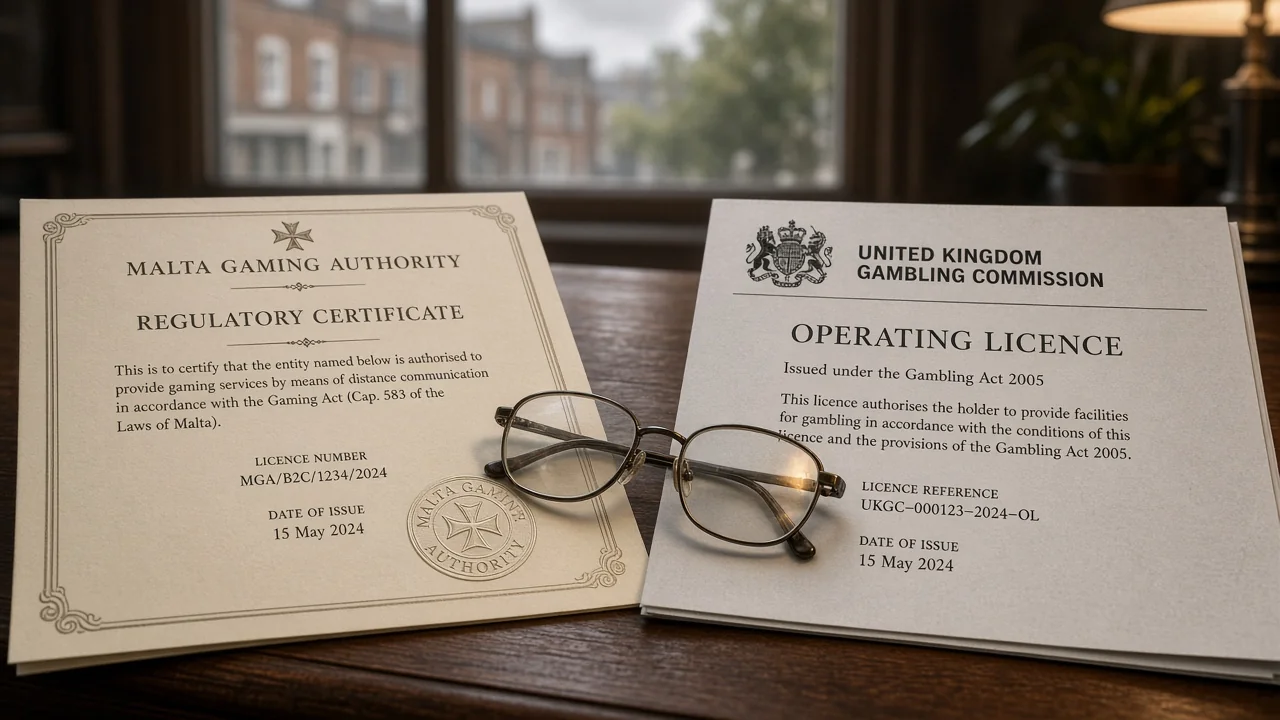
That last point is the core of the matter. The UK Gambling Commission (UKGC) is the regulator for gambling in Great Britain, and its rules apply to the operators it licences. A casino holding a licence from a foreign authority is not regulated by the UKGC and does not follow its rules. The site may look identical to a UK-licensed one — same slots, same live dealer tables, same welcome offer on the homepage — but the regulatory framework behind it is entirely different. The licence tells you whose rules govern the operator’s conduct, not how polished the website looks.
It is worth being precise about the legal position of the player. UK residents are not prohibited from using overseas gambling websites under current regulations. The restriction runs the other way: it is operators who face the legal exposure. An operator must hold a UKGC licence to advertise to or take bets from consumers in England, Wales, or Scotland, and operating without one is a criminal offence on the operator’s side. So a non-UKGC casino is not an underground operation by definition — most hold legitimate licences from their own jurisdictions — but it sits outside the system that British players might assume is protecting them.
How UKGC-licensed casinos are regulated
To understand the difference, it helps to know what UKGC-licensed casinos are subject to. The UKGC was established under the Gambling Act 2005 and assumed its full powers in 2007. It issues operating, personal, and premises licences, and it maintains a public register of current operating and personal licences — which means anyone can check whether a casino genuinely holds a licence rather than merely displaying a badge on its footer. Before granting a licence, the UKGC assesses the applicant’s identity and ownership, finances, integrity, competence, and criminality. Applicants pay a fee that is non-refundable whether or not the licence is granted, and the standard application processing time is roughly 16 weeks — a demanding and expensive process that filters out a great deal of the market.

Licensing comes with ongoing obligations. UKGC-licensed casinos must follow rules on advertising, on the structure and promotion of bonuses, and on self-exclusion schemes such as GamStop. These requirements exist to protect players, and they constrain what operators can do.
The most concrete example is online slots. The UKGC imposes a maximum stake of £2 per spin on online slots — a rule reported in industry casino reviews as a deliberate constraint on potential losses. Whatever you think of it as policy, it is a hard limit written into the licence conditions of every UKGC-licensed casino, and no UK-licensed slot can offer higher stakes.
Where non-UKGC casinos stand on the same rules
Non-UKGC casinos are generally not bound by UKGC advertising restrictions, bonus limitations, or self-exclusion guidelines. Their obligations come from whichever authority licensed them — and standards vary considerably between those authorities.
On stakes, the contrast is stark. Non-UKGC casinos generally do not have universal maximum stake limits on games. Where a UK-licensed slot is capped at £2 per spin, the same slot at an offshore site may allow much higher wagers. That is neither a flaw nor a feature in itself; it is simply what follows from operating under a different rulebook. Whether it suits you depends on your own view of the risks involved.
The same logic applies across the board. Bonus rules, advertising claims, and the tools available for limiting your own play are all set by the licensing jurisdiction rather than by the UKGC. Some jurisdictions — Malta and Gibraltar among them — maintain rigorous standards of their own. Others impose far less on their licensees. The label "non-UKGC" does not tell you which kind of site you are dealing with; it only tells you which regulator is not standing behind it.
Regulatory Scope UKGC-licensed sites follow UK rules; non-UKGC sites follow foreign authorities.
Slot Limit UKGC-licensed online slots are capped at £2 per spin.
GamStop Coverage UKGC sites are part of GamStop; non-UKGC sites are not.
Why the distinction matters for you
For a UK player, the practical difference is not about the games — you can find the same titles on both sides of the divide. It is about accountability and protection.
If a dispute arises with a UKGC-licensed casino, you are dealing with an operator bound by UK rules, answerable to a UK regulator, and required to participate in UK dispute-resolution and self-exclusion arrangements. If a dispute arises with a non-UKGC casino, the UKGC has no jurisdiction over the site and cannot be involved, and resolution depends on the casino’s own licensing body and internal processes. The consumer protections that come with a UK licence travel with the licence — and a foreign licence brings its own framework instead, whatever its quality may be.
None of this makes non-UKGC casinos inherently unsafe, and none of it makes them automatically safe either. What it means is that the assumptions you might reasonably make about a UK site — a regulator watching conduct, a public licence register, standard player protections — do not carry over. Before considering any overseas operator, you would want to verify that it holds a valid licence from a credible international authority and treat the absence of one as a reason to walk away.
The sections that follow build on this foundation: how to evaluate an individual site’s credentials, how self-exclusion works (or doesn’t) across the divide, and what the licensing landscape outside the UK actually looks like in 2026. The starting point for all of it is the same: know whose licence you are playing under, because that licence defines the rules of the game you are actually in.

How to Assess Casino Sites Without a UKGC Licence
Once you accept that a casino site without a UKGC licence is not automatically a scam — and not automatically safe either — the practical question becomes: how do you tell the workable ones from the rest? The answer is a series of checks, each of which takes minutes. None of them requires insider knowledge. All of them require you to read things most players scroll past.
Start with the stated regulator
Every legitimate offshore or international non-UKGC casino site names its licensing authority somewhere in the footer of its website. What matters is which authority it names, because regulatory oversight varies significantly between jurisdictions. Authorities such as the Malta Gaming Authority and Gibraltar’s regulator maintain rigorous standards; other jurisdictions may have less stringent rules, and some offer little more than a registration process.
One example worth knowing: Anjouan Gaming is the designated regulatory authority for licensing and supervising internet gaming operations under Anjouan law. It issues, supervises, and enforces Internet Gaming Licences within its jurisdiction, and it has the authority to suspend or revoke a licence when operators breach its rules. That matters for assessment, because a licence that can be enforced is worth more than one that exists only on paper.
Verifying an Offshore Site
- Identify the specific licensing authority named in the footer
- Cross-check the licence number against the regulator’s official register
- Confirm the domain you are using is covered by that specific licence
- Read the terms regarding withdrawal conditions and bonus wagering
- Locate the official dispute resolution route for that jurisdiction
A footer licence number you cannot verify is worth nothing. A named authority whose licence register you can search is worth something — and if the site names no authority at all, close the tab.
Verify rather than trust
The first check is existence; the second is confirmation. A site may display a regulator’s logo without actually holding a licence. Before you deposit anything:
- Find the licence number and the operating company name, not just the brand name — casino brands are frequently run by a parent company that holds the actual licence.
- Cross-check both against the licensing authority’s own records or published register, if one exists. Regulators with rigorous standards make this easy; regulators with weak standards often make it difficult, which is itself useful information.
- Check that the site you are on is actually the domain covered by the licence. Some operators hold a licence for one domain and accept deposits on another.
This is the stage where a UKGC-licensed casino site differs most sharply from an unregulated one. For a UK-licensed site, you can verify everything against the UKGC’s public register, and if something goes wrong, the regulator is accountable. For a casino outside the UKGC, you are doing the verification yourself, because no UK body will do it for you.
Read the terms before you accept them
The terms and conditions of a non-UKGC casino are not boilerplate; they are the contract that governs your money. Look specifically at:
- Withdrawal conditions. When can you withdraw, what documentation is required, and under what circumstances can the operator delay or refuse a payout?
- Bonus terms. Wagering requirements, game restrictions, and the rules on forfeiting winnings. Overseas sites can offer larger promotional packages than UK-licensed operators precisely because their terms face fewer external constraints — which sometimes means the terms are harsher where you are not looking.
- Dormancy and account closure. What happens to your balance after a period of inactivity?
Unclear or restrictive terms at a casino site outside the UKGC are not a technicality. They are the mechanism through which a legitimate-looking operation becomes an expensive lesson.
Check the security information
A licence tells you who oversees the operator. Security tells you how the site handles your data and your money in the meantime. Look for standard encryption indicators on the site, and check what the operator says about holding customer funds separately from operating funds. If a site is vague about where your deposit actually sits, that vagueness is data.
Understand the dispute route before you need it
This is the check most players skip, and the one they most regret skipping. If a dispute arises — a withheld withdrawal, a voided bonus, a closed account with a balance — where do you complain?
For UK players, the uncomfortable answer is that the consumer protections and dispute resolution processes available at UKGC-licensed casino sites may not apply here. Dispute resolution for non-UK-licensed casinos relies on the casino’s licensing body or on the operator’s own internal process, and the accessibility of that route for a UK player varies considerably. You cannot escalate a complaint to the UK Gambling Commission about a site it does not license. Before registering, find out:
- whether the licensing authority accepts complaints directly from players in other countries, and in what circumstances;
- whether the operator commits to any independent alternative dispute resolution, or only to its own review;
- what the operator’s own complaint procedure says about timelines and final decisions.
If the only dispute route is "contact our support team and accept their answer," treat that as a serious warning sign regardless of how polished the rest of the site looks.
Put the checks together
No single check separates a good offshore casino site from a bad one. A site can hold a licence from a rigorous authority and still have punishing withdrawal terms. Another can have friendly terms and a regulator that has never enforced anything. The assessment only works when the checks confirm each other: a verifiable licence from an authority that actively supervises its licensees, terms that are specific rather than vague, visible security practices, and a dispute route that exists outside the operator’s own support chat.
Do this before you deposit, not after. Every check is easier to walk away from when you have no money sitting on the outcome.
Non-GamStop Casinos: What Their Independence Means
GamStop is a national self-exclusion scheme for Great Britain. When you register with it, your details are meant to block you from every UKGC-licensed gambling site that participates in the scheme. It is one of the main safety nets a UK player has — and it is exactly the net that casinos licensed outside the UK sit outside of.
GamStop Scope
GamStop is a national self-exclusion scheme for Great Britain and does not have jurisdiction over casinos licensed by foreign authorities.
Why the scheme does not reach them
The reason is structural, not accidental. Non-UK casino sites are not affiliated with GamStop and therefore do not enforce its self-exclusion programme. GamStop’s blocking mechanism works through licence conditions: a UKGC-licensed operator is obliged to check registered self-excluded players against the scheme’s database and refuse them access. An operator licensed in Malta, Gibraltar, Curacao or elsewhere holds no UK licence and is bound by none of those conditions. Non-GamStop casinos are not obligated to block access to players registered with the scheme — not because they have chosen to opt out of a system that applies to them, but because the system has no jurisdiction over them in the first place.
The same logic covers the wider set of UKGC rules. Non-UK casinos are generally not bound by UKGC advertising restrictions, bonus limitations, or self-exclusion guidelines. If you are registered with GamStop and you visit an overseas site, your registration will not trigger a block in the way it would at a UK-licensed one. The site has no list to check you against.
What this means for a self-excluded player
This is where the independence stops being a neutral regulatory detail and becomes a practical matter. Self-exclusion only works if it covers the places you can actually reach. For a player who signed up to GamStop precisely because gambling had become a problem, the existence of sites outside the scheme is the weakest point in an otherwise solid barrier — and the barrier does not extend to them.
It is worth being precise about the legal side, because it is often confused. UK residents are not prohibited from using overseas gambling websites under current regulations. Using such a site is not, in itself, unlawful for the player. What is unlawful is operating in Great Britain without a UKGC licence — and that obligation sits with the operator, not with you. So an overseas site left open by GamStop is not a loophole you are sneaking through; it is a site the scheme was never designed to cover.

The harder question is what happens after that. Consumer protections and dispute resolution processes available to UK players may not apply to non-UK licensed casinos due to their jurisdictional independence. If a dispute arises with a site that ignores your GamStop registration, you cannot escalate it through UK mechanisms on the grounds of that registration alone. The complaint route runs through the site’s own licensing body, if it runs anywhere at all.
Independence is a property, not a promise
Marketing for some overseas sites presents "not on GamStop" as a feature — freedom, fewer checks, uninterrupted access. Treat that framing with suspicion. A casino’s independence from a UK self-exclusion scheme says nothing about its licence quality, its payment practices, or its treatment of players. It only says that a specific UK safety mechanism does not apply.
If you are considering an overseas site while your GamStop registration is active, the honest summary is this: the scheme cannot stop you, the site is not required to stop you, and no UK body will intervene on your behalf afterwards. Whether that access is something you should use is a separate question — and if self-exclusion was a decision made for a reason, that reason has not changed. Support services such as GamCare, BeGambleAware and Gamblers Anonymous remain available regardless of where a casino is licensed, and they are not tied to any regulator’s jurisdiction.
For players who are not self-excluded, GamStop’s reach matters less. But understanding which sites sit outside it — and why — is part of understanding what protection you are, and are not, buying into when you choose where to play.
Bound by UK rules, including advertising restrictions, bonus limits, and mandatory GamStop participation.
Operate under foreign jurisdictions; can offer different bonus structures, higher stakes, and no GamStop enforcement.
Online Casinos Outside the UKGC Framework
The licence on a casino’s homepage tells you little about what the site feels like day to day. The regulator behind that licence shapes the details you actually notice: how you sign up, how bonuses are structured, and what tools exist when gambling stops being fun. At online casinos outside the UKGC framework, those details work differently from what a UK-licensed player is used to.
Bonuses built to a different rulebook
UKGC-licensed online casinos operate under rules that limit how bonuses can be advertised and structured. Sites licensed elsewhere don’t answer to those rules, and their promotional offers reflect it. Non-UK licensed casinos can offer larger welcome bonuses, free spins, and more flexible wagering requirements than their UK-licensed counterparts.
Some claims circulating about overseas operators should be read with their source in mind. Player forum discussions describe welcome packages with hundreds of free spins, and operator-run reviews promote lower wagering requirements or no-wagering cashback offers. Neither is a market standard — treat the specific numbers as a claim about one site, not a promise about the whole category. Bonus terms at non-UK licensed casinos can also be unclear or restrictive, which is a separate risk from the headline offer. The size of a bonus says nothing about how achievable its conditions are.
Identification checks
Know Your Customer (KYC) verification is where the contrast is sharpest. A UKGC-licensed online casino verifies your identity before you can deposit and play in earnest. Overseas sites frequently take the opposite approach: operator reviews report that many run less demanding KYC processes, particularly at initial sign-up, allowing faster registration with minimal documentation. The checks tend to arrive later — typically when you request a large withdrawal.
That sequencing has an obvious appeal and a less obvious cost. Getting started is quicker, but a delay at the withdrawal stage can be disruptive, and a document request at that point is not something you can negotiate away.
Responsible-gambling controls
This is the difference with the fewest silver linings. UKGC rules require licensed operators to offer deposit limits, self-exclusion tools, and links to UK-based support services such as GamCare and BeGambleAware. Non-UK licensed casinos are not bound by those requirements, and there is no guarantee a given site will offer equivalent safeguards voluntarily. Before you rely on any limit or self-exclusion feature at an overseas site, confirm it actually exists and how it works — assuming it mirrors UK practice is the one assumption you can’t afford.
What this means when comparing sites
If you are weighing a UKGC online casino against an overseas operator — whether an established name or one of the newer non-UKGC sites — the comparison is not really about games or bonus size. It is about which rulebook governs the things that only matter when something goes wrong:
- Bonus fairness — larger offers at overseas sites, but terms that may be harder to pin down.
- Verification timing — faster access at overseas sites, with checks deferred to withdrawal.
- Player safeguards — mandated at UKGC-licensed sites, optional elsewhere.
None of these differences makes a site outside the UKGC framework better or worse on its own. They change where the burden of diligence sits: with the regulator in one case, and with you in the other. The sections that follow set out how to carry that burden without guessing.
Why Some Players Consider a Non-UKGC Casino
Most UK players who look at a casino without a UKGC licence are not looking for trouble. They are looking for something the UK-licensed market no longer offers them, or never offered in the first place. The reasons are fairly consistent, and none of them, on its own, tells you whether a particular operator is safe or legitimate. That is a separate question, and a harder one.
Broader game selection. Non-UK licensed casinos may stock a wider range of games, including niche table games, live dealer experiences, and titles from smaller or emerging software studios that rarely appear on UKGC-licensed sites. For a player who has exhausted the selection at their usual casino, this variety is often the first thing that draws attention. More games is a genuine difference — it is not, by itself, evidence of anything else.
Common Attractions
Players often look toward non-UKGC sites for specific advantages:
- Broader Game Selection: Access to niche titles and emerging studios.
- Bigger Promotions: Larger welcome bonuses and more flexible wagering.
- Fewer Restrictions: Different rules regarding stakes and player limits.
- Faster Onboarding: Quicker registration processes with less immediate documentation.
Bigger promotional offers. Because they are not bound by the UKGC’s bonus rules, non-UK licensed casinos can offer larger welcome bonuses, free spins, and more flexible wagering requirements than UK-licensed casinos. Some operator-run promotions advertise match percentages ranging from 200% to 500%, and welcome packages that include hundreds of free spins. Those figures come from the operators’ own promotional reviews, so treat them as marketing claims rather than a market standard — the terms attached to such offers, and the withdrawal conditions behind them, decide whether they are worth anything. A large headline offer with unclear terms can be worth less than a modest one with honest conditions.
Fewer restrictions on play. UK-licensed sites operate under rules covering stakes, payment methods, and product design. Overseas sites generally are not bound by the UKGC’s bonus limitations or self-exclusion guidelines, and that difference in restrictions is part of the appeal for some players.
Faster, lighter onboarding. Non-UK licensed casinos often allow quicker registration with less demanding documentation, at least until a significant withdrawal triggers further checks. For players who find UK identity procedures tedious, this convenience reads as a benefit. It also means fewer early friction points that might otherwise slow down a decision.
None of these reasons settles the question of whether a given non-UKGC casino is safe, legit, or worth your money. Broader choice and bigger bonuses are differences between markets, not proof of quality. An operator can offer a large game library and generous promotions and still handle disputes badly, apply restrictive withdrawal terms, or hold a licence from a jurisdiction with little practical accountability. The reasons above explain why players look; they do not explain what a player will find, and the gap between the two is where most of the risk sits.
If you are considering a non-UKGC casino in 2026, treat the appeal as a reason to investigate carefully, not a reason to skip the investigation. The differences that attract you are the easiest things for a poorly run operator to advertise — and the hardest things to verify before you have deposited.
Regulation Beyond the UK: Strengths, Gaps and Accountability
A licence is only as strong as the authority behind it. Once a casino sits outside the UK Gambling Commission’s remit, the quality of oversight depends entirely on which jurisdiction issued its licence — and those jurisdictions are not interchangeable.
The uneven landscape
Regulatory oversight varies significantly between jurisdictions. Some authorities, such as the Malta Gaming Authority and the Gibraltar Regulatory Authority, maintain rigorous standards: detailed vetting of operators, ongoing supervision, and structured processes for handling complaints. Others operate with less stringent rules, and the practical difference for a player is not cosmetic. It shows up when something goes wrong — a delayed withdrawal, a disputed bonus term, an account closure without explanation — and you need someone with the power to intervene.
What happens when you complain
At a UKGC-licensed casino, a dispute has a clear escalation path: the operator first, then the regulator or an approved alternative dispute resolution service. At an online casino not regulated by the UKGC, that path disappears. Dispute resolution instead relies on the casino’s own licensing body or its internal complaints process, and the accessibility of both varies widely for UK players. A regulator on another continent may have limited interest in — or capacity for — resolving the complaint of a British customer. An internal process, by its nature, leaves the casino marking its own homework.
Dispute Resolution
If a dispute arises with a non-UKGC casino, the UK Gambling Commission has no jurisdiction to help you; resolution depends entirely on the foreign regulator or the operator’s own process.
The consumer protections and dispute resolution processes that UK players take for granted do not automatically apply to non-UK licensed casinos. Because these operators are jurisdictionally independent of the UK framework, the guarantees you might assume travel with you do not.
Licences can be pulled
None of this means an overseas licence is decorative. Regulators outside the UK do enforce their rules, and licensing authorities do act. Anjouan Gaming, for example, has the statutory authority to suspend or revoke Internet Gaming Licences issued under Anjouan law — and it has used that authority, with at least one licence suspended pending investigation. The lesson cuts both ways: a valid licence is a real, enforceable instrument, and a casino that loses its licence can lose the right to operate at all.
The accountability that exists, however, is accountability to the licensing jurisdiction — not to you as a UK resident. A suspension protects that jurisdiction’s standards; it is not a UK consumer remedy.
What this means in practice
A non-UKGC regulated casino is not an unregulated casino, and treating every offshore licence as a red flag is as inaccurate as treating every licence as equal weight. The honest position is narrower: a licence tells you who is watching the operator, and the value of that depends on who the watcher is and what powers they demonstrably use.
When you read a non-UKGC casino review, the regulatory question to ask is not simply "is there a licence?" but "who issued it, and what happens if this operator breaks the rules?" An authority that investigates, suspends and revokes is doing its job. An authority that only collects licence fees is not. The distinction between the two is the single most useful thing you can know about any casino operating beyond the UK’s borders — and it is usually the hardest to find out before you need it.

Choosing a Non-UKGC Casino in the UK Without Overlooking the Risks
Comparing overseas operators in 2026 is not a search for a "best" casino in any absolute sense. It is a search for the least risky version of a decision that carries more risk by default. Every operator licensed outside the UK stands outside UKGC oversight, so the comparison has to be made on different ground — and honestly, that ground is uneven.
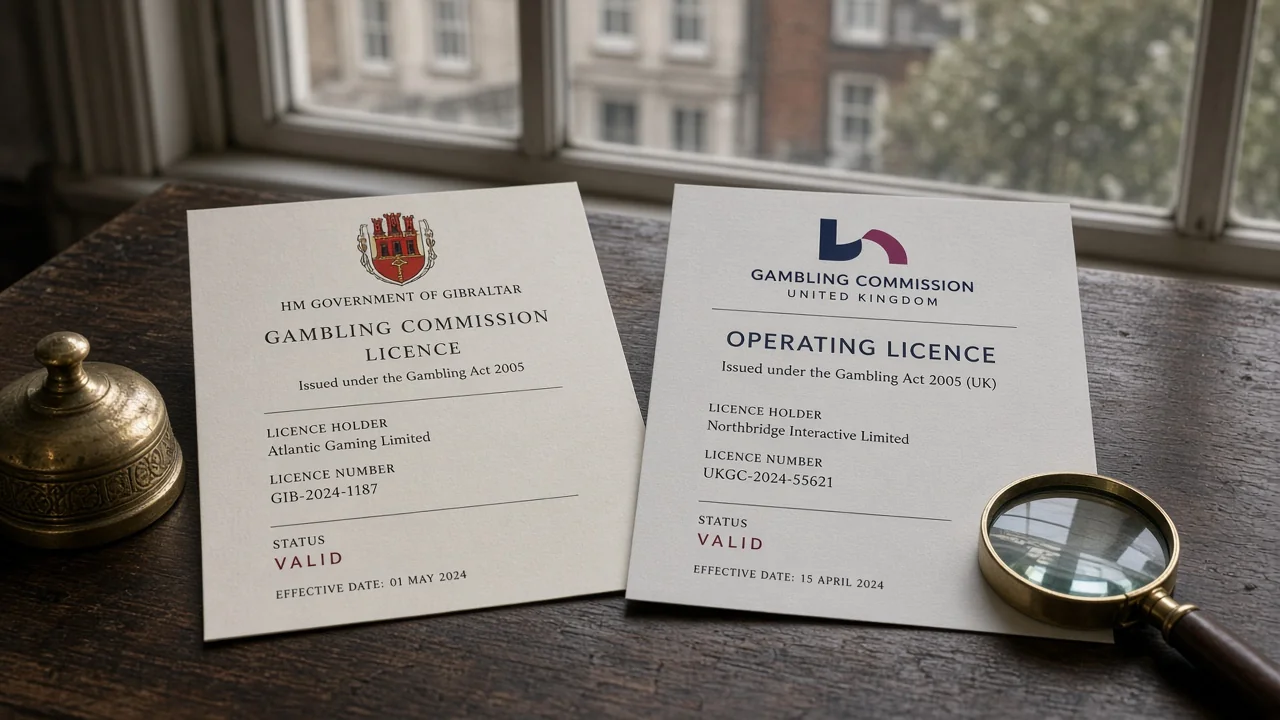
Start with where the operator is answerable. A licence from Malta or Gibraltar means something concrete: those authorities maintain rigorous standards and are positioned to act on complaints. A licence from a jurisdiction with lighter requirements still makes the site "licensed", but the word covers very different levels of supervision. Treat the licensing jurisdiction as the first filter, not the last.
Reputation is the second filter, and it is slower work. An operator that has been running under the same licence for a sustained period, with a traceable history of paying out and responding to complaints, is a different proposition from a new non-UKGC brand that appeared with an aggressive welcome offer and no track record. New is not automatically bad — but new plus unverifiable is. Where you cannot find independent evidence of how an operator behaves when a withdrawal is delayed or a bonus term is disputed, that absence is itself information.
Payment and withdrawal terms deserve close reading before any deposit. Check which currencies are supported, whether withdrawal methods match deposit methods, and what the terms say about processing times. Some non-UK licensed casinos process withdrawals within hours, including near-instant cryptocurrency transactions — but processing time and access conditions are set by each operator’s terms, not by any external standard. If the terms are vague on when and how you get your money back, that vagueness will not resolve itself in your favour later.
- Verify the licence on the official regulator’s register
- Read the specific terms for withdrawals and bonuses
- Check if the operator uses reputable encryption and security
- Trusting a site based solely on a displayed logo
- Assuming GamStop protections apply to overseas sites
- Ignoring vague or unclear terms and conditions
Responsible-gambling safeguards are where the gap with UKGC-licensed sites is widest. Expect fewer built-in protections: tools for deposit limits or self-exclusion may be absent or less comprehensive, and GamStop does not apply. If maintaining control over your gambling is something you rely on external tools to do, this is not a gap you should talk yourself past.
Finally, understand what happens when something goes wrong. Dispute resolution for non-UK licensed casinos runs through the licensing body or the operator’s own internal process, and how accessible either route is to a UK player varies considerably. The consumer protections that apply to you domestically do not follow you to an overseas site.
None of these checks makes an offshore operator equivalent to a UKGC-licensed one — that equivalence does not exist, and no bonus offer creates it. What the framework does is sort the market into tiers of exposure. A trusted international non-UKGC casino with a serious regulator, visible history and clear payment terms is a categorically different risk from an anonymous site holding a thin licence. Your job is to know which tier you are standing in before the money moves, not after.
Can a UKGC Casino Be Outside GamStop?
The question sounds like a loophole: a casino licensed by the UK Gambling Commission, yet somehow immune to GamStop. The short answer is that the two things are separate, and treating them as one and the same is where the confusion begins.
GamStop is not a regulator and it is not part of the UKGC’s licensing machinery. It is a national self-exclusion service — a register that people voluntarily join to block themselves from gambling sites. The UKGC requires the online operators it licenses to participate in that scheme, which is why, in practice, a UKGC-licensed casino and GamStop coverage go together. If a site holds a UKGC licence, self-exclusion registered through GamStop applies to it.

So a genuinely UKGC-licensed casino cannot be "outside" GamStop in any meaningful sense. A player who searches for one is usually looking for something else: a site where a GamStop registration does not apply. Those sites exist, but they are not UKGC casinos. They are operators licensed outside the United Kingdom — in jurisdictions such as Malta, Gibraltar, Curacao, or Cyprus — and they are not affiliated with GamStop, so they do not enforce its self-exclusion programme.
That distinction matters, because mixing the two labels can lead to false expectations in either direction. A site that advertises itself as holding a UKGC licence while also promising to accept GamStop-registered players is describing a combination that should not exist. One of those claims is wrong. A valid UKGC licence can be checked against the Commission’s public register by operator name or licence number, including the listed domain — if the register does not match the site in front of you, the licence claim is the part to distrust.
The reverse confusion is just as common. Some players assume that any site not blocked by GamStop is operating illegally. That is not the position: UK residents are not prohibited from using overseas gambling websites. The consequence of using one is not illegality but a different set of protections — no GamStop enforcement, no UKGC oversight, and dispute routes that run through the operator’s licensing body rather than a UK regulator.
In short: UKGC oversight and GamStop coverage are separate mechanisms that happen to overlap on the same sites. A UKGC casino not signed up to GamStop is, in effect, a contradiction in terms. A casino free of GamStop is a non-UK licensed site, and the decision to use one should be made knowing exactly which protections are being left behind.
Can a UKGC casino be outside GamStop?
No. A site holding a valid UKGC licence is required to participate in the GamStop scheme, so UKGC-licensed casinos and GamStop coverage go together.
Is using an overseas casino illegal?
No. UK residents are not prohibited from using overseas gambling websites; however, the operators themselves must hold a UKGC licence to legally target UK consumers.
How to Check an Online Casino Licence
A licence claim is only as good as your ability to test it. The process below works in two directions: checking whether a site holds a UKGC licence, and checking what licence a site outside the UKGC framework actually claims to hold.
Step 1: Identify the claimed regulator
Scroll to the footer of the casino site. Any operator making a licence claim should name the regulator and, ideally, give a licence number or a link to the regulator’s register. Two things can go wrong here: the regulator may not be named at all, or it may be named but unverifiable. Both are reasons to stop and think before depositing.
Step 2: Confirm the operator and licence details
For a UKGC licence, verification is straightforward. The UKGC maintains a public register of current operating and personal licences, and anyone can search it. Match the operator name or licence number against the register, then confirm the listed domain matches the site you are on. A licence held by one company does not cover a sister site that has no licence of its own — a common point of confusion, since operators often run several brands.
For a site licensed abroad, the check depends on the jurisdiction. Some regulators publish searchable registers of their licensees; others publish far less. Anjouan Gaming, for example, is the designated authority for licensing and supervising internet gaming operations under Anjouan law, and it issues Internet Gaming Licences in B2C and B2B categories. A casino claiming an Anjouan licence should be identifiable through that framework — if the site’s claim cannot be traced to anything the regulator actually shows, treat the claim as unverified.
Step 3: Consider the complaint and enforcement route
A live licence tells you a regulator exists; it does not tell you what happens when something goes wrong. Before playing, look at what the regulator actually does: does it supervise and enforce its licences, and can a UK player realistically raise a dispute with it? Disputes with non-UK licensed casinos rely on the casino’s licensing body or its internal complaints process, and access to that process varies. A regulator that can suspend or revoke licences has real enforcement power; one that only collects fees does not.
If you cannot complete all three steps, that itself is the answer: an unverifiable licence is functionally the same as no licence.
What It Means When a Casino Is Not Licensed by the UKGC
This list provides a quick reference for readers exploring non-UKGC-licensed casino options in 2026. Use the available bonus, payout, and deposit details to identify which offers and payment expectations may be relevant to you.
License: UKGC Operator Licence · Bonus: £200 welcome bonus · Payout speed: Within 48 hours · Min. deposit: £10 32Red stands out with a £200 welcome bonus and a stated payout time of within 48 hours. The minimum deposit is £10, and it holds a UKGC Operator Licence.
License: UKGC Operator Licence · Bonus: £100 bonus · Payout speed: Within 24 hours · Min. deposit: £10 ProgressPlay Limited offers a £100 bonus with payouts stated as arriving within 24 hours. Its minimum deposit is £10, and it holds a UKGC Operator Licence.
License: UKGC Operator Licence · Bonus: £20 bonus · Payout speed: Within 48 hours · Min. deposit: £10 Silverbond Enterprises features a £20 bonus and payouts within 48 hours. The minimum deposit is £10, and it holds a UKGC Operator Licence.
License: UKGC Operator Licence · Bonus: £100 bonus · Payout speed: Within 24 hours · Min. deposit: £10 Genesis Global Limited offers a £100 bonus and a stated payout time of within 24 hours. The minimum deposit is £10, and it holds a UKGC Operator Licence.
License: UKGC Operator Licence · Bonus: £100 bonus · Payout speed: Within 24 hours · Min. deposit: £10 LeoVegas combines a £100 bonus with payouts stated as arriving within 24 hours. Its minimum deposit is £10, and it holds a UKGC Operator Licence.
License: UKGC Operator Licence · Bonus: £50 bonus · Payout speed: Within 48 hours · Min. deposit: £10 Platinum Gaming Limited offers a £50 bonus, with payouts stated as arriving within 48 hours. The minimum deposit is £10, and it holds a UKGC Operator Licence.
By now you have seen the term used throughout this article, but it is worth stating plainly what a casino not licensed by the UKGC actually is — and what it is not.
The label refers to one thing: the origin of the licence. These casinos operate under licences granted by regulatory bodies outside the United Kingdom — Malta, Gibraltar, Curacao, Anjouan and similar jurisdictions. That licence is real, but it is not a UK licence. The UK Gambling Commission plays no role in supervising the operator, and the operator does not follow UKGC rules.
Because of that, the practical consequences for a UK player come down to one word: applicable law. The consumer protections and dispute resolution processes available to UK players may not apply to a non-UKGC licensed casino, precisely because of its jurisdictional independence. If something goes wrong — a withheld withdrawal, a disputed bonus term — the complaint route runs through the casino’s own licensing body or its internal process, not through any UK authority.
This is also why the label should not be read as a judgement of quality. A non-UKGC casino in the UK is not automatically rogue, and it is not automatically safe. Some licensing jurisdictions maintain standards comparable in rigour to the UKGC’s; others are lighter on enforcement. The licence tells you who supervises the operator — it does not, by itself, tell you how well.
So when you see a site described as a non-UKGC casino in 2026, read the phrase literally. It means the casino answers to a regulator elsewhere, under a different set of rules, with a different path for complaints. It does not mean the site is unlicensed, and it does not mean UKGC protections follow you there. Whether the operator is trustworthy is a separate question — one settled by checking the licence, the terms and the site’s reputation, not by the label alone.
Can I use cryptocurrency at UKGC-licensed casino sites?
No. Cryptocurrency payments are associated with non-UK casinos, while UKGC-licensed casinos do not accept them according to the provided information.
How do I know if a casino is licensed in the UK?
Check the UK Gambling Commission’s public register of current operating and personal licences. This confirms whether the casino genuinely holds a UKGC licence rather than merely displaying a badge on its website.
Is gambling with cryptocurrency legal for UK players?
UK residents are not prohibited from using overseas gambling websites under current regulations. However, a cryptocurrency casino operating without a UKGC licence is outside the UKGC’s jurisdiction and protections.
How long does it take to obtain a UK gambling licence?
The standard UKGC application processing time is roughly 16 weeks.
Are there UK casinos that still accept credit cards?
No. Credit card gambling is banned at UKGC-licensed casinos, although some non-UK casinos still accept credit cards for deposits.
How fast are deposits and withdrawals for UK iGaming players?
Non-UK casinos may process withdrawals within hours, and cryptocurrency transactions can be near-instant. Processing speed depends on the payment method and whether additional verification is requested.
Published by the Casinouk Game Info team.