Live Dream Catcher Casino UK: How It Works
 Available in GB
See how the physical wheel, live dealer format and casino features shape the Dream Catcher experience.

Table of Contents
- How Dream Catcher Works in a Live Casino
- Finding a UK-Licensed Casino for Dream Catcher
- The Best Live Casino Shows to Try Alongside Dream Catcher
- Dream Catcher Casinos and the Live-Dealer Choice
- How to Play the Dream Catcher Casino Game
- Understanding the Dream Catcher Wheel
- What to Look for on a Live Dream Catcher Casino Site
- Can You Try Dream Catcher in Demo Mode?
- Dream Catcher Casino Review: Limits, Bonuses and Real-World Trade-Offs
- How to Play Dream Catcher Live Casino Without Losing Track
How Dream Catcher Works in a Live Casino
Dream Catcher sits in a category the industry calls Live Game Shows: real, broadcast games hosted by a human presenter, built around a physical prop rather than cards or a roulette layout. If you have watched a televised wheel of fortune, the premise will feel familiar — but here the wheel is real, the presenter is a trained dealer working in a broadcast studio, and the outcome is settled on your screen within seconds. This page is about how that machine actually works, from the studio floor to the bet you place.
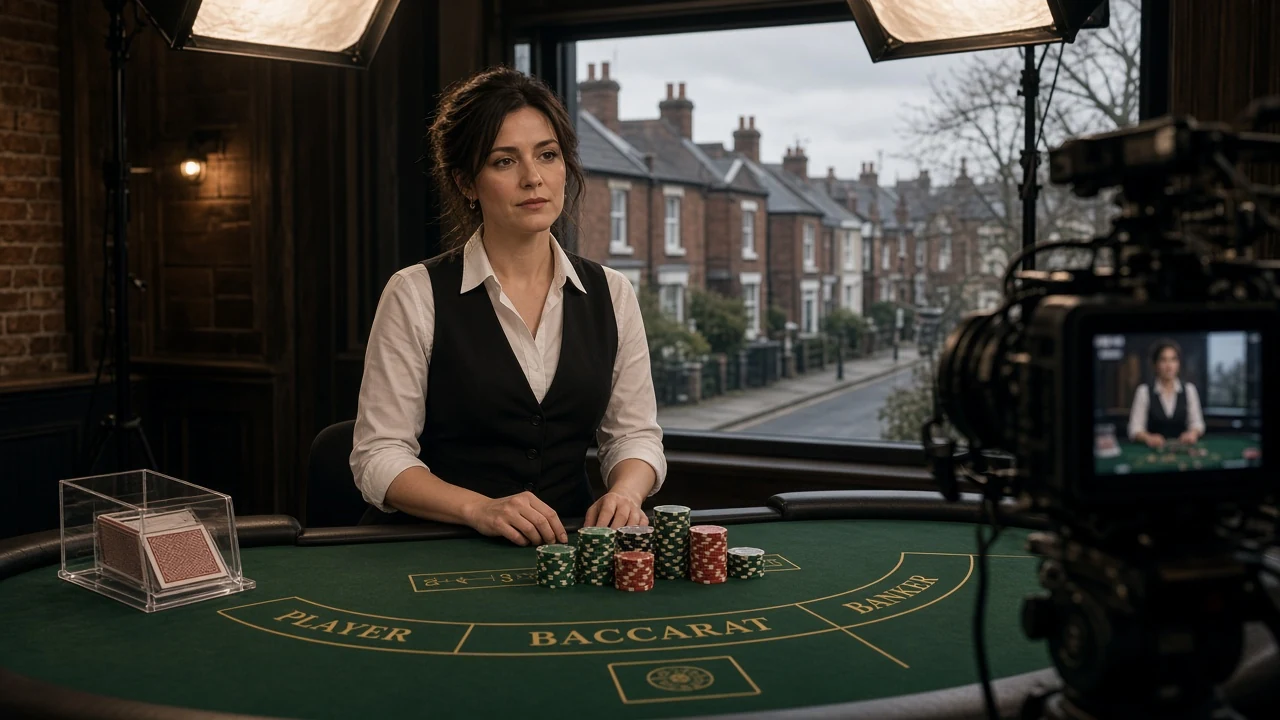
A real wheel, a real dealer, a real studio
Unlike standard online casino games, where a software-based random number generator (RNG) determines each outcome, a live dealer casino game uses real human dealers operating physical casino equipment. Dream Catcher is exactly that. A large vertical money wheel stands in the studio, segmented into numbered pockets. The dealer spins it by hand at the start of every round, and wherever the pointer comes to rest is the result — there is no hidden algorithm deciding the outcome between the spin and your screen.
Everything you see is filmed as it happens. Live casino studios use multiple high-definition cameras covering the wheel from different angles, and the video feed typically has latency under two seconds, so the moment the pointer settles is close to the moment you see it. The dealer is not a recording and not an animation: they talk to the camera, call the result, and often respond to messages from players in the game’s chat.
How the broadcast becomes a bet
Between the studio and your device sits a chain of technology that turns physical events into digital ones. Player bets are registered in real time via camera feeds and specialized software that reads the table — in card games this job is done by Optical Character Recognition reading card values and suits, and comparable recognition systems capture the wheel and the chips in a game like Dream Catcher. The technical heart of each table is the Game Control Unit (GCU), the hardware that encodes the table events and integrates them with the betting software.

On your side, the experience is a split screen. The larger part is the live video of the dealer and the wheel. Overlaid on it is a digital betting interface: the available numbers, the chip values, your balance, and a countdown. Players place bets and make game decisions through this digital interface, and many games provide dealer or player chat, so you can type a message and see the presenter respond during the round.
Rounds, windows and timing
A round of Dream Catcher follows the rhythm common to live casino games: fixed betting windows, table limits, and decision timers. When a round opens, the betting window is displayed with a countdown — you have that window, and only that window, to place or change your bet. When it closes, the dealer spins the wheel, the camera follows it, and the result is read and settled automatically the moment the pointer stops. Winnings and losses are applied to your balance without you doing anything further, and the next round begins on the studio’s schedule, not yours.
This fixed rhythm is one of the differences between a live game and a standard online casino game. An RNG game waits for you; a live game runs to a timetable shared by everyone at the table, because the dealer, the wheel and the cameras cannot pause for a single player.
One show, thousands of seats
A physical casino wheel serves one table of players. A live game show does not have that constraint. Live casino game shows can accommodate hundreds or thousands of players simultaneously in the same live show — everyone watching the same spin, betting on the same numbers, and getting settled on the same result. The dealer addresses the room as a whole, and the chat gives the session something a solo RNG game lacks: other people, visibly present, reacting to the same outcome you just bet on.
The excitement is shared among many players, not a private experience.
You watch a real wheel decelerate rather than an animation.
A trained dealer manages the show and keeps the rhythm moving.
That is the structural appeal of Dream Catcher. The suspense is shared rather than private, the wheel is an object you can watch decelerate rather than an animation that resolves instantly, and the dealer is a person whose job is partly to keep the show moving between spins.
Live dealer versus RNG: what actually differs
If you are weighing Dream Catcher against a standard online casino game, the mechanical differences come down to a few points:
- The source of the outcome. Live dealer games use real dealers, physical equipment, and real-time video; standard online casino games use an RNG. Neither gives you control — one is a filmed physical event, the other a certified software process.
- The pace. RNG games resolve at your speed. Live games run on fixed betting windows and decision timers set by the studio.
- The social layer. Live games can include chat with the dealer and other players; RNG games are typically a closed loop between you and the software.
- The presentation. Multiple HD cameras, a studio set, a presenter — the production is the product as much as the payout.
Dream Catcher is a good introduction to this format precisely because its rules are thinner than almost anything else in the live dealer casino category: no card decisions, no strategy branches, just a bet on the wheel and the wait for the pointer to stop. The complexity sits in the production, not in the play — and understanding that production is what the rest of this guide unpacks, from choosing a properly licensed UK site to reading the wheel itself.
Finding a UK-Licensed Casino for Dream Catcher
Dream Catcher is a live game, which changes what you should look for when choosing where to play it. A slot studio can ship a game to hundreds of casinos with a single integration; a live game needs a studio, a trained dealer, cameras and regulatory approval in the jurisdiction where players sit. For anyone in the UK, that approval comes from one place: the UK Gambling Commission. Every casino offering live Dream Catcher to UK players must hold a UKGC licence — and that single requirement shapes most of the checks that follow.
Why the licence comes first
The UKGC was established under the Gambling Act 2005 and is the sole body allowed to issue remote operating licences for online gambling in Great Britain. Operating without one is a criminal offence, and the Commission also maintains a public register of current licences, which means the claim is verifiable rather than a matter of trust.
This matters more for live games than it might first appear. On a UKGC-licensed site, live casino games are subject to the same regulation and testing as the rest of the casino — slots, table games, everything. Live casinos operate under regulatory oversight: games are monitored, results are recorded, and independent auditors verify operations. A site that treats its live tables as a side door outside its licence obligations would be failing a legal duty, not just a customer-service one.

Verification is straightforward. The UKGC’s public register is searchable by operator name or licence number, and you can confirm that the domain you are on matches the one listed. This closes the most common trick in the offshore playbook: cloning the design of a legitimate brand and swapping in a domain that looks almost identical. If the register doesn’t list the domain you’re playing on, the site has no answer to that, no matter how polished the lobby is.
What a UKGC licence actually obliges the operator to do
The licence is not just a badge on the footer. It binds the operator to a set of consumer protections you’ll encounter directly:
- Age verification. Real-money play is available only to verified users aged 18 or over. The gambling age in the UK is 18, and operators are required to confirm it before you can bet.
- Identity checks. The UKGC assesses identity, ownership, finances, integrity, competence and criminality before granting a licence — and the operator, in turn, must verify who you are.
- GAMSTOP membership. All remote operators must belong to GAMSTOP, the national online self-exclusion scheme. A licensed site cannot quietly ignore your self-exclusion.
- Deposit limits. Operators must prompt players to set a deposit limit before their first deposit. If a site never asks, that’s a warning sign.
- The right to stop. Players must be able to stop playing at any time and retain their remaining deposit and any winnings earned from it.
- Independent testing. Live games are part of the same testing regime as the rest of the casino’s catalogue.
None of these protections travel with an unlicensed site. An offshore operator may copy the game, the presenter and even the studio aesthetic — but it cannot copy the register entry.
Payment rules you should know before depositing
The UK’s payment restrictions for gambling are unusually strict, and they work in your favour as much as they constrain you.
Credit cards cannot be used for gambling in the UK since 2020, and the ban reaches further than the card in your hand. Operators must not accept payment by credit card even when the card is used through a money service business, and they may not accept payments through an e-wallet unless the wallet provider can demonstrably prevent credit-card use for gambling through that wallet. In practice, this is why mainstream options like PayPal and Apple Pay are configured the way they are at licensed UK casinos: they function only as funded accounts, not as a route to borrowed money.
Payment Warning
If a site accepts credit cards for gambling, it is breaking UK rules and operating without a proper licence.
If a site accepts your credit card, or happily takes an e-wallet topped up on credit, it is breaking UK rules — and you’ve learned everything you need to know about its licence before you’ve placed a single bet.
Practical checks before you choose a site
Once licensing is settled, the remaining questions are about fit rather than lawfulness:
- Device access. Live casino games can be played on smartphones and tablets through a mobile browser, without downloading an app. If a site demands an app install for live games, ask why.
- Connection requirements. A dedicated casino review site recommends a stable connection of at least 5 Mbps for smooth HD streaming. Below that, expect buffering rather than gameplay.
- Verification timing. Complete identity checks before your first deposit rather than your first withdrawal. It’s the same process either way, but doing it early avoids waiting when you’d rather be collecting.
- Game availability. Confirm Dream Catcher is in the live lobby before registering — not all operators carry every Live Game Show, and catalogues change.
One more point worth weighing: a licensed UK live casino is a crowded table. Live blackjack is the most popular live casino game in the UK according to one operator’s own overview, which means Dream Catcher tables tend to be less contested and easier to join at the stakes you want.
If you want help with gambling
The licence framework is built on the assumption that players can lose control. BeGambleAware.org offers free, confidential support, and the National Gambling Helpline is available around the clock. Self-exclusion through GAMSTOP covers every licensed operator at once — another protection that only works because the licence forces participation.
A UKGC licence doesn’t make a casino good at customer service, bonuses or withdrawal speed. Those you judge separately. But it does make the site accountable, testable and answerable to a regulator with enforcement powers — which is the floor, not the ceiling, of what you should accept.
The Best Live Casino Shows to Try Alongside Dream Catcher
This page highlights key facts to consider when choosing a UK live Dream Catcher casino in 2026. Use the list to review licensing, welcome offers, payout times, and minimum deposit requirements.
License: UKGC Operator Licence · Bonus: £200 welcome bonus · Payout speed: Within 48 hours · Min. deposit: £10 32Red holds a UKGC Operator Licence and offers a £200 welcome bonus. Its minimum deposit is £10, with payouts available within 48 hours.
License: UKGC Operator Licence · Bonus: £100 bonus · Payout speed: Within 24 hours · Min. deposit: £10 ProgressPlay Limited is licensed by the UKGC and offers a £100 bonus. It has a £10 minimum deposit and payouts within 24 hours.
License: UKGC Operator Licence · Bonus: £20 bonus · Payout speed: Within 48 hours · Min. deposit: £10 Silverbond Enterprises operates under a UKGC Operator Licence and offers a £20 bonus. The minimum deposit is £10, with payouts within 48 hours.
License: UKGC Operator Licence · Bonus: £100 bonus · Payout speed: Within 24 hours · Min. deposit: £10 Genesis Global Limited is UKGC-licensed and provides a £100 bonus. Players can deposit from £10, while payouts are available within 24 hours.
License: UKGC Operator Licence · Bonus: £100 bonus · Payout speed: Within 24 hours · Min. deposit: £10 LeoVegas holds a UKGC Operator Licence and offers a £100 bonus. It features a £10 minimum deposit and payouts within 24 hours.
License: UKGC Operator Licence · Bonus: £50 bonus · Payout speed: Within 48 hours · Min. deposit: £10 Platinum Gaming Limited is licensed by the UKGC and offers a £50 bonus. Its minimum deposit is £10, with payouts within 48 hours.
If the money wheel has won you over, the good news is that Dream Catcher sits inside a whole category of Live Game Shows and live-dealer tables built on the same idea: a real host, real equipment, a video stream and a betting interface that settles your stake the moment the round ends. Below is a named selection of the titles most worth trying next, with the measurable details that actually help you choose between them.
Crazy Time
Crazy Time is the most direct heir to Dream Catcher — a large money wheel at the centre of a studio show, with bonus rounds layered on top of the base game. Where Dream Catcher keeps things simple, Crazy Time adds multiple bonus games that the wheel can trigger, so the round-to-round experience varies far more. Like Dream Catcher, it accepts bets from as low as £0.10, which makes it one of the cheapest live shows to sit down at. If what you enjoy about Dream Catcher is the spectacle and the shared anticipation of a big multiplier, this is the closest match.
Adds multiple bonus games to the wheel experience with stakes from £0.10.
Combines the money wheel format with the classic Monopoly board game.
Features random multipliers on a standard European roulette wheel.
A slower-paced, television-style broadcast focused on entertainment.
Monopoly Live
Monopoly Live takes the same wheel-and-host format and wraps it in the board game familiar to most British households. The base game plays like a money wheel, while a bonus round built around the Monopoly board adds a second layer that Dream Catcher deliberately leaves out. It is a good pick when you want the low-effort betting of a wheel game but with a change of scenery between rounds.
Lightning Roulette
If you want something with more structure than a wheel, Lightning Roulette is a live-dealer roulette variant with added random multipliers applied to selected numbers each round. It runs on the standard European wheel — a single zero, and a stated house edge of 2.7% on the standard bets. The multipliers change the payout profile but not the underlying game, so it is a natural step up in complexity from Dream Catcher without abandoning the game-show presentation.
Deal or No Deal Live
Deal or No Deal Live is the closest thing to a television broadcast you will find in a live casino: a presenter, briefcases and a drawn-out round structure designed for entertainment first. It is slower-paced than the wheel games and rewards players who enjoy the show as much as the payout. Come for the format, not for a quick spin.
Infinite Blackjack
Blackjack is described as the most popular live casino game in the UK, and Infinite Blackjack solves the one problem standard tables have: seats. A standard live blackjack table typically seats seven players, and when it is full, you wait. Infinite Blackjack allows unlimited players to play simultaneously against the same dealer hand, each with their own cards. Standard live blackjack and roulette tables typically start at £1–£5 minimum bets per round; VIP and high-roller tables may require £25–£500 or more — worth checking before you sit down, because live blackjack tables usually carry higher limits than their digital counterparts.
Other names worth knowing
- Funky Time — another Evolution money-wheel show with a brighter, more disco-flavoured presentation than Dream Catcher.
- Gonzo’s Treasure Hunt — blends a live host with a treasure-hunt format rather than a wheel.
- Lightning Baccarat — baccarat with multiplier mechanics similar to Lightning Roulette.
- Live Baccarat — the traditional game; the Banker bet carries an approximate house edge of 1.06%, with a 5% commission on Banker wins.
If you would rather stay with roulette, note the variant differences before choosing a table: European and French roulette use a single zero, while American roulette uses a double zero, which pushes the house edge from 2.7% to 5.26%. French roulette with La Partage is stated to reduce it further, to 1.35%.

What all of these share
Every title above uses real dealers or hosts and physical equipment rather than a software-based random number generator. All live casino games use fixed betting windows, table limits and decision timers, so you cannot slow a round down to think. Many provide dealer or player chat, and Live Game Shows can accommodate hundreds or thousands of players in the same show — part of what makes them feel like a shared event rather than a solitary spin.
Two practical notes before you branch out. First, real-money play is restricted to verified users aged 18 or over, and any UK-facing site offering these games must hold a UKGC licence — the operator-selection criteria are covered elsewhere in this guide. Second, live casino games often contribute at a reduced rate or are excluded entirely from bonus wagering requirements, so a welcome offer rarely stretches as far at a live table as it does on slots.
Summary
- Live casino games use real dealers and physical equipment.
- UKGC licensing is mandatory for legal play in Great Britain.
- Live games run on fixed schedules, not at the player’s pace.
- Many live games have reduced contribution rates for bonuses.
If the fun stops, help is available at BeGambleAware.org.
Dream Catcher Casinos and the Live-Dealer Choice
When you open the live dealer casino tab on a UK site, Dream Catcher sits alongside a much broader catalogue: blackjack, roulette and baccarat tables, plus a growing shelf of live game shows. Understanding how these categories differ helps you decide whether the money wheel is the right table for your session — or whether you’d rather be at a card table with a seat and a decision to make.
One studio, several formats
Every live dealer casino game you’ll encounter is produced the same way at the root: broadcast studios with genuine roulette wheels, card shoes and tables staffed by trained dealers, streamed to your device. What separates the categories is what you do once the stream starts.
Live blackjack is a seat-based game. Standard live blackjack tables typically seat seven players, and the decisions you make — hit, stand, double — affect the outcome of your own hand. It’s also described in UK-focused industry coverage as the most popular live casino game in Britain, which is unsurprising for a game where skill narrows the house’s advantage. If the standard tables are full, Infinite Blackjack variants remove the bottleneck entirely: unlimited players bet on the same dealer hand simultaneously.
Live rouletteoffers a different rhythm. European and French variants use a single zero; American roulette uses a double zero, and that extra pocket is what pushes the house edge from 2.7% on a European wheel to 5.26% on an American one. The game has no decisions after you place your chips — you’re watching physics play out, not playing it.
Live baccarat is simpler still. The Banker bet carries an approximate house edge of 1.06%, with a 5% commission taken on Banker wins — one of the lowest edges in the building, in exchange for one of the least interactive games on it.

Where Dream Catcher fits
Dream Catcher belongs to none of these traditions. It’s a money wheel: one spin, one outcome, no decisions beyond which number you back before the wheel turns. That places it closer to roulette in spirit — a pure chance game with a presenter rather than a croupier — but with a game-show presentation borrowed from television rather than the casino floor.
This matters for what you’re actually buying. Blackjack players pay for agency. Roulette and baccarat players pay for the elegance of a classic table. Dream Catcher players pay for the show: the host, the chat, the shared experience of a single wheel that everyone at the table is watching together.
Choosing your table
None of this is a ranking — a wheel is not better or worse than a card table, and the right choice depends on what you want from the session. If you want decisions and a calculable game, blackjack is the category built for it. If you want the lowest published edge with the least effort, baccarat’s Banker bet is the conventional answer. If you want entertainment first and odds second, the money wheel and its game-show relatives are where that trade-off lives.
The honest framing is this: every live dealer casino game is a bet on the same underlying reality — a real dealer, real equipment, real time. The categories differ only in how much of the outcome you’re allowed to influence. Dream Catcher asks for the least influence and offers the most spectacle in return. Whether that’s a fair swap is the only decision the wheel leaves you.
How to Play the Dream Catcher Casino Game
Dream Catcher is one of the simplest live dealer casino games to learn. There is no strategy to memorise before your first round, no decisions to make mid-hand — just a wheel, a dealer and a short betting window. Here is what actually happens during a typical round.
A Typical Round
The dealer invites bets and a countdown timer appears on your screen.
You select your chosen number and chip value through the digital interface.
Once the window closes, the dealer spins the physical wheel.
The software reads the result and instantly applies winnings or losses to your balance.
Joining the table
Open the live casino section of your chosen site and select the Dream Catcher table. You will see a video stream of a real dealer standing beside a large, vertically mounted money wheel, along with a digital betting interface laid over or beside the picture. The stream is live: what you see happening on the wheel is happening at that moment, not pre-recorded.
Before you can sit down with real money, you need to be a verified user aged 18 or over — that is a legal requirement for live casino play in the UK, not a house rule. Once you are in, there is no seat to claim. Live game shows like Dream Catcher can host hundreds or thousands of players in the same round, so you never wait for a place.
Placing your bets
Every round runs on the same rhythm:
- The betting window opens. The dealer invites bets, and a countdown appears on screen. Live casino games use fixed betting windows, so you have a set amount of time — no pausing to think beyond the timer.
- You choose your bet. Using the digital interface, you click the number you want to back and the chip value you want to stake. Your bet is registered in real time through the camera feed and the software reading the table.
- The window closes. Bets placed after the timer expires are rejected automatically. There is no late entry and no undoing a confirmed bet.
Many tables also offer live chat, so you can type a message to the dealer or other players while you wait. Whether the dealer responds depends on the flow of the round — the game itself never pauses for conversation.
Watching the spin
When betting closes, the dealer spins the wheel with a firm pull and sends it on its way. The flapper at the top ticks across the pegs as the wheel slows — this is the moment the whole table watches. A camera cut usually gives you a close-up of the final segments as the wheel comes to rest.
Settlement
You do not need to do anything to collect. The moment the wheel stops, the result is captured by the software reading the physical wheel and converted into digital data, which settles all bets instantly. Winning bets are paid to your balance automatically; losing stakes are taken. The dealer announces the outcome, the next betting window opens, and the round begins again.
That is the entire game. The only decisions you make are which number to back and how much to stake — everything else, from the spin to the payout, is handled between the dealer, the wheel and the software. Settle both of those decisions before the window opens, not while it is closing, and each round stays as straightforward as it looks.
Understanding the Dream Catcher Wheel
The wheel is the whole game. Unlike a slot machine, where a random number generator decides every spin invisibly, Dream Catcher depends on a physical wheel built to casino specifications, standing in a broadcast studio and spun by a real dealer. When you watch a round, you are watching an actual object move — the same wheel every other player at the table is watching at that moment.
What the wheel actually is
The Dream Catcher wheel is a large vertical wheel divided into numbered segments. The dealer pulls a lever, the wheel spins, and a pointer at the top indicates the winning segment once it comes to rest. Everything you see on screen — the wheel, the dealer, the studio lighting — comes from multiple high-definition cameras in the studio, with the video feed reaching your device with latency under two seconds.
Technology Behind the Wheel
The Game Control Unit (GCU) synchronises the live stream with the betting software to ensure the physical spin and digital results are perfectly aligned.
How a physical spin becomes a digital result
The bridge between the studio and your screen is a combination of hardware and software working in real time:
- Camera feeds capture the wheel, the dealer and the betting area continuously, and player bets are registered in real time via those feeds and specialised software that reads the table.
- Optical Character Recognition (OCR) — the same technology that reads card values and suits at live blackjack tables — is the family of tools that turns physical events into digital data. In card games, OCR transmits the value and suit of every card dealt straight to the player’s screen; the same principle of reading physical equipment and converting it into structured data underpins how live table events settle bets instantly.
- The Game Control Unit (GCU), the table-side hardware that encodes the live stream and synchronises it with the game software, makes sure that what the wheel does and what the software pays out cannot drift apart.
The practical consequence is simple: the outcome is decided by where the physical pointer stops, not by a script. The software’s job is to read, transmit and settle — not to generate the result.
Why that matters to a UK player
Because the wheel is real and monitored, the game is auditable. Live casinos operate under regulatory oversight: games are monitored, results are recorded, and independent auditors verify operations. On a UKGC-licensed site, the live game sits inside the same regulatory and testing framework as the rest of the casino — the wheel does not get a lighter touch than the slots.
That auditability works in one direction only, though. The recorded results let regulators and auditors confirm the game behaves as it should; they give you no information that helps predict the next spin. Each spin of the wheel is an independent physical event, and nothing about how the last segment landed tells you anything about the next one.
The wheel on your screen
When you join a table, the wheel is presented alongside the betting interface — chips, betting positions and a countdown to the end of the betting window. You place bets through the digital interface; the wheel does the rest. You do not touch it, you do not time it, and you cannot slow it down. All you control is what you stake and when you stop — which is worth remembering before the next section, where the site experience around that wheel comes into focus.

What to Look for on a Live Dream Catcher Casino Site
A licence tells you a site is lawful; it does not tell you whether playing Dream Catcher on it will be pleasant. That distinction sits in the details below.
Browser access first, app second
Live casino games can be played on smartphones and tablets through a mobile browser without downloading an app. That matters here: a site that gates its live tables behind an installable app adds friction for something you might play once. Look for a live lobby that loads directly in the browser, on desktop and mobile alike, and check that the Dream Catcher table appears in the lobby without requiring a separate download or plugin.
Streaming quality
The whole point of a live dealer casino is that you are watching a real wheel spun by a real person. Live casino studios use multiple high-definition cameras, and the video feed typically runs with latency under two seconds. On a good site the stream is sharp, the camera angles switch smoothly between the wheel and the dealer, and the picture does not stutter when the betting window closes. A useful practical reference: a specialist review recommends a stable connection of at least 5 Mbps for smooth HD streaming — so if your broadband struggles with that, test the site’s lower-quality stream option before depositing.
Site Check
- Verify the operator holds a valid UKGC licence
- Check that the live lobby loads directly in your mobile browser
- Ensure the stream quality is stable with at least 5 Mbps
- Confirm the table limits before you join the session
The on-screen betting interface
How a site presents the live table matters as much as the stream. You want a clear betting grid that stays readable on a phone screen, a visible countdown for the betting window, and your balance and bet history placed where you can actually see them during a round. Chaos on screen is not a styling quirk; it is how missed bets happen.
Chat and dealer interaction
Live casino games can include chat functionality that lets players interact with dealers and other players. In Dream Catcher the dealer is not furniture — they run the show, announce results and often respond to the room. A site that displays the chat clearly, without it overlapping the wheel or your bets, makes the format feel like what it is rather than a video with buttons attached.
Table presentation
Finally, look at how the site organises its live lobby. A Dream Catcher table buried three clicks deep behind slots banners, with no indication of table limits until you open it, is a small warning sign. Good sites name the game, the provider and the stake range up front, so you know what you are joining before the betting window starts.
Can You Try Dream Catcher in Demo Mode?
A demo, in the context of Dream Catcher, is not quite the same thing as the free-play mode you may know from slots. Because the game runs as a live dealer casino product — a real wheel, a real host and a real-time video stream — there is no software simulator that spins on demand whenever you feel like practising. What some sites offer instead is a practice presentation of the live table: you open the game, watch the interface and the stream, and follow rounds without money on the line.
What a demo actually teaches you
Even without placing bets, a practice view answers the questions a new player most needs answered:
- The interface. You see where the betting buttons sit, how chip values are selected and how the digital interface communicates with the live table.
- The betting window. Dream Catcher, like other live casino games, uses fixed betting windows. Watching a few rounds makes the rhythm obvious: the window opens, the host calls for final bets, it closes, the wheel spins. There is no pause button for slow decisions.
- Table limits. Minimum and maximum bet levels are displayed on the table, and a demo lets you read them at your own pace before any money is involved.
- The wheel and host. You see the physical wheel turn and the host run the round, which is a different experience from reading a description of it.
This is genuinely useful. The most common beginner error in Dream Catcher is not the choice of number but the timing — betting too late in the window or fumbling the interface mid-round. A practice presentation removes that learning cost entirely.
What a demo does not tell you
It tells you nothing about an operator’s legal status. A practice view is a product feature, not a licence. A site can stream a live table and still be unlicensed, so checking the UKGC public register — by operator name or licence number — remains a separate step you take before depositing, regardless of how polished the demo looks.
It also does not replicate the pressure of real money. Fixed windows and table limits feel different when a stake is live. Treat the demo as a way to learn the format, not as a prediction of how a real session will go.
Practical notes
- Practice access, where offered, works in a mobile browser on smartphones and tablets without downloading an app, same as the real-money game.
- Real-money play requires a verified account and is restricted to players aged 18 or over.
If you find the interface clear and the timing manageable in a demo, you have learned what a demo can teach. Whether to deposit after that is a separate decision — and one to make with a set budget, not with the wheel still spinning in front of you.
Dream Catcher Casino Review: Limits, Bonuses and Real-World Trade-Offs
When you read a Dream Catcher live casino review, the useful parts are rarely the marketing copy. They are the numbers and conditions that shape what the game actually costs you and what the operator actually allows. Here is what deserves your attention before you deposit.
Betting limits
Live casino games run on fixed table limits, and Dream Catcher sits at the accessible end of that range. Where standard live blackjack and roulette tables typically start at £1–£5 minimum bets per round, and VIP or high-roller tables may require £25–£500 or more, Dream Catcher accepts bets from as low as £0.10. That low floor makes it easy to drift into long sessions on small stakes — the entry price is a convenience, not a safety feature.
Bonus Terms
Attention Live casino games often contribute at a much lower rate to wagering requirements or may be excluded from bonuses entirely.
Bonus treatment
This is where many reviews go quiet. Live casino games often contribute at a reduced rate toward bonus wagering requirements or are excluded from them entirely. A welcome offer that looks generous on paper may be worth considerably less if your money is going to a live wheel, and there is nothing in the game’s mechanics that compensates for it. Read the wagering terms before you count a bonus toward your bankroll.
Entertainment value, not control
The honest part of any review is this: Dream Catcher is built for spectacle. A human dealer spins a physical wheel on camera, the outcome is captured and settled in real time, and you watch it happen — unlike standard online casino games, where a software-based random number generator decides each result. That real-time, real-equipment presentation is the product. It is also the entire product. The format gives you no decisions to make, no way to reduce the house’s margin through skill, and no influence over the wheel. You choose a number, and the wheel chooses everything else.
A fair review, therefore, prices the game correctly. If the show — the dealer, the stream, the shared table atmosphere — is worth the stakes to you, that is a legitimate reason to play. If you find yourself rationalising continued play on any other basis, you are paying for something the game does not sell.
For help with gambling, BeGambleAware.org offers free, confidential support, and the National Gambling Helpline is available around the clock. Real-money play is restricted to verified players aged 18 or over.
How to Play Dream Catcher Live Casino Without Losing Track
Before you place a single chip on Dream Catcher, run through a short checklist. It takes a minute and it is the part of the session you actually control — the wheel, the dealer and the outcome are not.
Confirm you are eligible and verified. Live casino gambling is restricted to players aged 18 and over, and a UKGC-licensed operator will verify your identity before you can withdraw. Verification is not a hurdle to resent; it is the mechanism that keeps your account and your funds tied to you rather than to whoever claims them.
Set a budget before the betting starts. Decide the amount you are prepared to spend before you open the table, and treat it as spent the moment you sit down. Operators must prompt you to set a deposit limit before your first deposit — accept the prompt rather than dismissing it. If you later want to stop playing, you can do so at any time and retain your remaining deposit and any winnings earned from it. That right only works if you use it.
Understand the tempo of the game. Live casino games run on fixed betting windows, table limits and decision timers. The wheel does not wait for you, and the temptation to chase the next round after a losing spin is built into that rhythm. Knowing the window is fixed helps you decide before the pressure of a countdown does.
Stop when the session stops being controlled. If you are betting more than you planned, playing to recover losses, or no longer enjoying it, that is the signal. GAMSTOP lets you self-exclude from all UK-licensed operators at once. Free, confidential support is available at BeGambleAware.org and from the National Gambling Helpline.
Play Dream Catcher for what it is — a live game show — and the budget stays where you put it.
Can you play live dealer casino games on your phone?
Yes, you can play live dealer casino games on smartphones and tablets through a mobile browser without downloading an app. A stable internet connection of at least 5 Mbps is recommended for smooth HD streaming.
Do bonuses work on live casino games?
Live casino games may be included in casino promotions, but any bonus terms determine which games qualify and how wagering applies.
Do I need to deposit to use these spins?
No deposit is not necessarily required: whether you can use free spins without depositing depends on the promotion’s terms.
Written by the editors at Casinouk Game Info.