Fruit Machine Slots UK: Rules, Games and Play
 Available in GB
Explore the legal terminology, game formats, pub-machine origins and key conditions behind online fruit slots.
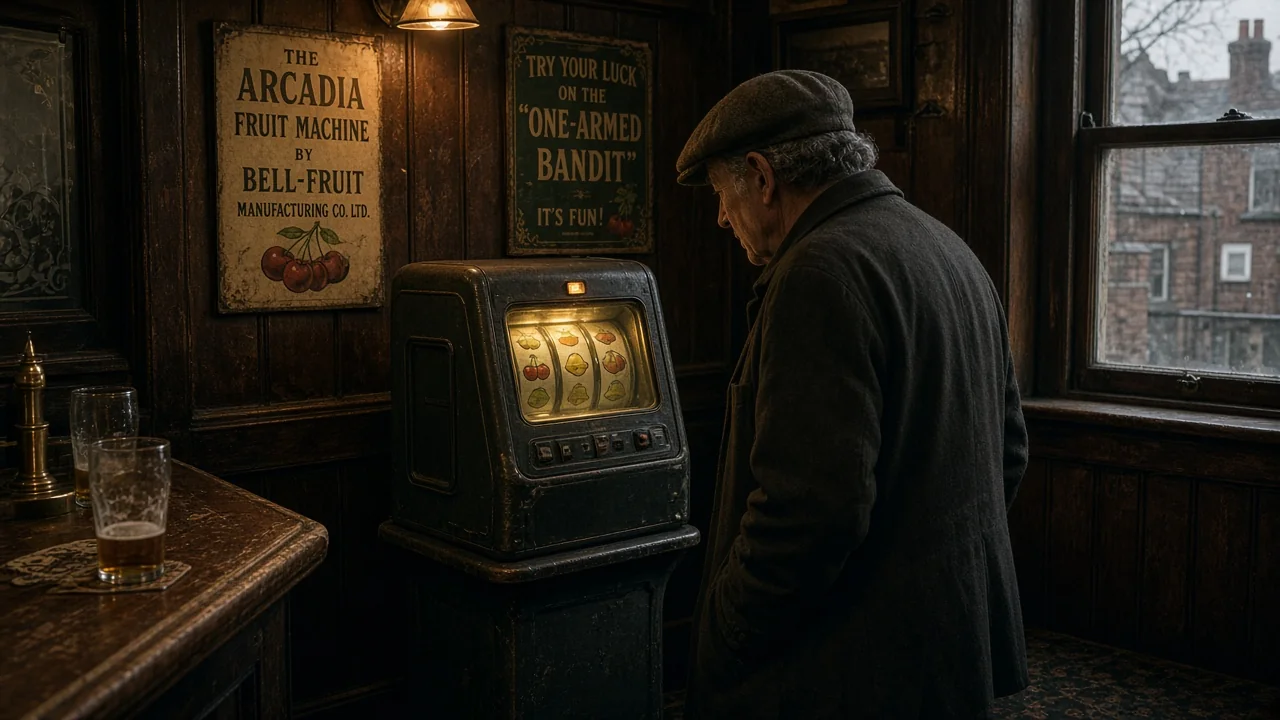
Table of Contents
- What “Fruit Machine” Means in the UK
- Where UK Casinos Can Legally Offer Fruit Machine Games
- Playing Fruit Slots for Real Money: Stakes, Prizes and Player Information
- Which Fruit Slot Game Formats Are Available in the UK?
- Fruit Slot Casino Games and the Meaning of a Casino Setting
- How Fruit Slot Games Work Online in the UK
- Classic Fruit Slot Machines: The Pub-Machine Connection
- Trying a Fruit Slot Demo Before You Play
- Fruit Slot Bonuses: Read the Conditions Before Opting In
- What “High Payout” Means for UK Fruit Slots
What “Fruit Machine” Means in the UK
If you have grown up in Britain, “fruit machine” needs no explanation. It is the cabinet in the corner of the pub, the one with reels, symbols and the small chance of a payout. But when you take that phrase online — “fruit machine slots UK”, “online fruit slots” — you are mixing two vocabularies: the everyday one and the legal one. They are not the same, and the difference matters more than most players realise.
The legal term comes first
In regulatory language, what most people call a slot machine or fruit machine is a gaming machine. That is the term used in the Gambling Act 2005 and in the documents of the Gambling Commission, the body that regulates gambling in Great Britain. “Fruit machine” and “slot machine” are informal labels; they describe what a machine looks like, not what it legally is.
This is not pedantry. Under the Gambling Act 2005, gaming machines in the United Kingdom are categorised according to the maximum stake and prize they offer. The categories are A, B1, B2, B3, B3A, B4, C and D. Where a machine can be placed, who is allowed to play it and how much you can lose or win in a single game all follow from its category — not from its theme, its artwork or the cherries on its reels.
This page highlights UK-licensed operators for fruit machine slots in 2026. Use the listed bonus, payout timeframe and minimum deposit details to identify options that match your preferences.
License: UKGC Operator Licence · Bonus: £200 welcome bonus · Payout speed: Within 48 hours · Min. deposit: £10 32Red holds a UKGC Operator Licence and offers a £200 welcome bonus. Its minimum deposit is £10, with payouts processed within 48 hours.
License: UKGC Operator Licence · Bonus: £100 bonus · Payout speed: Within 24 hours · Min. deposit: £10 ProgressPlay Limited is a UKGC-licensed operator offering a £100 bonus. It has a £10 minimum deposit and payouts within 24 hours.
License: UKGC Operator Licence · Bonus: £20 bonus · Payout speed: Within 48 hours · Min. deposit: £10 Silverbond Enterprises operates under a UKGC Operator Licence and offers a £20 bonus. The minimum deposit is £10, with payouts within 48 hours.
License: UKGC Operator Licence · Bonus: £100 bonus · Payout speed: Within 24 hours · Min. deposit: £10 Genesis Global Limited is UKGC licensed and provides a £100 bonus. It supports a £10 minimum deposit, with payouts within 24 hours.
License: UKGC Operator Licence · Bonus: £100 bonus · Payout speed: Within 24 hours · Min. deposit: £10 LeoVegas holds a UKGC Operator Licence and offers a £100 bonus. Players can deposit from £10, while payouts are processed within 24 hours.
License: UKGC Operator Licence · Bonus: £50 bonus · Payout speed: Within 48 hours · Min. deposit: £10 Platinum Gaming Limited is UKGC licensed and offers a £50 bonus. Its minimum deposit is £10, with payouts within 48 hours.
So when a page advertises “the best fruit slots UK” or “UK online fruit slots”, the word “fruit” tells you about the symbols on screen. It tells you nothing about the machine’s legal status. Two games could look identical — same fruit symbols, same reels, same sounds — and sit in entirely different regulatory categories with different stakes, prizes and venue rules.
The pub fruit machine has a precise legal identity
The classic British pub fruit machine is not a vague cultural object. It is a Category C gaming machine, defined by a maximum stake of £1 and a maximum prize of £100. Category C machines may be made available in pubs, licensed family entertainment centres, clubs, bingo premises, adult gaming centres, betting shops, tracks with pool betting and casinos — but the pub is where most people meet them, and “pub fruit machine” remains the shorthand.
At the lower end sits Category D, which covers generally low-stake fruit machine style machines, coin pushers and crane grabs. Category D machines have five different combinations of stake and prize, and — unlike every other category — they carry no age restriction. This is the tier you find at the seaside: the pusher where coins teeter on the edge, the crane grab with a plush toy, and fruit machine style games at stakes a child can reach with pocket money.
That is the shape of the traditional UK fruit machine landscape: a Category C machine for adults in the pub, Category D machines for everyone on the pier. The label “fruit machine” spans both, which is exactly why it is unreliable on its own.
Why the online phrase muddies the water
Search for “fruit machine slots UK” and you will be shown online slot games — digital products with fruit symbols, marketed with the nostalgic vocabulary of the pub machine. The terminology carries over; the legal framework does not translate word for word. An online fruit-themed game is not sited in a pub or an arcade. It is offered under a remote operating licence from the Gambling Commission, and the stake-and-prize categories that organise physical machines describe where cabinets stand on licensed premises, not how an online catalogue is arranged.
That gap between word and framework is where confusion — and occasionally marketing that leans on the confusion — lives. A fruit-themed online game can use the imagery of the £1-stake pub machine while operating under entirely different parameters. The reels and lemons are decoration; the licence, the machine category or the remote gambling rules behind them are the substance.
The vocabulary you actually need
For the rest of this article, a small glossary will do more work than any amount of nostalgia:
- Gaming machine — the legal term for what casual language calls a slot or fruit machine.
- Category C — the classic pub fruit machine: £1 maximum stake, £100 maximum prize, restricted to adults.
- Category D — low-stake fruit machine style machines, coin pushers and crane grabs, with five stake-and-prize combinations and no age restriction.
- Categories B1 through B4 — higher-stake machine categories, sited in casinos, betting shops, bingo premises and similar venues, each with its own stake and prize ceilings.
None of these categories is defined by fruit. A Category C machine could display anything on its reels; a casino machine could display fruit. The theme is a marketing choice made by the manufacturer or operator. The category is a legal fact.
What this means when you read an offer
When you next see fruit slots advertised at a UK casino, or an online game trading on the pub-machine look, the useful questions are not about the fruit. Ask which machine category applies, or — for online play — under what licence the game is offered. Those answers are verifiable. The cherries are not.
The pub fruit machine earned its place in British life honestly: a pound in, a drink in hand, a machine that was legally required to be what it appeared to be. The online fruit slot inherits the imagery but not necessarily the setting, the stakes or the rules. Knowing which vocabulary you are reading — casual or regulatory — is the first step to telling the two apart, and the sections that follow use that distinction throughout: where machines may legally stand, what money rules apply, and what the casino label really promises.
Regulatory term Gaming machine
Classic pub machine Category C
Pub machine limits £1 stake / £100 prize
Age restriction (Cat C) 18+
Where UK Casinos Can Legally Offer Fruit Machine Games
If you search for UK online casinos with fruit slots, you are really looking at two separate questions. The first — where can you legally play a fruit machine at all — is answered by the Gambling Act 2005 and the machine categories it creates. The second — what "online" adds to that picture — is a matter of licensing rather than premises, and it works differently from the physical machine network. This section deals with the first question: the venues where fruit machine style games may legally be sited, and what those venue rules mean in practice.
The licence comes before the machine
Every physical gaming machine in Great Britain sits somewhere under the categories set out in the Categories of Gaming Machine Regulations 2007: A, B1, B2, B3, B3A, B4, C and D. What separates the categories is the combination of maximum stake and maximum prize, and the Act pairs each category with a list of premises where it may be made available. A machine category and a venue type are therefore inseparable: the same cabinet cannot simply be moved from a casino floor to a pub corner without crossing a regulatory boundary.
Casinos occupy an unusual position in this system because they can host more machine categories than any other venue type. That breadth is worth unpacking, because it explains why the word “casino” tells you less about a machine than you might expect.
What casinos can site
The clearest case is Category B1, which is exclusive to casinos. These machines have the highest stakes and prizes available outside the restricted Category A, and no other venue — no betting shop, bingo hall or arcade — may offer them. If you encounter a B1 machine, you are in a casino. That exclusivity is the regulatory reason the casino label carries weight for high-stake play.
Casinos can also site Category B2 machines, though they share that category with betting shops and tracks with pool betting. B2 is also where the distinction between the two generations of casino legislation becomes visible: B2 machines may be located in both 2005 Act casinos and 1968 Act casinos, the older licensing regime that still governs some premises.
Category B3 machines widen the circle further. They may be made available in casinos, betting shops, tracks with pool betting, bingo premises, and adult gaming centres. A B3 machine in a casino is the same category as a B3 machine in a seaside arcade — the venue changes, the regulatory limits do not.
Finally, casinos may site Category C machines, which is the category the classic British pub fruit machine belongs to. This is the point at which the casino’s apparent exclusivity dissolves. The fruit machine you find in a casino is, in machine-category terms, the same machine you find in a pub — a fact the following sections return to when they look at what the casino setting actually adds.
Exclusive to casinos. Highest stakes and prizes available outside Category A.
Sited in casinos, betting shops, and tracks with pool betting.
Available in casinos, betting shops, tracks, bingo premises, and adult gaming centres.
The classic pub fruit machine. Maximum £1 stake and £100 prize.
The other licensed venues
Because the search interest in fruit slots concentrates on casinos, it is easy to forget that the same games appear across a much wider licensed landscape.
Betting shops may site B2 and B3 machines, alongside Category C. Bingo premises may site B3, B4 and C machines — a bingo hall is not just a bingo hall in machine terms. Adult gaming centres — the licensed arcades found on high streets and seafronts — hold a particularly broad entitlement: an Adult Gaming Centre licence permits unlimited Category B3, C and D machines. There is no cap on the number an AGC may operate, which is why these venues carry rows of £500 jackpot slots and AWP machines rather than one or two.
Clubs round out the picture with B4 and C machines, while tracks with pool betting can host B2, B3 and C. Note that members’ clubs are treated differently from commercial clubs — a distinction the regulations apply strictly, and one that matters if you are trying to work out why a particular venue offers the machines it does.
Pubs and the automatic entitlement
Pubs sit in a special position because they do not need a full gaming licence for a small number of machines. An alcohol-licensed pub is automatically entitled to up to two Category C or D machines, provided it notifies the local licensing authority. No application, no hearing — notification is enough for the entitlement to take effect.
Two things follow from this. First, the pub fruit machine is not an anomaly but a right attached to the alcohol licence itself. Second, the limit is real: a pub wanting more than two machines cannot simply add a third cabinet. It needs a formal Licensed Premises Gaming Machine Permit, which involves the local licensing authority and can be refused. The entitlement covers machines of the lower categories only — C or D — not the higher-stake B3 machines found in arcades.

The 18-year boundary
Venue rules interact with age rules in a way that matters in practice. Category D machines have no age restriction, which is why coin pushers and crane grabs appear in family-friendly settings. Category C machines are restricted to adults aged 18 and over, and persons under 18 may not enter a B3 machine area or play B3 machines at all. So the venue you are standing in determines not just which machines exist there but who may be near them. A licensed family entertainment centre can host Category C machines precisely because those machines must be kept in an adults-only arrangement within the premises.
Why this matters for the online question
None of the venue rules above apply to an online casino in the same way, because an online operator is not "siting" machines at all. Online gambling services offered to consumers in Great Britain require a remote operating licence from the UK Gambling Commission, regardless of where the operator is based, and the UKGC maintains a public register where a licence can be checked by operator name or licence number. The categories described here — B1 through D — govern physical cabinets in physical premises. When a website describes its fruit slots, it is not describing a machine category in this sense, and the venue logic of pubs, casinos and arcades does not transfer.
That gap between the physical machine network and the online offer is exactly where confusion tends to start, and later sections address it directly. For now, the practical rule is simple: offline, the machine category tells you which venues may have it; online, the licence tells you whether the service may reach you at all.
Playing Fruit Slots for Real Money: Stakes, Prizes and Player Information
Moving from free play to real money changes what you should be looking at. A demo answers one question — what does the game look like? Real-money play raises several more: how much can you stake, how much can you win, and what must the machine tell you before you commit a penny. In the UK, all three of those questions have regulated answers, and the answers differ depending on where the machine sits and which category it belongs to.
Financial Verification
- Identify the machine’s legal category
- Confirm stakes and prizes match the category limits
- Check that the required return information is clearly displayed
Stake and prize limits you can actually check
UK gaming machines are categorised by their maximum stake and maximum prize. That gives you a fixed reference point: whatever a game’s promotional copy says, the legal ceiling does not move.
Category B1 machines, which can only be found in casinos, carry a maximum stake of £5 and a maximum prize of £10,000. A B1 machine can also be linked into a progressive jackpot with other machines, but only on a premises basis, and that linked jackpot is capped at £20,000. So if you encounter a machine in a UK casino offering a life-changing seven-figure sum from linked play, it is not a B1 machine under that arrangement — the prize structure described to you does not match the category it claims.
Category B3A machines are a narrower case. They have a maximum stake of £2 and a maximum prize of £500, and their game type is limited to lottery-style games: the outcome is predetermined by the virtual lottery ticket selected when the game starts. If a machine presents itself as a fruit machine but determines its result this way, it is legally a lottery-style product wearing fruit-machine styling. That distinction matters for how you interpret the game in front of you.
Category C machines are the classic British pub fruit machine: a £1 maximum stake and a £100 maximum prize. This is the format most people picture when they hear "fruit machine," and its financial parameters are deliberately modest.
Money-prize AWP machines — Amusement With Prizes — sit lower still, allowing a 10p stake and up to a £5 cash prize. These are the small machines you pass without thinking about, and their limits reflect that.
The practical use of these numbers is simple: they let you verify what you’re told. A stake button that lets you commit more than the category allows, or a jackpot display above the legal ceiling, tells you something is wrong with the claim, not with your arithmetic.
What the machine must show you
Money limits are only half of what to examine. The other half is the information the operator is required to display.
For B1 machines there is no minimum RTP requirement — a point worth sitting with for a moment. Regulation does not guarantee that a machine returns a particular share of stakes over time. What it does require is disclosure: the minimum average return must be displayed to the player. In other words, the regulator’s answer to the absence of a floor is that you must be told what the return is, and the displayed figure on B1 machines must be the theoretical target percentage return to player. That figure has to be verified by the manufacturer or an accredited test house before it goes on the machine.
This is where the free-play-to-real-money shift becomes concrete. In a demo, the return figure is decoration; nothing you win is real, so the number has no consequence. In real-money play, the displayed average return is the single most load-bearing piece of information on the cabinet, because it is the only quantitative statement about the game’s economics that anyone is obliged to make to you. Read it before you stake, and treat a machine with no visible return information as a machine you cannot evaluate.
How to read these numbers without over-reading them
A few cautions follow from what the regulations do and do not say.
First, a maximum prize is a ceiling, not an expectation. The £10,000 B1 limit describes what the top of the prize table may legally reach; it says nothing about how often anything near it is paid. The same applies to the £500 B3A cap and the £100 Category C cap. None of these figures is a forecast of your session.
Returns Disclosure
While B1 machines have no minimum RTP requirement, the machine is legally required to display the minimum average return to the player.
Second, the stake limits are consumer protections, not pricing guidance. That a Category C machine accepts up to £1 per play does not make repeated maximum staking a sensible approach; it simply bounds what any single play can take from you.
Third, disclosure requirements cover specific, defined items — the average return figure above all. They do not extend to every claim you might see in promotional material around a machine or on a website. Marketing language sits outside the regulated display; the numbers on the machine sit inside it. When the two seem to disagree, the regulated display is the one with verification behind it.
What real-money play asks of you
Before you put money into any fruit-machine-style game in the UK, three checks cover the financial ground: which category the machine belongs to, whether the stake and prize on screen fit that category’s limits, and whether the required return information is displayed where you can see it. If you are playing online, the same licensing logic applies — operators providing online gambling services to consumers in Great Britain must hold a UK Gambling Commission licence regardless of where they are based, and you can verify an operator against the UKGC’s public register before depositing. The register is public, checking it costs nothing, and it converts "trust me" into something you can confirm for yourself.
That is the honest summary of what real-money play demands: not a system for winning, which no regulated disclosure will give you, but a way of confirming that the machine behaves within stated limits and tells you the one number it is obliged to tell you. The stake you choose after that is yours.
Which Fruit Slot Game Formats Are Available in the UK?
When someone types a search like "fruit slot games" into a browser, the phrase covers several genuinely different products. The fruit-machine look — cherries, lemons, bells, a hold-and-nudge layout — has been borrowed by machines that sit in very different parts of the UK regulatory framework. Understanding the formats on offer means understanding that the label describes a style, not a single regulated product.
The legal term comes first
In regulatory language, everything you might call a fruit machine is a gaming machine. The Gambling Act 2005 and the Categories of Gaming Machine Regulations 2007 sort these machines into categories determined by the maximum stake and prize they can offer. Two machines can look almost identical on the outside and belong to different categories, with different stakes, different prizes and different rules about who can play them. That is the first reason the familiar label is unreliable as a description.
The classic pub format
The traditional fruit machine — the reel-based type you find in a pub — is a Category C gaming machine. This is the format most British players picture when they hear "fruit machine": physical reels or a video simulation of them, a low stake, a modest cash prize, and the hold and nudge features that made the British machine distinct from its overseas cousins. The regulatory vocabulary for this product is Amusement With Prizes (AWP), and it is treated in law quite separately from anything with bigger stakes attached.
Low-stake fruit machine style machines
Below Category C sits Category D, and this is where the fruit-machine label gets even looser. Category D gaming machines are generally low-stake fruit machine style machines, coin pushers, or crane grabs. That is a wide span of products: a coin pusher has no reels and no fruit symbols, yet it shares a category with machines that look like small pub fruit machines. Some Category D gaming machines are also designed or adapted to play bingo as a prize game, which stretches the label further still.
Category D specifics
Category D machines cover low-stake fruit machine style games, coin pushers, and crane grabs. Unlike other categories, they carry no age restriction.
Category D also stands apart on one point that surprises many people: Category D machines have no age restriction. A crane grab machine with a soft toy as the prize is a Category D product, and it is legally available to children even though it sits in the same category as certain money-prize machines. If you are used to thinking of "fruit machines" as an adults-only product, the category structure does not share that assumption.
One concrete illustration of the range within Category D: crane grab machines allow up to a £1 stake and up to a £50 non-monetary prize. The prize is a physical object, not cash — something the fruit-machine label never hints at.
Club and venue formats
Away from pubs, clubs and adult gaming centres run Category B4 gaming machines, which can appear in clubs, bingo premises, and adult gaming centres. B4 machines are a step up from the pub format in stake and prize terms, and fruit-style games are common among them, but they remain a distinct regulated format rather than a bigger version of the pub machine.
Online formats
Online, the fruit theme is largely a design choice rather than a regulatory one. Remote gambling in Great Britain operates under a separate licensing regime, and an online slot with cherries and bells on its reels has no category in the machine sense — the physical machine categories do not map onto browser-based games. The visuals borrow from the pub machine; the rules that govern the product do not. Section 6 of this article covers how online play works in detail.
Free play and demos
Many online fruit-themed games can be tried in a demo or free-play mode. This is worth separating from the "real" formats because a free version of a game is not a regulated gaming machine in the same sense — no stake changes hands. It is a way to look at a game’s interface and features, and nothing more than that.
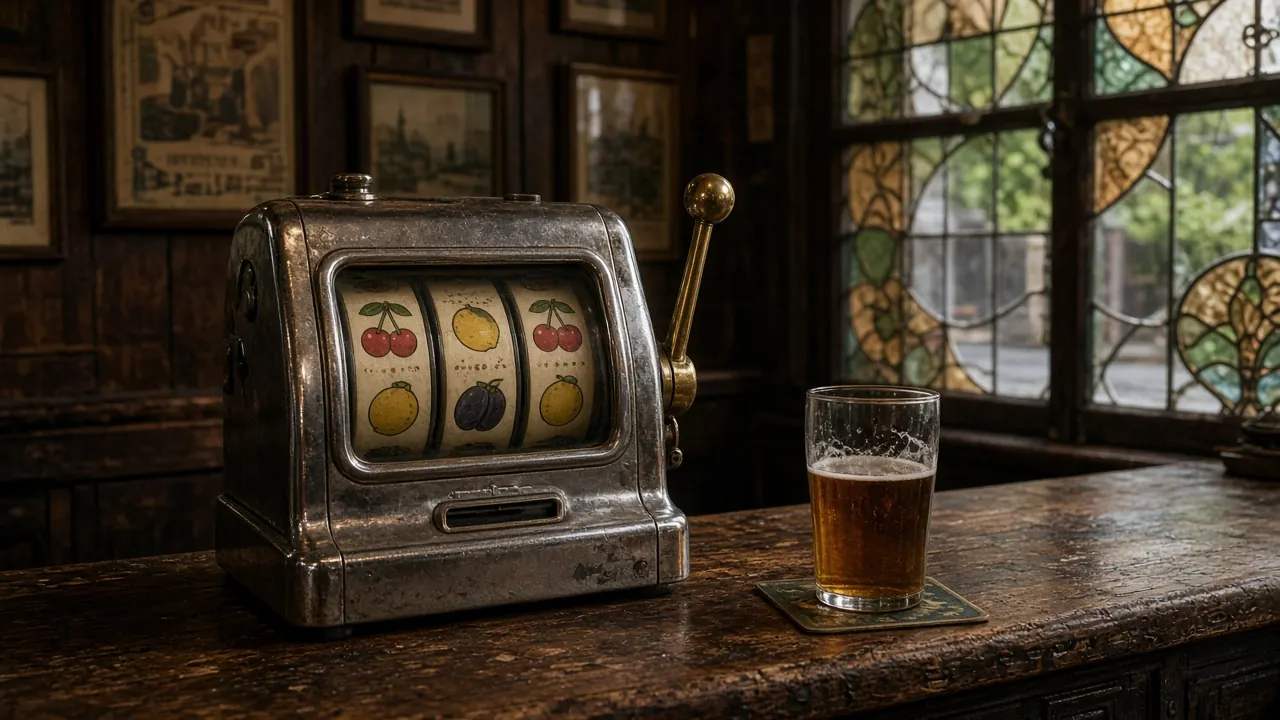
Why no ranking appears here
Searches for the best fruit slot games UK or the best fruit slots sites UK return pages full of top-ten lists, and those rankings are largely marketing. The regulatory picture does not rank games; it classifies them. A Category C pub machine, a Category D crane grab and a Category B4 club machine all answer to the same word in everyday speech, and the only meaningful way to compare them is by what category they sit in, where they can legally be sited, and what they can legally charge and pay out.
That is the practical takeaway. Before you play anything described as a fruit machine, find out which format you are actually facing: the pub classic, the low-stake Category D variant, the club B4 machine, or an online game using the imagery. The label on the cabinet or the thumbnail tells you about the theme. The category tells you about the product.
Fruit Slot Casino Games and the Meaning of a Casino Setting
When a fruit-themed game carries the word "casino" in its description, that label tells you where the machine can legally stand — not what it looks like or how it plays. In the UK, the casino setting has a specific regulatory meaning under the Gambling Act 2005, and it changes the category of gaming machine you may encounter.
The clearest example is Category B1. These machines can only be made available in casinos — no pub, bingo hall or adult gaming centre can site one. Casinos are also among the premises permitted to offer the lower categories, so a single venue can mix machines from several categories, each with its own stake and prize limits. The building says "casino"; the machines inside do not all belong to the same class.
Casino Settings
Attention The term “casino” refers to the venue’s licensing and machine variety; it does not guarantee that the fruit-themed games inside are higher-stake or better-paying than those in a pub.
This is where the fruit-machine label becomes genuinely unhelpful. The classic pub fruit machine — £1 stake, £100 prize — sits in Category C, and a casino can offer that same category too. So two machines with a familiar fruit-machine appearance, standing in different venues, can operate under completely different rules. What separates them is not the reels or the symbols but the category they fall into, which is set by maximum stake and prize.
One casino-specific detail is worth knowing. For B1 machines there is no minimum RTP requirement — but the minimum average return must be displayed to the player. In other words, the rules rely on visible information rather than a fixed floor, so the displayed figure is doing the regulatory work. If you are comparing machines, the label on the machine tells you more than the logo on the door.
The practical point is simple. "Casino" tells you the venue holds the licences a casino needs and that the highest-category machines may be present. It does not tell you that a fruit-themed game is higher-stake, better-paying or in any way different from the one in your local pub. To know that, you have to look at the category, the stake and prize limits, and the displayed return — the things the venue itself does not advertise.
How Fruit Slot Games Work Online in the UK
When a UK player searches for fruit-themed games to play on a phone or laptop, the word "online" changes the legal picture more than it first appears. In a pub, the machine in front of you is a physical gaming machine, and its category determines what it can do. On a screen, there is no cabinet — but the underlying question, of who is allowed to offer the game and under what rules, has not gone away.
Under the Gambling Act 2005, gaming machines in the United Kingdom are categorised according to the maximum stake and prize available. The full list of categories runs A, B1, B2, B3, B3A, B4, C and D, and this classification applies to machines in physical premises — the Category C fruit machine behind the bar, the Category D coin pusher at a seaside arcade. An online game hosted on a website does not sit in any of these categories in the same way a cabinet does; it falls under remote gambling rules instead, which is why the vocabulary shifts.
This is the key thing to understand about the term "fruit slot game" online: it borrows the look and the vocabulary of the pub machine, but the legal object is different. The reels, the fruit symbols and the hold-and-nudge feel may be faithfully reproduced, yet the game is not a Category C machine with a £1 stake limit sitting on a server. It is a remote game, offered by an operator holding a remote operating licence from the Gambling Commission, and the protections attached to it come from that licensing framework rather than from the machine category system.
For you as a player, this distinction matters when reading descriptions. A site that describes its games using machine-category language — implying the stake and prize limits of a pub fruit machine — is using informal terminology, not a statement about the regulated status of the game you are about to play. The formal term "gaming machine" belongs to the premises-based system; the online equivalents are simply licensed gambling games, and the rules that govern them come from the operator’s licence and its conditions of practice.
What stays constant between the two worlds is the underlying product: a game of chance with a displayed interface, a stake, and a prize. What changes is which part of the regulatory framework is doing the work.
Classic Fruit Slot Machines: The Pub-Machine Connection
When most people picture a fruit machine, they picture the pub machine: the cabinet in the corner of the bar with its familiar symbols and its hold-and-nudge buttons. In regulatory terms, this classic format has a precise identity. It is a Category C gaming machine, and the rules attached to that category explain both what the machine can offer and why it ended up in pubs in the first place.
- Use a demo to learn the interface and features
- Verify the operator’s licence on the UKGC public register
- Read the displayed average return on the machine
- Assume a “high payout” claim matches the legal prize ceiling
- Treat demo winnings as a predictor of real-money outcomes
- Rely on marketing language over regulated machine displays
The Category C definition
Under the UK’s machine categorisation, Category C machines carry a maximum stake of £1 and a maximum prize of £100. Those two figures are the ceiling — no Category C game can take more per play or pay out more on a single win. The classic pub fruit machine sits squarely inside those limits, which is part of what makes it the format you encounter in licensed premises rather than in higher-stake environments.
Category C machines are restricted to adults aged 18 and over. That restriction applies wherever the machine is sited, including in a pub where children may otherwise be present.
Why pubs have them
The pub connection is not an accident of history alone — it is written into the entitlement rules. An alcohol-licensed pub is automatically entitled to up to two Category C or D gaming machines, provided it notifies the local licensing authority. No separate application process is needed for those first two machines; notification is enough.
A pub that wants more than two machines cannot simply add them under the same entitlement. Going beyond two requires a formal Licensed Premises Gaming Machine Permit. So the sight of exactly one or two fruit machines along a pub wall reflects the automatic entitlement, while a larger row of cabinets signals that the premises has obtained a permit.
What the classic label means
The word "classic" describes a recognisable format, not a single uniform product. Regulators use "gaming machine" as the legal term, and "fruit machine" is the everyday name that has stuck to this Category C style. The machines themselves may vary in appearance and features, but they share the same stake and prize limits and the same adult-only rule. What ties them together is the setting: the pub machine is the fruit machine as most British players first met it.
Trying a Fruit Slot Demo Before You Play
A demo version of a fruit slot lets you press the buttons, watch the reels spin and see how the paytable is laid out without staking any money. That is genuinely useful, because fruit-machine-style games often carry features that are not obvious from a screenshot — hold buttons, nudges, bonus trails and win ladders all behave differently from one interface to the next. Playing through a demo is a reasonable way to learn where everything sits before any real money is involved.
What a demo cannot do is tell you what you are likely to win. The outcomes in a free version do not predict the outcomes in a paid version, and a run of good luck in a demo says nothing about the machine’s behaviour once stakes are live. Treat demo results as familiarisation, not as evidence.
There is also a distinction worth carrying with you. On regulated gaming machines in the UK, certain information must be shown to the player directly on the machine — for B1 machines, for instance, there is no minimum return-to-player requirement, but the minimum average return must be displayed. When you move from a demo to a real game, that displayed information is the part you can actually rely on, because it sits inside the regulated machine framework rather than inside a marketing page. A demo teaches you the layout; the displayed figures on a licensed machine tell you the parameters.
So the sensible sequence is: use the demo to understand the interface, then check what the real machine itself displays before you stake anything. If you are comparing games, the honest comparison point is the information shown on the machine, not how generous the demo felt — a session with no money at risk was never a measurement of anything.
Can I play fruit machines with children?
Only if they are Category D machines, such as coin pushers or crane grabs, which carry no age restriction.
How can I verify an online operator?
You can check if an operator holds a valid remote operating licence by searching the UK Gambling Commission’s public register.
Does a bonus change the machine’s limits?
No, a bonus cannot lift a machine above its legal maximum prize or alter its regulated return characteristics.
Demos are a learning tool. They are not a preview of winnings, and they are not a recommendation of any particular game.
Fruit Slot Bonuses: Read the Conditions Before Opting In
A bonus offer and the machine it applies to are two different things, and the offer is always the louder of the two. When you see a fruit slot bonus advertised in the UK, the promotional wording tells you what an operator wants to give you; the machine’s own rules tell you what will actually happen when you play. Reading the second before accepting the first is the whole exercise.
Start by separating the two layers. The promotional text — headline amounts, free play, welcome language — sits on top of the regulated product. Underneath it, the machine itself operates within fixed stake and prize limits set by its category, and those limits do not change because a bonus is attached. A bonus cannot lift a machine above its maximum prize, and it cannot alter the return the machine is built to deliver.
What you can rely on is displayed information, and regulation is firm on this point. For B1 machines in casinos, for instance, there is no minimum RTP requirement, but the minimum average return must be displayed to the player. That displayed figure belongs to the machine, not the promotion. A bonus offer that sounds generous next to a headline number may look very different next to the average return the machine is actually required to show you. When you opt in, check the displayed information first and treat the bonus wording as a separate question.
Be equally careful with offers described as free or no-risk. The conditions attached to a bonus — what you must do to receive it, keep it, or withdraw anything connected to it — are part of the offer even when they appear in smaller print. No verified bonus terms can be listed here, so the honest advice is procedural: find the full conditions before opting in, not after, and compare them against the machine’s displayed stake, prize and return information rather than against the advertisement alone.
A useful habit is to ask one question of any bonus: does the machine’s own displayed information support what the promotion implies? If the promotion rests on impressions and the machine rests on displayed figures, the figures are the ones that count.
What “High Payout” Means for UK Fruit Slots
When a fruit slot is described as offering a high payout, the phrase can point to two different things: the size of the top prize a machine can legally award, or the percentage of money staked that a machine returns to players over time. Both have regulatory meaning in the UK, and neither is a promise about your next session.
On the prize side, everything starts with the gaming machine categories. A machine’s category sets a ceiling on what it can take and pay out. Most fruit machines you encounter in pubs and similar venues are Category C machines, with a £1 maximum stake and a £100 maximum prize. If a Category C machine were marketed as a high-payout game, that claim would run into a hard limit very quickly: no outcome on that machine can exceed the prize ceiling set by its category.
The only category without stake or prize limits is Category A, and machines in that category are not currently permitted — so in practice, every fruit-style machine you can legally play in the UK operates inside defined financial boundaries. Even casino-based machines are capped: Category B1 machines take a maximum stake of £5 and pay a maximum prize of £10,000, with a linked progressive jackpot of up to £20,000 on a premises basis. Those are the largest verified figures attached to any machine a UK player can actually reach.
On the returns side, the picture is different. Rules require that machine categories display return information to the player — for example, the theoretical target return on B1 machines must be displayed. But a displayed percentage describes long-run machine behaviour, not a forecast for any individual player. It does not tell you when, or whether, a payout will arrive.
So a sensible reading of "high payout" is: check which category the machine belongs to, check what the displayed return information says, and treat both as structural facts about the machine rather than as expectations for your own play. No ranking of individual fruit slots can be produced from verified data, and any site offering one without saying where its numbers come from is asking you to trust marketing rather than regulation.
Published by the Casinouk Game Info team.