Best Highest RTP Slots UK: How Returns Work
 Available in GB
Understand RNGs, advertised return figures and the differences between slot formats before comparing UK games.

Table of Contents
- How UK Online Slots Work: RNGs, Reels and RTP
- The Highest-RTP Slot Games Available to UK Players
- Finding High-RTP Slots Across Different Casino Game Libraries
- Online Slots With the Highest RTP: What the Figures Really Mean
- High-RTP Slot Machines: Classic, Multi-Line and Jackpot Formats
- The Best Balance of RTP and Low Volatility
- High-RTP Pragmatic Play Slots: Check the Configuration First
- Which Slot Has the Highest RTP in the UK?
- What Slot Has the Highest RTP—and Is That Enough?
- Highest-RTP Slots in the UK: The Short Answer
How UK Online Slots Work: RNGs, Reels and RTP
Before you compare slot games by their advertised return figures, it helps to understand what is actually happening when you press the spin button. A slot is not a machine with a mood, a memory or a sense of fairness. It is a piece of software that produces outcomes according to a fixed statistical design — and once you know how that design works, the numbers that casinos and game developers publish start to make a lot more sense.
The random number generator
Every online slot runs on random number generator (RNG) technology. The RNG is a program that continuously produces strings of numbers with no pattern to them. When you spin, the game takes the numbers generated at that exact moment and translates them into the symbols that appear on your screen. Nothing that happened on the previous spin, and nothing you do as a player, changes what the next set of numbers will be.
This is worth dwelling on, because a great deal of folk wisdom about slots depends on the opposite being true. Slots do not "warm up" after a losing streak. They do not become "due" to pay. There is no scenario you can create — a particular stake, a particular time of day, a particular pattern of spins — that changes the output. Slot machines feature what game theorists call output randomness: the result is generated fresh each time, independently of everything around it. The output cannot change depending on a particular scenario, because there is no mechanism by which it could.
This has a practical consequence for anyone hunting for the highest-RTP slots in the UK. Two players can sit at the same game, at the same stake, minutes apart, and have completely different experiences. One walks away up; the other leaves with nothing. Neither outcome says anything about the game or about what will happen to the next player.
Reels, symbols and paylines
The visible part of the game — the part you actually watch — is a grid of reels. Slot games typically display three to five reels, each showing a set of symbols. When the reels stop, the arrangement of those symbols determines whether you have won. Certain symbols award prizes; others trigger bonus rounds, free spins or other features.

Around the reels runs the payline structure: the specific paths across the grid along which matching symbols must land for a payout. Older, simpler games have a small number of fixed lines. Modern games can offer far more, with some formats allowing thousands of possible ways to win on a single spin. The rules screen of any game will show you exactly which lines or combinations count.
You also control two things before every spin: your stake and, on games where it is configurable, the number of active paylines. Your stake is the amount you wager per spin. The number of active paylines determines how many of the possible winning routes are live — more active lines generally means a higher total stake per spin, because you are effectively betting on each line separately.
There is a persistent myth that certain stake levels or payline settings influence how generous a game is. They do not. Changing your stake changes how much you can win in proportion to what you wager; it does not change the probabilities behind the game. The RNG produces the outcome, and the game’s paytable applies your stake to it.
What RTP actually measures
RTP stands for return to player. It is expressed as a percentage and describes the theoretical long-run return of a game. An RTP of 97% means that, in theory, the game returns £97 for every £100 spent on it.

The key words there are "in theory" and "long run". An RTP figure is not a promise about your session, your week or even your year of play. It is a statistical property of the game, calculated over an enormous number of spins by many different players. Because outcomes are random, individual sessions can land anywhere — well above the theoretical return or far below it. A game with a high RTP can still take your deposit in twenty minutes; a game with a lower RTP can pay out early and often. Randomness does not average itself out on any timetable you will notice.
So what is the figure good for? Comparison, over time, between games. If one slot returns a higher theoretical percentage of everything wagered on it than another, then across a very large volume of play it is the more economical game to sit at. That is a real and meaningful difference — it is the reason this whole topic is worth reading about — but it is a difference that shows up in aggregate, not in any single sitting. When you see RTP examples quoted, remember that they are theoretical figures rather than guaranteed returns.
RNG Technology Continuous, patternless random number generation
RTP Meaning Theoretical long-run return percentage
Outcome Basis Independent, fresh generation per spin
Why the mechanics matter before you compare games
Understanding these three pieces — the RNG, the reel-and-payline structure, and the meaning of RTP — changes how you read every "best slots" list you will ever come across, including the comparisons further in this article.
Knowing about the RNG tells you that no game on any list is "hot" or "cold", and that no tip, system or betting pattern will bend the outcome. Knowing how reels and paylines work tells you what you are actually paying for when you adjust your stake. And knowing what RTP measures — a long-run theoretical percentage, not a session-by-session entitlement — tells you how much weight a return figure deserves in your choice: real, but not everything.
With that groundwork in place, the next question is the practical one: which specific games available to UK players actually return the most, and what do those figures mean when you sit down to play? That is where the comparison begins.
The Highest-RTP Slot Games Available to UK Players
When you start comparing slot games by return to player, the first thing to understand is what the figure actually promises — and what it doesn’t. An RTP of 97% theoretically returns £97 for every £100 spent on the slot. That word "theoretically" is doing all the work. Online slot outcomes are produced by random number generators, so RTP examples are always long-run averages rather than guaranteed returns. The percentage describes what a game pays back across a very large number of spins, not what any individual player will see in a session.

An RTP of 95% works the same way: over a very long period and many plays, a slot returns £95 for every £100 wagered in total. The two-point difference sounds small, but it adds up over time — and it is the only concrete, comparable number a slot’s paytable gives you. Everything else about a game’s behaviour is described in vaguer terms, which is why RTP has become the shorthand players reach for when ranking games.
The games that appear on highest-RTP lists
UK-licensed casinos carry titles from several providers, and the games that reliably appear on high-return lists include the following:
- Age of Gods — a progressive jackpot slot built around a mythology theme, from a major provider whose titles are widely available at UK-licensed operators.
- Jackpot Giant — another progressive jackpot title, known for its large fixed top prize rather than for a high headline RTP.
- Mega Moolah — a progressive jackpot slot whose main prize grows as players around the world spin the reels.
- Pokerstars’ Vegas Infinite — a VR slots experience, representing the newer end of slot design.
Notice something about this list: not one of these games is on it because of its RTP. Progressive jackpot slots trade theoretical return for the chance at an extremely large prize, and the probability of a player winning that jackpot is extremely low. That is the trade-off built into the format. A game can be famous, widely played and genuinely well made while still returning less over time than a plainer title with a higher stated percentage.
Why the "highest RTP" list is harder to write than it looks
There is a reason comparison articles tend to drift towards the same handful of names. The pool of games with genuinely high stated RTP is smaller than the marketing around slots suggests, and much of it is made up of games you have never heard of — simple, older titles with no bonus rounds, no branded themes and no jackpot mechanics. The games with the biggest marketing budgets are often not the games with the best returns.
Progressive jackpot slot with a mythology theme.
Progressive title known for a large fixed top prize.
Progressive slot with a growing global prize.
Modern VR slots experience.
Branded slots illustrate the problem neatly. These are games built on popular culture — Hollywood movies and famous video games are the two most common sources — and they often have low RTP and fewer extra features than other slots. You are, in effect, paying for the licence in the artwork. The theme is familiar, the soundtrack is recognisable, and the long-run return is worse than that of an unbranded game sitting a few rows down in the same casino lobby. If your goal is the best theoretical return, the branded shelf is generally the wrong shelf.
Reading a high-RTP claim correctly
Before you treat any published list — including one built from the games above — as settled fact, three checks are worth making:
- Confirm the RTP for the version you are actually playing. The same game name can cover configurations with different stated returns, and the figure that appeared in a review may not match the one loaded in front of you. The paytable or the game’s information screen is the authoritative source, not the title.
- Remember what the number measures. Slots rely on random number generators and RTP figures, in that order: the generator decides each spin, and the RTP describes the long-run average those spins produce. A 97% game can take your £100 in an afternoon, and a lower-RTP game can pay out handsomely in the same afternoon. Neither result contradicts the stated percentage.
- Distinguish return from frequency. A high RTP says nothing about how often a game pays or how evenly. Two games with identical percentages can feel completely different to play — one feeding back small amounts spin after spin, the other holding back and paying rarely. The stated return is the same; the experience is not. The relationship between RTP and volatility deserves its own discussion, and it comes later in this article, because the two figures answer different questions.
The honest summary
The games worth looking at are the ones where you can verify the stated return in the game itself, understand that the figure is a long-run average and not a promise, and accept what the game’s format trades away. A progressive jackpot title offers a shot at a life-changing prize at the cost of a lower practical return and near-impossible odds on the jackpot. An unbranded, higher-RTP title offers a better long-run return and no such prize. Neither choice is wrong, but they should be made knowingly.
What a highest-RTP list can honestly do is narrow your shortlist and tell you where the stated returns sit. What it cannot do is tell you which game will pay you today — because nothing can, and any source that implies otherwise is selling you something the mathematics does not support.
Finding High-RTP Slots Across Different Casino Game Libraries
Finding the highest-RTP slot games in the UK is not a case of learning one list and being done with it. The same game can appear at two different casinos with two different return figures, and a title that tops one operator’s library may not be available at another at all. Before you compare games, you need to understand what you are actually comparing — and where the differences between casinos come from.
No two casinos stock the same shelves
UK online casinos are not interchangeable storefronts. Beyond slots, they offer varying mixes of blackjack, roulette, live dealer games, scratchcards and poker rooms — and the slots catalogue itself differs from one operator to the next. Player reviews and operator-focused casino guides report that casinos differ in three respects that matter here: the game library they carry, the deposit options they accept, and the refund (withdrawal) options they provide.
That last point is easy to overlook when you are hunting for the highest-RTP online slot games. A high theoretical return loses some of its appeal if getting money in and out of the casino is awkward or expensive. Checking the payment side before you commit — which deposit methods are accepted, and how withdrawals are processed — is part of the same comparison, not a separate chore.
- Verify the specific RTP in the game’s paytable
- Check the operator against the UKGC register
- Compare slot returns with other slot returns
- Rely on a list’s RTP without checking the game version
- Assume a branded slot has a higher return
- Treat RTP as a guarantee for your session
Why the same slot can show different RTP
A slot’s return-to-player figure is a property of the game configuration, not just of the game’s name. That is why a list of the slot games with the highest RTP is only ever a starting point: what you should trust is the figure stated in the game you are actually about to play, not a number you remember from a list. The in-game paytable or information screen is the place to check, each time, at each casino.
This matters even more for Megaways slots. Megaways titles are licensed to many operators, and different configurations of the same underlying game can exist in the market. If you are comparing the highest-RTP Megaways slot games in the UK, treat the published figure as a claim to verify in the game itself rather than a fact carried across every site that hosts the title.
The same caution applies when a list mixes slots with table games under a heading like "highest RTP casino games". Blackjack and roulette have their own house-edge structures, and a return figure for a card game does not mean the same thing as a slot’s theoretical return. Compare like with like.
What the licence tells you about the numbers
A stated RTP is only worth checking if the mechanism behind it is sound. Online slot machines use random number generators to produce unpredictable outcomes, and the RTP figure only describes the long-run behaviour of that generator — slots rely on both RNGs and RTP figures working as designed. In Britain, that is where regulation does real work for you.

Online casinos operating in Britain must be licensed by the UK Gambling Commission, wherever in the world they are actually based. UK regulators require independent auditing of random number generators, which means the return figure you see has been subject to outside testing rather than simply asserted by the operator. You can verify a licence yourself: the UKGC maintains a public register of operating and personal licences, and you can check an operator’s name or licence number against it, confirming that the domain you are playing on matches the one listed.
This step is not bureaucratic box-ticking. If a site is not on the register, none of its RTP claims carry any independent backing.
A practical comparison routine
Rather than treating any published ranking as settled, work through the same short routine at each casino you consider:
- Confirm the licence. Check the operator against the UKGC public register and confirm the listed domain.
- Check the game in front of you. Open the paytable or info screen and read the stated RTP for that specific configuration — not the figure from a list.
- Compare the payment terms. Look at accepted deposit methods and withdrawal options, since these differ between operators.
- Match the game type. Make sure slot returns are being compared with slot returns, not with figures for table games.
None of this produces a single "best" casino, and it is not meant to. Libraries shift, configurations vary and payment arrangements change. What the routine gives you is something more durable: a way to read any highest-RTP slot games list you come across — knowing that the list is a map, not the territory, and that the number that governs your play is the one displayed in the game you have actually opened.
Online Slots With the Highest RTP: What the Figures Really Mean
Every slot you open at a UK-licensed casino displays a return to player percentage somewhere in its paytable or help screen. It might read 95%, or 97%, or something in between. The figure looks like a promise, and this is where most misunderstandings begin. It is not a promise. It is a measurement taken over an enormous number of spins, and knowing how to read it properly changes what you can reasonably expect from the highest-RTP online slots.
An RTP of 97% means the game returns £97 for every £100 spent in theory, but individual sessions will vary due to randomness.
The number is a long-run average, not a personal outcome
Take the standard example. An RTP of 97% theoretically returns £97 for every £100 spent on the slot. The same logic applies to a lower figure: an RTP of 95% means that over a very long period and many plays, a slot returns £95 for every £100 wagered in total.
The words doing the heavy lifting in those sentences are "theoretically" and "in total". The percentage describes the slot’s behaviour across every spin every player has ever made on it — a sample so large that individual results blend into the average. Your session, whether it lasts ten minutes or an entire evening, is a tiny fragment of that sample. Two people playing the identical game on the same evening can walk away with wildly different results, and the RTP figure will have predicted neither of them.
So when you see a list of the highest-RTP online slots and pick the top entry, you are choosing the game with the better long-run return. You are not choosing the game more likely to pay you during the next hour. Those are two separate claims, and only the first one is supported by the number on the screen.
Why randomness sits underneath the figure
Online slot machines use random number generator technology to ensure randomness, and this is the reason RTP can never function as a schedule of payments. Each spin is an independent event: the machine has no memory of what it just paid out and no obligation to balance its books within your session. The randomness is what produces the average in the first place — the RTP is simply what the mathematical structure of the game settles into once randomness has run its course over millions of spins.

A useful way to hold both ideas in your head at once: RTP tells you what the machine is designed to return overall; randomness tells you that your own experience has no obligation to match it. A high-RTP slot can eat your balance without paying anything meaningful. The same slot can hand a different player a large win within minutes. Neither outcome contradicts the published figure.
If that sounds like a caveat designed to protect the operator, it isn’t — it is the mechanism itself, and it works identically in the player’s favour on a lucky evening.
What the figure does not tell you
When you compare online slot machines by RTP, be aware of what the comparison leaves out. The percentage says nothing about how the returns are distributed. One slot might pay frequent small amounts; another might rarely pay anything until a large win arrives. Both could carry the same RTP. The figure also tells you nothing about the pace of play, the size of stakes, or the bonus features that may be where much of the return actually sits. And it tells you nothing about the casino: an operator can offer the same game as a rival, and the RTP belongs to the game, not the site hosting it.
Where the number earns your trust
There is one thing the RTP figure does give you, provided the game sits with a licensed UK operator: verification. UK regulators require independent auditing of random number generators, which means the published RTP of a licensed slot has been tested rather than simply asserted. A high figure on a UKGC-licensed site is a checked claim about long-run behaviour. The same figure on an unlicensed site is a number someone typed.
Volatility
Describes the pattern of payouts, specifically whether a slot provides frequent small wins or rare large hits.
That is the practical reading skill this section exists to hand you. Compare RTPs between games — it is a legitimate way to favour slots with better theoretical returns. Use the figure to understand the game’s design over time. But treat it as a long-run average produced by audited randomness, not as a forecast of your own session. The slot with the highest RTP online is the best mathematical bet across a very long horizon; whether it pays you tonight is a question the percentage genuinely cannot answer.
High-RTP Slot Machines: Classic, Multi-Line and Jackpot Formats
When you compare slot machines by RTP, the format of the machine matters as much as the number itself. A 97% RTP figure means the same thing in theory wherever it appears — the game returns £97 for every £100 spent on it over the long run — but the way that return reaches you differs sharply between a three-reel classic, a multi-line game and a progressive jackpot. Understanding the formats helps you read RTP claims in context rather than treating every percentage as interchangeable.
Single-coin and classic fruit machines
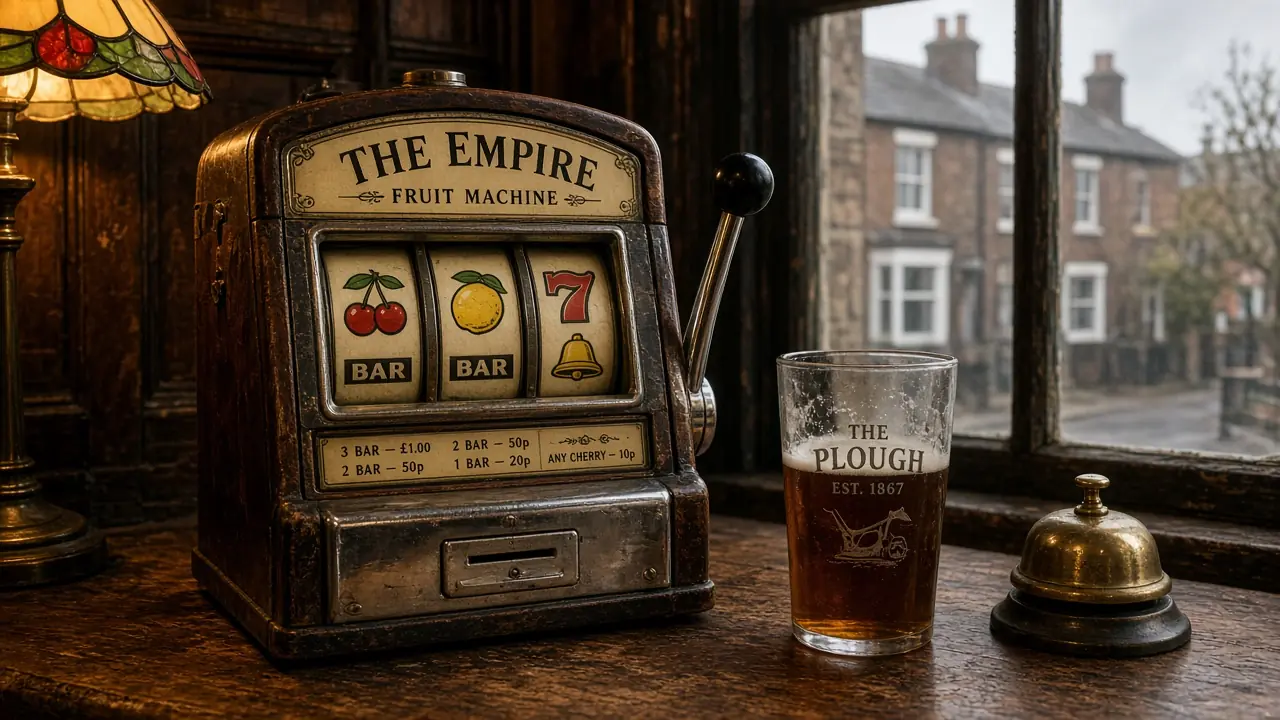
The traditional format is the single-coin machine — in Britain, the fruit machine. These let you play one coin at a time, normally for a small amount, and they remain the reference point for what a "slot machine" means to many UK players. Their structure is simple: a small number of reels, a small number of paylines, and a prize table you can take in at a glance. That simplicity is exactly why the RTP figure is easy to interpret here — there are few moving parts between the stated return and what you actually experience on the reels.

Multi-line slots and Megaways
Modern multi-line slots take the opposite approach. Instead of a single payline, they let you select your desired stake and the number of active paylines, and some go much further. According to one affiliate casino review, certain Megaways titles offer over 100,000 different paylines — a figure that changes how you should think about RTP entirely. With that many ways to win, your experience session by session can swing far more than on a classic machine, even when the headline RTP is identical.
The practical point: a high RTP on a multi-line or Megaways game does not mean steady returns. It describes the same long-run theoretical average as any other RTP figure, spread across an enormous number of possible outcomes. The format changes how the return is distributed, not the return itself.
Flat-top jackpots
Flat-top jackpot machines occupy the middle ground. Their defining feature is a fixed top prize — the maximum payout does not grow no matter how many people play. For RTP comparison, this format is the most predictable of the jackpot designs: the prize structure is known in advance, and the stated return covers a defined set of outcomes. A flat-top machine with a strong RTP figure is often a more transparent choice than a progressive game with a similar percentage, because nothing about the top prize depends on timing or player volume.
Progressive jackpot slots
Progressive jackpot slots are the format where RTP deserves the most caution. According to an affiliate casino review, progressive jackpots increase as players around the world spin the reels, and the prizes can reach thousands of pounds. PopularScience.co.uk reports that progressive jackpots are triggered at random, and that some may be triggered once per month after reaching a specified amount — though this describes specific games, not the market as a whole.
Progressive Jackpots
Attention: In progressive slots, a large portion of the headline RTP may be tied to a jackpot with an extremely low probability of being won.
What this means for the RTP figure: the probability of a player winning the jackpot is extremely low. If a progressive slot’s return includes a theoretical contribution from the jackpot, the portion of that return you are realistically likely to see is smaller than the headline number suggests. The RTP is not wrong — it is a long-run average across all players and all spins — but the format concentrates an unusual share of the return in an outcome almost nobody hits.
Matching format to how you read RTP
- Classic fruit machines: simplest to interpret; few variables between the RTP figure and your experience.
- Multi-line and Megaways slots: the RTP still holds in theory, but expect wider session-to-session variation across the many paylines.
- Flat-top jackpots: fixed top prize makes the payout structure transparent.
- Progressive jackpot slots: a headline RTP can include returns tied to a jackpot with an extremely low probability of being won.
No format is inherently better. What changes is what the RTP figure is telling you — and on a progressive jackpot slot, the same percentage can mean something materially different from the same percentage on a single-coin fruit machine. When a list of high-RTP slot machines mixes formats, compare like with like before comparing numbers.
The Best Balance of RTP and Low Volatility
Use this shortlist to focus on UK-licensed operators with clearly stated bonuses, payout times and minimum deposits when exploring high-RTP slots for 2026. These practical details can help you assess which options fit your playing preferences.
License: UKGC Operator Licence · Bonus: £200 welcome bonus · Payout speed: Within 48 hours · Min. deposit: £10 32Red holds a UKGC Operator Licence and offers a £200 welcome bonus. Its minimum deposit is £10, with payouts stated as being available within 48 hours.
License: UKGC Operator Licence · Bonus: £100 bonus · Payout speed: Within 24 hours · Min. deposit: £10 ProgressPlay Limited is a UKGC-licensed operator offering a £100 bonus. It lists a £10 minimum deposit and payouts within 24 hours.
License: UKGC Operator Licence · Bonus: £20 bonus · Payout speed: Within 48 hours · Min. deposit: £10 Silverbond Enterprises operates under a UKGC Operator Licence and offers a £20 bonus. The minimum deposit is £10, while payouts are stated as being within 48 hours.
License: UKGC Operator Licence · Bonus: £100 bonus · Payout speed: Within 24 hours · Min. deposit: £10 Genesis Global Limited is UKGC licensed and provides a £100 bonus. Players can deposit from £10, with payouts stated as being within 24 hours.
License: UKGC Operator Licence · Bonus: £100 bonus · Payout speed: Within 24 hours · Min. deposit: £10 LeoVegas holds a UKGC Operator Licence and offers a £100 bonus. It has a £10 minimum deposit and lists payouts within 24 hours.
License: UKGC Operator Licence · Bonus: £50 bonus · Payout speed: Within 48 hours · Min. deposit: £10 Platinum Gaming Limited is licensed by the UKGC and offers a £50 bonus. Its minimum deposit is £10, with payouts stated as being within 48 hours.
RTP tells you how much a slot returns over its lifetime. It does not tell you how those returns are shaped: whether they arrive as a steady trickle of small wins or as rare, large hits separated by long dry spells. That second dimension is volatility, and a high RTP says nothing about it. Two slots with identical RTP figures can feel like completely different games depending on how the payouts are distributed.
What volatility actually describes
Volatility is about the pattern of payouts, not the total. A low-volatility slot tends to produce more frequent, smaller wins, so your balance moves gradually in both directions. A high-volatility slot holds back and then pays out in larger amounts when it does pay, which means longer stretches with nothing at all. Neither design returns more to the player in theory — the difference is the ride.
This is worth knowing before you treat an RTP figure as a quality rating. A slot can return £95 for every £100 wagered in total — the standard illustration of a 95% RTP — and still go dozens of spins without giving you anything back, because that return is a long-run average measured across many plays, not a schedule of payments.

Why many players choose the steadier option
There is evidence that plenty of players already think this way. A survey cited by popularscience.co.uk found that more than 60% of slot machine players preferred frequent smaller payouts to larger infrequent ones — a clear preference for lower volatility over the chase for big hits. The same survey reported that 33% of gamblers preferred progressive jackpot slots, which sit at the opposite end of the spectrum: a high-volatility design where the headline prize has an extremely low probability of landing.
Matching the choice to how you play
If your goal is to make a set budget last for an evening, a high-RTP slot with low volatility is the more coherent choice: the theoretical return works in your favour over time, and the frequent small wins slow the rate at which your balance drains. If you are playing specifically for a large prize, volatility is the price of entry, and a high RTP will not soften it — outcomes remain random, and RTP examples are theoretical rather than guaranteed returns.
So when you compare slots, read both numbers where they are available, or at minimum ask what kind of payout structure the game has. RTP answers how much, on average, over a very long period. Volatility answers how it feels spin by spin. A slot that scores well on both counts is not automatically better than any other — but it is the one that behaves most predictably, and for many players that predictability is exactly what they are choosing.
Smart Comparison
- Confirm the casino’s licence via the UKGC register
- Open the in-game paytable to verify the specific RTP configuration
- Check accepted deposit and withdrawal methods
- Ensure you are comparing similar game types
High-RTP Pragmatic Play Slots: Check the Configuration First
Pragmatic Play is one of the most widely stocked slot studios at UK-licensed casinos, and its games appear on almost every "high RTP" list you will come across. That popularity creates a problem the lists rarely mention: the same game title does not always carry the same return.
The Same Game, Different Figures
Pragmatic Play builds its slots so that operators can run them at more than one RTP setting. The version you actually play depends on the configuration the casino has chosen, not on the studio’s marketing page. Two UK sites can offer what looks like the identical slot while the theoretical return differs between them, and neither version is mislabelled — they are simply different builds of the same game.
This is not unique to Pragmatic Play. Hacksaw Gaming, another studio whose titles frequently appear in UK libraries, works the same way. If you are comparing a Pragmatic Play title against a Hacksaw Gaming title on the strength of their returns, the first step is the same for both: open the game’s own information page and read the RTP stated there, rather than trusting a figure quoted in a review.
Where to Look
The stated RTP sits inside the game itself, usually behind an "i" or paytable button on the loading screen or within the rules. A casino’s list page or a third-party summary can be out of date or can describe a different configuration. The number displayed in the game you are about to stake on is the one that applies.
Remember what that number means: an RTP figure describes a theoretical long-run return, not a promise. Outcomes are produced by a random number generator, so the return is statistical, not a schedule of payouts. A high-RTP Pragmatic Play configuration improves the maths behind the game; it does nothing to the randomness of any individual spin.
A Note on Branded Themes
One pattern worth knowing when you scan a provider’s catalogue: branded slots — games built around films, television or video games — often have lower RTP and fewer extra features than unbranded titles in the same library. If you are hunting the highest return within Pragmatic Play’s range, the licensed recognisable name is frequently the weaker starting point, whatever its familiarity.
The practical habit is simple. Find the title, open it, check the stated configuration, and only then decide whether the game earns your stake.
Which Slot Has the Highest RTP in the UK?
There is no single slot that holds the title of "highest RTP" in the UK, and any site that names one without qualifications is oversimplifying. The honest answer depends on three things: the specific game version, the casino offering it, and the RTP the operator has actually configured.
Why the answer changes
The same slot title can run at different RTP settings depending on where you play it. A game that appears generous on one casino’s page may be configured differently at another operator, because online casinos differ in their game library, deposit options and refund policies — a point that comes up repeatedly in operator reviews of the UK market. Before treating any published percentage as fact, open the game’s information panel at the casino you intend to play at and read the RTP stated there. That figure, not a number quoted in a review or an advert, is the one that applies to your session.
Summary
- Always verify the RTP within the specific game version you are playing.
- Remember that RTP is a long-run theoretical average, not a session forecast.
- Ensure the casino is licensed by the UK Gambling Commission to guarantee audited randomness.
What the percentage actually promises
Even once you have found a high figure, treat it as a long-run statistical property rather than a promise. An RTP of 97% means the game theoretically returns £97 for every £100 spent on it — over an enormous number of spins, not over your evening. Every individual outcome is produced by a random number generator, so RTP figures describe theoretical behaviour, never guaranteed returns. You can sit down at the most generous configuration available and still finish well below the headline number, because randomness does not average out on a schedule that suits anyone.
A practical way to decide
Instead of hunting for one "best" title, compare like with like:
- Check the stated RTP at the casino itself, in the game’s paytable or help screen.
- Confirm the version, since the same name can hide different configurations.
- Verify the operator’s licence against the UK Gambling Commission’s public register — the regulator requires independent auditing of random number generators, which is what makes the published figure meaningful in the first place.
The slot with the highest RTP for you is whichever verified title, at whichever licensed operator, shows the strongest configured figure on the day you check. Anything more definite than that is a claim the maths does not support.
What Slot Has the Highest RTP—and Is That Enough?
Suppose you have found the slot with the highest RTP of anything on offer at a UK-licensed casino. It would be reasonable to assume that this is the best game to play — the one where your money lasts longest and your chances are strongest. That assumption deserves a closer look, because the RTP figure answers a narrower question than most players realise.
An RTP of 97% means the game theoretically returns £97 for every £100 wagered. But online slot outcomes are random, and that randomness does not pause to respect the published figure. The RTP describes what a slot returns over an enormous number of spins across all players. Your own session — even a long one — is a tiny sample of that run, and a tiny random sample can land almost anywhere. A high-RTP slot can swallow your balance in ten minutes; a low-RTP slot can pay out twice in a row. Neither outcome tells you the figure was wrong.
The jackpot question complicates things further. Progressive jackpot slots have an extremely low probability of any individual player winning the jackpot, so if you are drawn to these games, the headline RTP is not the number governing the prize you are actually chasing. Popular Science has reported that progressive jackpots are triggered at random and may be triggered only once per month after reaching a specified amount — a claim about specific games, not a market-wide rule, but it gives a sense of how remote the top prize is. A game can carry a respectable RTP while the chance of hitting its most advertised feature stays close to zero.
None of this makes RTP useless. Comparing stated figures is still the most reliable way to filter out games that are structurally poor value, particularly branded slots, which often carry low RTP and fewer extra features than other games. But the figure is a filter, not a promise. Once two games are close in RTP, the deciding factors — how often a slot pays, how big the swings are, whether a jackpot is realistically winnable — sit outside the percentage entirely.
So yes: find the highest RTP you can. Just don’t mistake it for a forecast. It tells you what the machine returns in theory, over time, in aggregate. What happens on your next spin remains, by design, unknowable — and no published percentage changes that.
Highest-RTP Slots in the UK: The Short Answer
If you have read this far, here is the whole article compressed into three checks.
1. Compare the stated RTP. A slot’s published RTP is a long-run theoretical figure, not a promise about your session. Use it to compare games on paper, and remember that the same title can carry different RTP configurations depending on where you play it.
2. Treat every outcome as random. Online slots run on random number generators, and regulators in Britain require independent auditing of those generators. That is what makes the results unpredictable — and it is also what makes any single session deviate from the theoretical return, in either direction.
3. Verify the licence. Any online casino operating in Britain must be licensed by the UK Gambling Commission. You can check the operator’s name or licence number against the Commission’s public register and confirm the listed domain before you deposit.
That is the entire decision process: a stated RTP you have compared against alternatives, an honest understanding that randomness governs the outcome, and a licence you have confirmed for yourself. Nothing else in a slot’s marketing copy — themes, jackpots, celebrity branding — tells you anything you can act on. The numbers on the game sheet and the entry in the regulator’s register do.
Written by the editors at Casinouk Game Info.